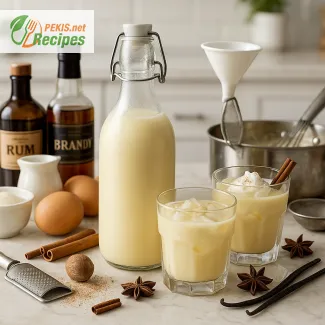
A silky, fragrant Christmas liqueur with vanilla and rum that blends warm spices, creamy texture and a touch of festive nostalgia. Real vanilla, gentle citrus peel and smooth rum create a rich, velvety drink that feels like a cosy winter tradition in every sip.
A small trick that always helps with Christmas liqueur: warm the spices gently before infusing — the aroma becomes deeper, the vanilla blooms, and the rum blends in with a softer edge. If you enjoy pairing festive drinks with desserts, you’ll probably like what PEKIS creates around holiday flavours.
PEKIS – professional chef and recipe developer with more than 25 years of experience in cooking and baking, specialised in European and international cuisine.
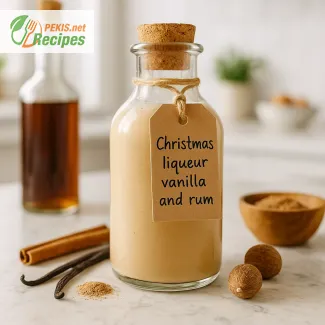
Silky homemade vanilla–rum Christmas liqueur for cosy winter nights
A smooth, aromatic holiday drink with real vanilla, warm spices and a gentle rum kick
The first sip of homemade Christmas liqueur with vanilla and rum feels like wrapping cold hands around a steaming mug after coming in from the snow. It is silky on the tongue, with gentle sweetness and a deep vanilla aroma that rises from the glass even before it reaches your lips. The warmth of rum spreads slowly through the chest, while a hint of Christmas spices lingers on the palate, almost like the aftertaste of freshly baked festive desserts cooling on the kitchen counter. This is the kind of drink that invites you to slow down, turn on soft lights, and let the quiet crackle of the season do the talking.
Behind this simple-looking drink is a careful balance: real vanilla for floral depth, a good dark or golden rum for round warmth, and just enough sweetness to make the liqueur velvety rather than heavy. A pinch of spice – maybe cinnamon, cloves or allspice – creates that unmistakable Christmas character, matching the aroma of rich bakes like The Most Fragrant Christmas Cake: A Recipe for Chocolate Lovers. The texture should feel creamy and smooth, never grainy, with flavours that stay clear and layered instead of collapsing into sticky sweetness.
A short story of Christmas liqueurs and European traditions
Christmas liqueurs have their roots in European winter traditions, where families would infuse alcohol with spices, citrus peel, nuts or coffee as a way to preserve flavour and create special drinks for feast days. In some homes, a bottle of vanilla–rum liqueur stands alongside walnut rolls, spiced breads and chocolate logs on the festive table. Think of a rich slice of Traditional Christmas Walnut Potica – A Slovenian Festive Masterpiece served with a small glass of chilled liqueur after dinner. The combination of nuts, honey, cocoa, vanilla and rum creates a layered dessert experience without feeling overcomplicated.
Over time, these liqueurs became homemade gifts: bottles wrapped with simple twine, handwritten labels, and the promise that what is inside was made slowly, with care. This vanilla–rum version fits right into that story. It is easy enough for a home kitchen, yet refined enough to stand next to an elegant Christmas cake or a delicate chocolate yule log.
How the key ingredients shape flavour and texture
Vanilla
Real vanilla – whether from a pod, paste or high-quality extract – is what makes this Christmas liqueur feel luxurious. It adds floral notes, gentle creaminess in the aroma, and soft caramel-like depth that links beautifully with rum and brown sugar. The more natural the vanilla, the more rounded and complex the flavour.
Rum
The choice of rum defines the character of the drink. A dark rum gives molasses, caramel and dried-fruit notes, while a golden rum feels lighter and slightly fruity. Both types support the Christmas spices and allow the vanilla to shine. Harsh or very strong industrial spirits push the liqueur into aggressive territory; a balanced, smooth rum keeps it sippable and elegant.
Sweetener and body
Sugar, honey or condensed milk (if using a creamy style) are not just about sweetness. They influence viscosity and mouthfeel. The right level of sweetness makes the liqueur silky and round, helping the alcohol feel gentler and enhancing the perception of vanilla and spice rather than masking them. Too much sweetness, however, would hide the rum and make the drink feel cloying and heavy.
Christmas spices
A subtle blend of cinnamon, cloves, star anise or allspice brings the unmistakable holiday profile. These spices echo the flavours of Christmas breads, cookies and cakes, pairing naturally with bakes like gluten-free festive loaves or spiced chocolate desserts. If you already serve something like Gluten-Free Christmas Bread: A Festive Delight for Everyone, a vanilla–rum liqueur with similar spice notes will feel like part of the same story.
Storing and making your Christmas liqueur ahead
Homemade Christmas liqueur is ideal for preparing in advance:
- Infusion time: Allowing the vanilla, rum and spices to rest together for several days or even weeks creates deeper, smoother flavours.
- Shelf life: Stored in a sterilised glass bottle in a cool, dark place, a non-dairy version can last for several months, with flavours mellowing and rounding out.
- Creamy versions: If dairy is part of the recipe, refrigeration is essential and the liqueur should be consumed within a shorter time window, typically a couple of weeks, to keep the texture and taste at their best.
- Gifting: Preparing a small batch for yourself and several smaller bottles as gifts is easy once you know your preferred sweetness and spice level.
Serving ideas and pairing suggestions
A glass of vanilla–rum Christmas liqueur is more than just an after-dinner drink; it can become a versatile part of your dessert table:
- Serve chilled in small liqueur glasses alongside slices of rich chocolate desserts like Ultimate Chocolate Yule Log Cake Recipe.
- Pour a small splash over vanilla or cinnamon ice cream to turn a simple scoop into a festive dessert.
- Use a little liqueur to moisten sponge layers in trifles or Christmas parfaits, adding both flavour and aroma.
- Pair it with nut-based festive cakes such as walnut rolls or nutty coffee cakes, where the rum and vanilla emphasise roasted nut notes.
- Offer it as a slow-sipping digestif after a hearty winter meal, especially when the menu includes spiced roasted meats, root vegetables or creamy potato dishes.
Why you will love this Christmas liqueur
- Comforting flavour profile: Combines vanilla, rum and winter spices into a cozy, nostalgic drink.
- Perfect for gifting: Bottled in small glass jars with simple decorations, it becomes a personal homemade present.
- Flexible sweetness and strength: You can adjust sugar and rum levels to suit your own taste and your guests’ preferences.
- Pairs with many desserts: Works beautifully with chocolate cakes, nut rolls, spiced breads and cookies, from fragrant cakes to rich potica.
- Simple ingredients, luxurious result: Everyday pantry items transform into a premium-tasting liqueur with a few careful steps.
Christmas liqueur and festive dessert traditions
Across Europe, Christmas dessert tables often mix baked sweets and homemade drinks: liqueurs, punches, mulled wine and dessert wines. A vanilla–rum Christmas liqueur fits harmoniously between spiced cookies, fruit breads and layered nut cakes. You might serve it next to a slice of Traditional Christmas Walnut Potica – A Slovenian Festive Masterpiece, a rich chocolate Christmas cake, or a rustic gluten-free festive loaf. The shared elements – citrus zest, cinnamon, cloves, cocoa, vanilla, honey, nuts – create a coherent flavour theme even when plates look very different.
This connection between homemade liqueur and baked desserts helps the whole menu feel curated rather than random. One guest might prefer a slice of cake and coffee, another a small glass of liqueur and a thin slice of nut roll, and someone else may enjoy just the liqueur on its own while talking by the tree. The drink becomes part of a larger holiday ritual, not just a stand-alone recipe.
Creative variations for your vanilla–rum Christmas liqueur
Adjusting flavour accents
- Add a strip of orange or lemon peel to brighten the vanilla and rum with a light citrus top note.
- Introduce a touch of coffee bean or cocoa nibs for a subtle mocha depth that pairs perfectly with chocolate desserts like The Most Fragrant Christmas Cake: A Recipe for Chocolate Lovers.
- Use brown sugar or demerara sugar instead of white for a more caramelised, toffee-like sweetness.
Playing with texture and richness
- Keep the liqueur light and clear for a long-keeping, sharable bottle that works well over ice or in cocktails.
- Make a cream-style version with a richer mouthfeel for serving in small glasses alongside buttery cookies, shortbread or festive breads like Gluten-Free Christmas Bread: A Festive Delight for Everyone.
Using it beyond the glass
- Whisk a small amount into whipped cream to serve with panettone, stollen or fruitcake.
- Fold a spoonful into custards, tiramisu creams or simple chocolate mousses for a gentle vanilla–rum note.
- Drizzle over warm sponge cake or bread pudding right before serving to add a final aromatic layer.
By tuning sweetness, spice and intensity, this vanilla–rum Christmas liqueur can match everything from rich chocolate logs to nutty festive breads, quietly supporting the stars of the dessert table while bringing its own smooth, fragrant personality.
- Split the vanilla pod lengthwise and scrape out the seeds. Add both pod and seeds into a medium saucepan.
- Pour in whole milk, heavy cream, granulated sugar, brown sugar, cinnamon stick, cloves, star anise and orange peel. Warm gently over low heat until the mixture reaches a light steam, approximately 85°C (185°F). Do not boil.
- Remove from the heat, cover with a lid and let the spices infuse for 15 minutes.
- Strain the mixture through a fine sieve to remove all solids, pressing gently to extract maximum flavour.
- Stir in the honey and salt while the liquid is still warm. Mix until dissolved.
- Allow the mixture to cool to room temperature, then pour in the dark rum. Stir thoroughly to combine.
- Transfer the liqueur into a sterilised glass bottle. Seal tightly.
- Refrigerate for at least 24 hours before serving to allow flavours to harmonise.
- Serve chilled in small glasses. Shake gently before pouring.
FAQ questionHow long should Christmas liqueur rest before drinking?
Allowing the liqueur to rest for at least 24 hours helps the flavours settle, but giving it 3–5 days creates a much smoother taste. During this time, the vanilla, rum and spices blend into a more balanced, rounded profile. The alcohol mellows, the sweetness integrates, and the spice notes become softer rather than sharp.
FAQ questionCan I make Christmas liqueur without dairy?
Yes — replacing milk and cream with almond milk, oat milk or full-fat coconut cream still gives a creamy mouthfeel. Coconut cream adds the richest texture, while almond milk keeps it lighter. The key is maintaining the balance between sweetness, fat content and alcohol, so the liqueur stays silky instead of watery.
FAQ questionHow do I keep the texture smooth and not grainy?
Warm the mixture gently and never let it boil. Boiling causes sugars and dairy to separate, creating graininess. Slow heating to about 85°C (185°F) keeps everything emulsified. Straining the mixture removes spice particles that could cause rough texture, ensuring the final drink feels silky and velvety.
FAQ questionWhat type of rum works best for this recipe?
A dark rum creates deeper caramel notes, while golden rum adds a lighter, fruity warmth. Avoid very harsh or low-quality spirits, as they overpower the delicate vanilla and spice. Choosing a smooth rum ensures a balanced, aromatic liqueur that tastes refined rather than aggressive.
FAQ questionHow long does homemade Christmas liqueur last?
A non-dairy version can last several months in a sterilised, sealed bottle stored in a cool, dark place. Dairy-based versions should be refrigerated and enjoyed within 1–2 weeks. As it sits, the flavour becomes more harmonious, and the spice and vanilla infuse even more deeply.
FAQ questionCan I adjust the sweetness without ruining the balance?
Absolutely. Reducing sugar keeps the drink lighter and less dessert-like, while adding more creates a richer, creamier mouthfeel. The key is tasting after the rum is added. If it feels too sharp, a little more sugar or honey will smooth out the edges and enhance the warm spice profile.
FAQ questionIs this liqueur good for gifting?
Yes — it’s ideal for homemade gifts. Once the flavours have matured, bottle the liqueur in small glass jars, add simple labels and tie with festive ribbon. Its aroma, colour and smooth texture make it a thoughtful, personal present that feels both traditional and luxurious.
FAQ questionCan I use this liqueur in desserts?
Definitely. A splash enhances whipped cream, custard, tiramisu layers or chocolate mousse. It also works as a drizzle over cakes or ice cream. The vanilla–rum flavour adds depth without overwhelming other ingredients, making it a versatile addition to festive desserts.
The warmth of vanilla, rum and gentle winter spices brings a sense of calm that fits perfectly into the slower rhythm of the season. The drink gathers the aromas of festive kitchens into one smooth sip, creating a cosy moment whether it’s enjoyed alone or shared after a holiday meal.
A homemade liqueur also becomes a small piece of tradition. The process of gently heating, infusing and resting the mixture adds a ritual-like quality, and the result feels personal in a way that store-bought drinks rarely do. Every element — from the silky texture to the deep vanilla aroma — reflects the care put into it.
The balanced blend of creamy sweetness, warm spices and smooth rum makes the liqueur versatile alongside many winter desserts. It pairs naturally with chocolate, nuts and buttery pastries, adding depth without overwhelming the plate.
Small bottles make thoughtful gifts, carrying the scent of the holidays and the comfort of something handmade. The flavour evolves over time, becoming even more refined as the vanilla and spice notes settle into harmony.
Allergens present in the recipe
- Milk – dairy products are included.
- Cream – contains milk proteins.
- No gluten – the recipe is naturally gluten-free.
How to remove allergens and gluten
- Replace milk with almond milk or oat milk.
- Replace heavy cream with full-fat coconut cream.
- Ensure spices are certified gluten-free (most are naturally GF, but cross-contamination is possible).
- Vitamin A (µg): 58 – supports vision and immune function
- Calcium (mg): 45 – contributes to bone strength
- Potassium (mg): 62 – helps maintain fluid balance
- Magnesium (mg): 6 – supports muscle and nerve health
- Phosphorus (mg): 38 – important for energy production
- Vanillin (mg): 4 – provides mild antioxidant protection
- Cinnamaldehyde (mg): 3 – supports anti-inflammatory processes
- Polyphenols from rum (mg): 6 – contribute to oxidative stress reduction
- Clove eugenol (mg): 2 – known for strong antioxidant activity
Recipes worth trying