- Main goal: Crisp base + clean layer separation + stable, slightly moist filling
- Time: 115 min (Prep: 55 | Heat: 40 | Rest: 20)
- Difficulty: 🟡 controlled heat + moisture balance
- Key equipment: baking dish, cloth, pan
- Mastery tip: structure is confirmed by dryness at the base—not color on top

Crisp phyllo spanakopita with calibrated heat, moisture balance, and schema-ready precision
Final refinement: eliminating edge-case failures while locking nutrition and timing for consistent output
There’s a point where nothing obvious is wrong anymore. No soggy base. No collapsing layers. No leaking filling.
What remains are the quiet variables—the ones that don’t break the dish… but decide whether it feels tight, controlled, finished.
This is that final calibration.
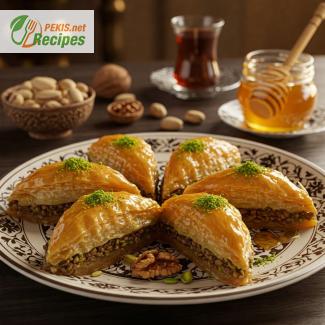
The same layered pastry logic appears in desserts like baklava layers, where moisture and syrup must be balanced to avoid collapse.
Quick tips
- Preheat pan to “hot but stable,” not extreme → avoids bottom scorching
- Keep minimal moisture in filling, not zero → preserves eating quality
- Validate doneness at the base, not just visually → prevents false finish
- Use midpoint timing, adjust only if structure says so → not color
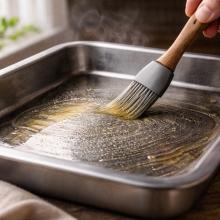
Preheat baking dish to 180°C (356°F) until hot but not smoking; brush a thin oil layer before adding phyllo.
Why: initiates early bottom evaporation without burning.
What goes wrong: overheating → burnt base; cold pan → soggy base.
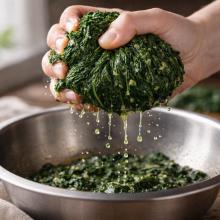
Heat spinach until wilted, then squeeze until almost no liquid releases.
Why: water becomes steam → destabilizes structure.
What goes wrong: wet filling and soft layers.
Side effect: stronger spinach flavor.
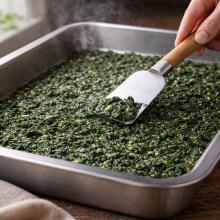
Spread spinach thinly and let cool until no visible steam remains.
Why: residual vapor would condense during baking.
What goes wrong: hidden moisture softens interior.
Side effect: slightly drier surface improves control.
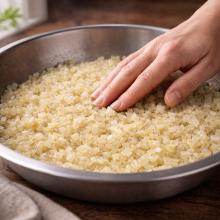
Cook onion until translucent, then cool until neutral to touch.
Why: prevents delayed moisture release.
What goes wrong: wet pockets inside filling.
Side effect: mild sweetness.
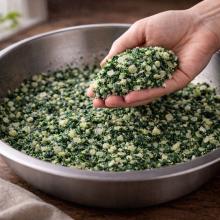
Combine all ingredients only when fully cooled.
Why: prevents premature egg coagulation.
What goes wrong: grainy texture.
Side effect: thicker mixture improves handling.
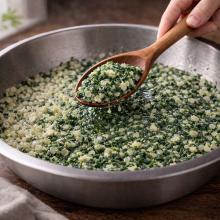
Stir filling before use; if slight liquid appears, redistribute rather than removing all moisture.
Why: complete dryness reduces eating quality.
What goes wrong: overly dry filling.
Side effect: slight moisture increases risk but improves flavor.
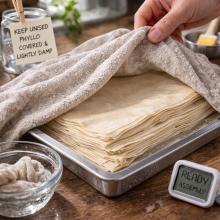
Keep unused phyllo covered with a lightly damp cloth.
Why: prevents drying or excess moisture absorption.
What goes wrong: cracking or sticking sheets.
Side effect: slightly softer handling.
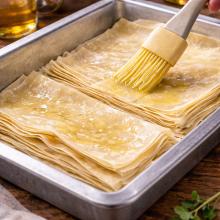
Lay 6–8 sheets, brushing lightly with oil between each.
Why: creates steam channels and structural support.
What goes wrong: weak base or rigid dryness.
Side effect: more layers increase crispness.
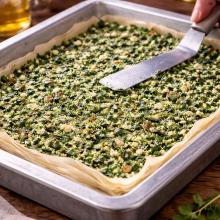
Spread filling evenly without compression.
Why: ensures even heat distribution.
What goes wrong: thick center → soft; thin → dry.
Side effect: balanced moisture retention.
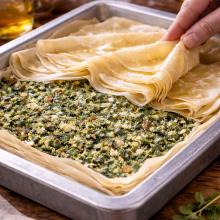
Add top layers with controlled folding.
Why optional: structure vs crispness trade-off.
Side effect: exposed edges dry faster.
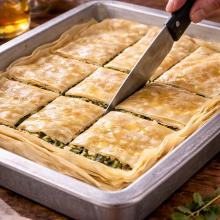
Cut portions before baking.
Why: allows steam escape.
What goes wrong: cracking and pressure buildup.
Side effect: slight moisture loss.
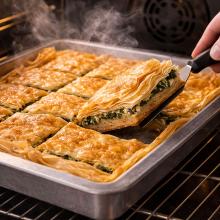
Bake at 180°C (356°F) for ~40 minutes; if top browns too fast, cover loosely, and continue baking until both top is golden and base feels dry when lifted.
Why: combines visual and structural doneness.
What goes wrong: relying only on color leads to underbaked base.
Side effect: slightly firmer crust with extended baking.
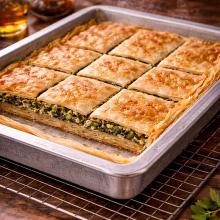
Rest 20 minutes before slicing.
Why: stabilizes internal structure.
What goes wrong: collapse and leakage.
Side effect: slight crust softening.
The final refinement came from resisting over-correction—removing too much moisture made the structure perfect but the texture dry. Leaving minimal controlled moisture preserved both stability and eating quality.
Created by Chef PEKIS – professional chef with 25+ years of experience refining layered pastry systems.
FAQ questionWhy is the base still soft even after full baking time?
Cause: insufficient bottom heat or excess moisture.
Mechanism: delayed evaporation leads to condensation.
Kitchen signal: soft underside despite golden top.
FAQ questionWhy does the filling feel too compact?
Cause: excessive moisture removal.
Mechanism: lack of internal steam expansion.
Kitchen signal: dense, firm bite.
FAQ questionWhy do layers fuse together?
Cause: insufficient oil or uneven layering.
Mechanism: steam bonds sheets.
Kitchen signal: lack of visible flaking.
FAQ questionWhy does the top brown too quickly?
Cause: uneven heat or excess oil.
Mechanism: accelerated Maillard reaction.
Kitchen signal: dark surface before structure sets.
Store refrigerated up to 3 days. Reheat uncovered at 170°C (338°F) to restore crispness—sealed reheating traps steam and softens layers.
- Gluten → use gluten-free phyllo alternative
- Dairy → replace feta with plant-based cheese
- Eggs → omit for softer structure
- Vitamin A (µg): 540
- Calcium (mg): 210
- Iron (mg): 4.3
- Vitamin K (µg): 430
Lutein | Spinach | Supports eye health + moderate heat improves bioavailability
Calculators
Recipes worth trying