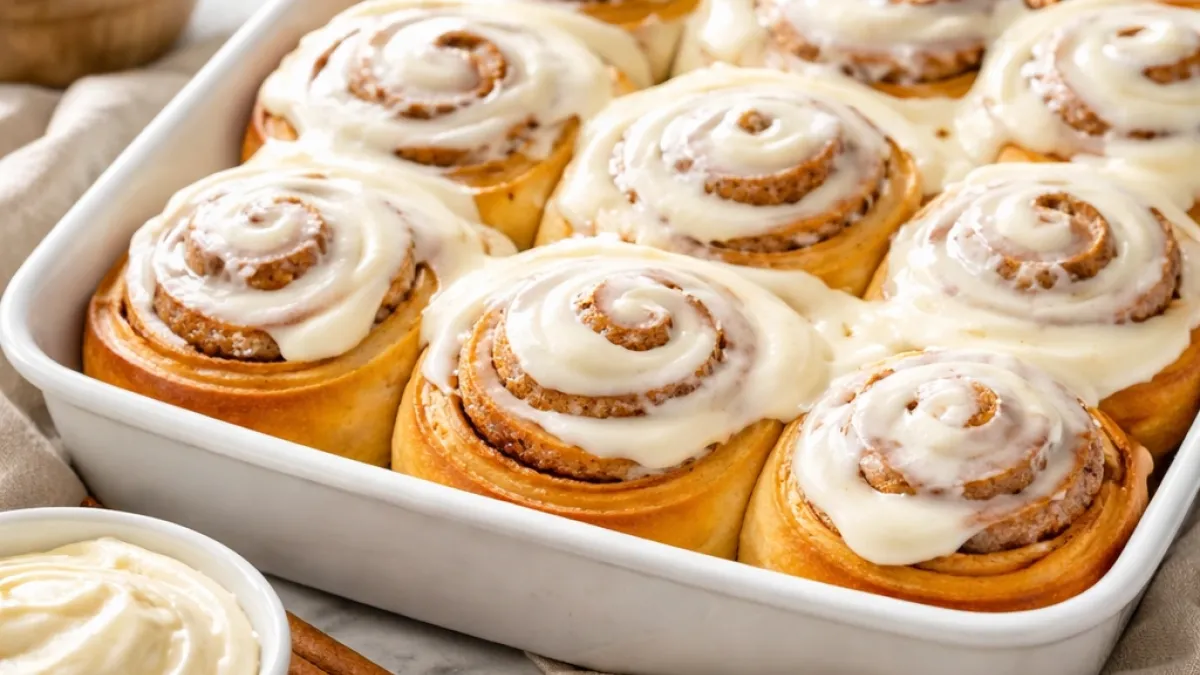
Cinnamon Rolls with Silky Cream for a Perfect Holiday Morning bring the warmth of slow-risen dough, fragrant cinnamon, and a smooth cream finish into one deeply comforting bite. Inspired by festive European breakfast traditions, the rolls pull apart softly, release rich spice aromas, and melt on the tongue, turning a quiet holiday morning into a moment of shared indulgence and calm celebration.
Holiday Cinnamon Rolls with a Creamy Swirl Experience
A festive morning pastry where softness, warmth, and cream meet
The first bite sinks into pillowy dough, still warm from the oven, releasing a wave of cinnamon perfume that feels instantly familiar and deeply comforting. The spiral pulls apart effortlessly, strands stretching just enough before melting away, while the silky cream settles into every fold, glossy and smooth, never heavy. This is the kind of pastry that slows a morning down, one that belongs on a quiet holiday table where time briefly loses its meaning and the kitchen smells like celebration rather than routine.
Cinnamon rolls have always carried a sense of ritual. Across Northern and Central Europe, enriched doughs scented with cinnamon were reserved for special mornings, when baking itself became part of the celebration. What elevates this version is the balance: spice that is warm but not sharp, sweetness that feels rounded, and a cream element that brings calm richness instead of sugar rush. The dough stays tender long after baking, while the cream creates contrast—cool against warmth, smooth against the gentle pull of the crumb.
There is a reason why variations of cinnamon rolls appear in so many culinary traditions. Scandinavian kitchens refined the spice-forward approach, Central Europe leaned into richness, and modern baking introduced cream-forward finishes that turn a breakfast pastry into something closer to dessert. If you enjoy exploring classic formats, a more traditional version is also available as Homemade Cinnamon Rolls for Christmas Breakfast, where the focus stays closer to the original holiday table style.
Why this version stands out
- Soft, layered dough that stays tender even after cooling
- Balanced cinnamon warmth without bitterness
- Silky cream texture that melts rather than sits on top
- Holiday versatility, suitable for breakfast or late-morning indulgence
Beyond the rolls themselves, this flavor profile connects naturally with other seasonal pastries built around cinnamon and gentle sweetness. A sliced, oven-warm option like Warm Streusel Cake with Apples and Cinnamon brings the same aroma in a shareable, cake-style form, perfect when serving a larger table. For moments that call for something smaller and spiced, Soft Christmas Gingerbread Cookies with Orange Aroma – Holiday Classic offer a firmer texture with citrus lift, ideal alongside coffee or tea.
Storage and make-ahead flexibility
This style of cinnamon roll adapts well to planning ahead. The dough benefits from slow resting, which deepens flavor and improves softness. Once baked, the rolls retain moisture thanks to the cream component, making them suitable for short storage without losing their appeal. Gentle reheating revives the aroma and restores the just-baked softness, especially when covered to protect the surface.
Creative variations to explore
- A lighter cream finish for those who prefer subtle sweetness
- Extra spice layers that lean into clove or cardamom tones
- A minimalist glaze approach for a more classic breakfast feel
If your holiday baking leans toward tradition, pairing these rolls with Vanilla Crescent Cookies creates a table that contrasts soft spirals with delicate, crumbly classics. Together, they tell a complete seasonal story—warmth, spice, cream, and calm indulgence—without repetition, yet clearly connected by aroma and mood.
- Crumble the fresh yeast into lukewarm milk, add 1 tablespoon of the measured sugar, mix gently, and let stand for 10 minutes until lightly foamy.
- In a large bowl combine flour, remaining sugar, and salt. Add eggs, melted butter, and the activated yeast mixture.
- Knead until a smooth, elastic dough forms, about 10 minutes by hand or 7 minutes with a mixer. The dough should be soft but not sticky.
- Shape into a ball, cover, and let rise in a warm place until doubled in size, about 60 minutes.
- Roll the risen dough into a rectangle approximately 35 × 45 cm (14 × 18 inch).
- Spread the softened butter evenly over the surface, sprinkle with brown sugar, then distribute the ground cinnamon uniformly.
- Roll tightly from the long side into a log and cut into 12 equal rolls.
- Arrange the rolls in a baking dish lined with parchment, leaving slight space between them. Cover and let rise again for 30 minutes.
- Bake in a preheated oven at 180 °C (356 Fahrenheit) for 22 minutes until lightly golden and fully baked through.
- While baking, whisk cream cheese, heavy cream, powdered sugar, and vanilla until smooth and silky.
- Spread the cream over the warm rolls so it melts gently into the spirals before serving.
A common mistake with cinnamon rolls is rushing the rise, which leads to dense spirals and uneven texture. This method works because time and gentle handling let the dough relax, trap air, and bake into soft layers that stay tender under the silky cream. That balance is what makes the rolls feel festive rather than heavy.
Created by PEKIS – a professional chef and recipe developer with over 25 years of experience in cooking and baking, focused on European and international cuisine, with a hands-on approach rooted in precision, consistency, and real kitchen practice.
FAQ questionCan I make Cinnamon Rolls with Silky Cream ahead of time?
Yes, and it’s often the best way to get a more relaxed dough and a cleaner roll shape. Prepare the dough, let it rise, shape the rolls, then place them in the baking dish, cover well, and refrigerate overnight. In the morning, let them sit at room temperature until they look slightly puffy before baking. The key is giving the dough time to warm up so the yeast can wake up—this is what keeps the crumb soft and layered, not tight and bready.
FAQ questionWhy do my cinnamon rolls turn out dry or tough?
Dry rolls usually come from too much flour, overbaking, or a dough that didn’t rise enough. When flour is added beyond what the dough needs, the spiral loses that pull-apart tenderness. Overbaking pushes moisture out fast, especially on the edges. And if the dough is rushed, the structure stays tight, making the bite feel chewy rather than delicate. Aim for a dough that feels soft and elastic, and pull the rolls when they’re baked through but still light in color.
FAQ questionHow do I get a fluffy, not dense, texture?
Fluffiness is mostly about fermentation and handling. Let the dough rise until it truly doubles, then shape gently so you don’t squeeze out the air you just built. Rolling too aggressively or adding excess flour while shaping can compress the layers. Also, cut the log with a sharp knife or dental floss so the spirals stay open. When done right, you’ll see distinct layers and a crumb that’s pillowy, not compact.
FAQ questionWhen should I add the silky cream topping—hot or cool rolls?
For the signature “melt-into-the-swirl” finish, spread the cream on warm rolls. The heat softens the topping so it flows into the spirals and settles in the seams, creating that silky bite. If you want a thicker, more defined layer, let the rolls cool longer so the topping stays more structured. Both work—choose based on whether you want soaked-in creaminess or a clean, fluffy cap.
FAQ questionCan I freeze cinnamon rolls with cream topping?
You can, but results are best if you freeze the rolls without the topping. Bake, cool completely, wrap tightly, and freeze. Reheat gently, then add freshly whipped silky cream so it keeps its smooth texture and doesn’t separate. If you must freeze with topping, freeze quickly and thaw in the fridge, but expect the cream layer to be slightly less glossy.
FAQ questionWhat’s the best way to reheat cinnamon rolls so they stay soft?
The goal is to warm without drying. Reheat briefly and gently, ideally covered so steam stays trapped. A short warm-up makes the dough feel freshly baked again and brings the cinnamon aroma back to life. If the topping is already on, keep the heat lower so it softens rather than melts away completely. Done well, you get warm, tender layers with a smooth cream finish instead of a stiff spiral.
Soft layers, gentle sweetness, and a silky cream finish define the experience of these cinnamon rolls in a way that feels intentional and balanced. The dough stays tender, the cinnamon remains warm rather than sharp, and the cream settles naturally into every spiral, creating a texture that feels calm, rich, and composed.
What makes this preparation stand out is how each element supports the others. Time, careful handling, and controlled baking allow the rolls to rise evenly and pull apart without resistance. The cream doesn’t overpower the pastry; it completes it, adding smoothness where the crumb is lightest and depth where the spice is most fragrant.
These rolls fit naturally into a holiday morning rhythm, whether served fresh from the oven or gently reheated. They work just as well at a shared breakfast table as they do alongside coffee later in the day, holding their structure while staying soft and aromatic.
Taken as a whole, the recipe brings together tradition, texture, and technique in a way that feels approachable yet refined. Each bite reflects balance rather than excess, making the rolls memorable not because they are loud, but because they are thoughtfully made.
Allergens present in the recipe
- Gluten: Wheat flour, structure and elasticity of the dough
- Milk: Butter, milk, cream cheese, richness and softness
- Eggs: Eggs, dough structure and tenderness
Allergen and gluten substitution tips
- Gluten-free: Replace wheat flour with a gluten-free bread flour blend containing psyllium for structure.
- Dairy-free: Use plant-based milk, dairy-free butter, and vegan cream cheese alternatives.
- Egg-free: Substitute eggs with plant-based egg replacer suitable for yeast doughs.
- Calcium (mg): 95 – supports bone strength and muscle function
- Iron (mg): 2.1 – contributes to oxygen transport in the body
- Vitamin A (µg): 160 – supports vision and immune function
- Vitamin B12 (µg): 0.8 – important for nervous system health
- Polyphenols (mg): 45 – derived mainly from cinnamon, help combat oxidative stress
- Cinnamaldehyde (mg): 6 – supports anti-inflammatory processes
- Flavonoids (mg): 18 – contribute to cellular protection
Calculators
Recipes worth trying