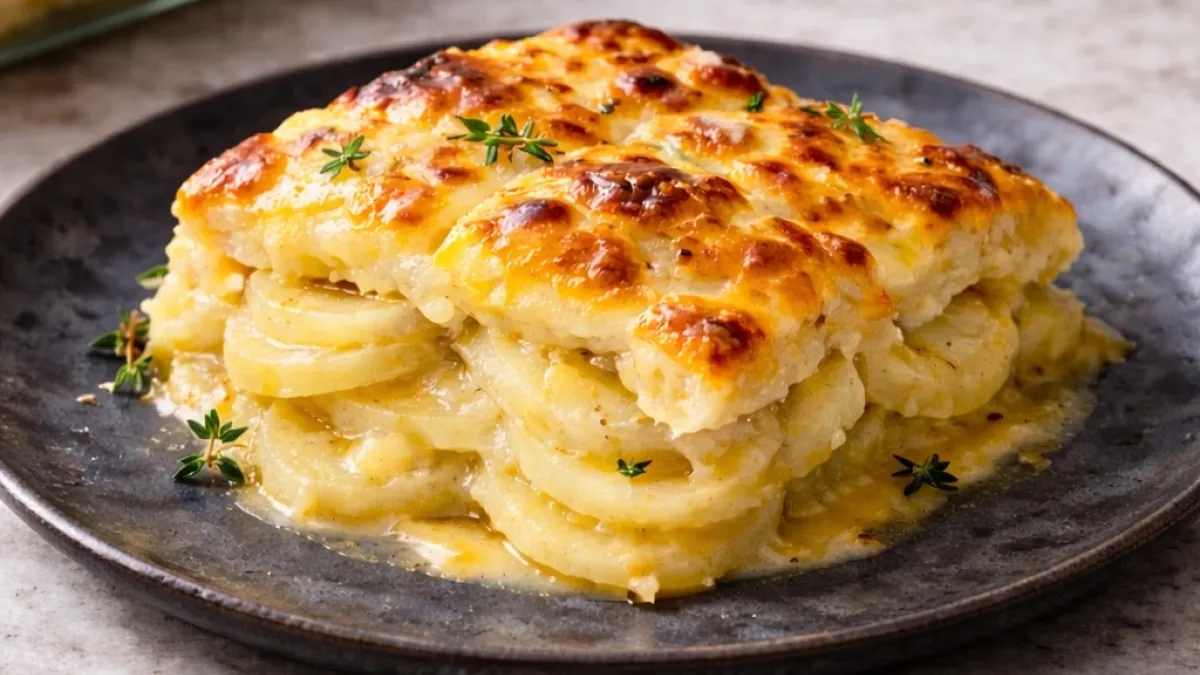
Creamy cheesy potato bake with golden crust for dinner brings layered tenderness and a clean, structured slice to the table. The top turns golden and lightly crisp, while the interior stays smooth and rich without feeling heavy. Inspired by classic gratins, it fits family meals, weekend gatherings, or a quiet evening when oven warmth becomes part of the moment.
When Cream Turns Into Structure in the Oven
The golden crust that makes potatoes the center of the table
The first thing you notice is not the cream. It’s the sound. A quiet crackle as the knife moves through the golden crust, followed by the soft resistance of layered potatoes that hold their shape instead of collapsing. A creamy potato bake promises comfort, but what makes it memorable is structure — that clean slice, that visible layering, that gentle steam rising from the center.
In many American homes, potatoes show up as mashed, fried, or roasted. A cheesy potato bake sits somewhere deeper in the rhythm of dinner — slower, oven-bound, meant for a table that gathers rather than a plate eaten standing up. It belongs to the same family as gratins and layered casseroles, dishes that transform humble ingredients into something quietly indulgent.
A Dish Rooted in Practical Luxury
This style of bake draws inspiration from European gratins, yet it has found a steady place in American kitchens. Cream, cheese, and potatoes — not extravagant, but generous. The idea is simple: starch absorbs richness, and the oven does the rest. What began as a way to stretch ingredients became a dish associated with Sunday dinners and cold evenings.
You might recognize its cousins in other comforting plates like Spaghetti Bolognese with a Slow-Simmered Sauce for Family Dinners, where time and patience build depth. Or in the understated smoothness of Creamy mashed potatoes with butter and cream – A classic side dish for all winter meals. The difference here is layering — visible, deliberate, architectural.
How It Lands on the Table
This is not a scoop-and-serve casserole. It’s cut. Lifted. Set down carefully. The slice stands upright, the melted cheese crust catching the light. The interior looks silky but defined. When served, it carries weight — visual and physical. It pairs naturally with roasted meats, but it is equally confident alone, a vegetarian dinner that feels complete without explanation.
What Makes It Different
Many potato bakes blur into softness. This one does not.
It aims for:
- A clean edge when sliced
- Cream absorbed, not pooled
- A crust that is golden, not burnt
- Layers that remain visible
The balance between moisture and structure is intentional. Too much cream and it slides apart. Too little and it dries. The sweet spot is where starch and dairy meet in quiet equilibrium.
Why It Wins People Over
- It feels generous without being heavy
- It feeds a table with minimal fuss
- It reheats beautifully
- It works as both side and main
- It delivers that unmistakable oven-baked aroma
There’s something reassuring about a dish that doesn’t try to surprise you, yet still impresses.
From the PEKIS Kitchen – What Experience Teaches
The mistake I see most often is rushing the rest. When pulled from the oven, a potato bake looks ready. It isn’t. Letting it settle is what transforms it from creamy chaos into structured comfort. The rest is where the internal temperature evens out and the starch finishes binding the dairy.
I’ve watched cooks chase deeper browning under high heat, only to lose the moisture beneath. True golden crust comes from patience, not intensity.
If you enjoy layered vegetable bakes, you’ll notice a similar philosophy in dishes like Italian-style oven-baked fennel gratin with golden crust, where surface caramelization and interior tenderness must coexist.
Creative Variations That Respect the Core
While the foundation remains constant, subtle shifts change the mood.
A touch more thyme brings brightness.
A sharper cheese sharpens the edges of flavor.
A slightly thinner slice leans toward delicacy.
Seasonally, this bake moves easily from winter comfort to early spring gatherings, especially when paired with crisp greens.
When It May Not Be Ideal
If you need a fast weeknight solution, this is not it. The oven time asks for intention. It also isn’t suited for ultra-light menus — its richness is part of its identity. For quick sides or lighter meals, simpler preparations might serve better.
Make-Ahead and Storage Rhythm
This dish welcomes preparation in advance. Baked earlier in the day and reheated gently, it maintains structure and flavor. Refrigerated slices firm up even more, making them easy to portion. Rewarming should be gradual to preserve the cream’s smooth texture.
From the PEKIS Kitchen – On Season and Perspective
There is a rhythm to dishes like this. They belong to evenings when the day slows down. The oven hum becomes background music. The scent of cream and garlic fills the kitchen before anyone sits down.
A creamy cheesy potato bake with golden crust is not dramatic. It doesn’t rely on novelty. Its strength is repetition — the confidence of a dish that tastes just as good the tenth time as the first.
- Preheat the oven to 180°C (356°F), convection mode.
- Grease a 28 × 20 cm baking dish with butter.
- Slice the potatoes evenly to 2–3 mm thickness.
- In a bowl, whisk heavy cream, milk, eggs, garlic, salt and white pepper until smooth.
- Arrange the potato slices tightly in layers in the baking dish. Sprinkle thyme evenly between layers.
- Pour the cream mixture evenly over the potatoes. Press gently to remove air pockets.
- Cover the dish with foil and bake for 45 minutes at 180°C (356°F).
- Remove the foil. Sprinkle Gruyère and mozzarella evenly over the surface.
- Bake uncovered for 25–30 minutes at 180°C (356°F) until golden.
- For deeper browning, bake an additional 3–5 minutes at 210°C (410°F).
- Remove from oven and rest for 20 minutes before slicing.
Let the bake rest before slicing — that pause is what turns cream into clean structure. I’ve seen many home cooks rush this step and lose the layered definition that makes the dish stand out. When you respect heat and timing, the golden crust and tender interior settle into balance.
I’m Chef PEKIS, a professional chef and recipe developer with over 25 years in the kitchen. I focus on clarity, structure, and repeatable results so that even classic comfort dishes feel intentional and composed on your table.
FAQ questionWhy does my potato bake turn watery at the bottom?
That usually means the potatoes released excess moisture or the dairy ratio was off. Slice evenly and avoid rinsing the potatoes after cutting — surface starch helps bind the cream. Bake long enough for the center to reach full tenderness, and always let it rest before cutting.
Chef’s tip: If you see bubbling liquid after baking, give it 5–10 extra minutes uncovered to reduce gently.
FAQ questionCan I prepare creamy cheesy potato bake ahead for a dinner party?
Yes, and it actually benefits from it. Bake it earlier in the day, cool completely, then reheat at moderate heat until warmed through. The structure becomes firmer and slices cleaner.
Chef’s tip: Cover loosely with foil during reheating so the crust stays golden but doesn’t darken too far.
FAQ questionWhat if I only have Yukon Gold potatoes instead of starchy ones?
Yukon Gold will work, but the texture will be slightly denser and less fluffy between layers. The bake may feel more compact. Keep the slices thin and avoid overloading with cream.
Chef’s tip: Add a small handful of extra grated cheese between layers to compensate for the lower starch content.
FAQ questionIs this the same as scalloped potatoes served at American holiday tables?
Not exactly. Traditional scalloped potatoes often skip the egg and focus more on a looser cream sauce. This version aims for defined layers and a structured slice rather than a spoonable casserole.
Chef’s tip: If serving at Thanksgiving or Christmas, slice neatly and plate individually instead of scooping — it elevates presentation instantly.
FAQ questionHow do I get a deeper golden crust without drying the inside?
Avoid cranking up the heat too early. Let the bake cook through fully first, then finish with a short, higher-heat phase. Browning should be the final touch, not the cooking method.
Chef’s tip: Position the dish on the upper rack for the last few minutes to intensify surface color while protecting interior moisture.
Evening settles differently when something steady is in the oven. The scent of cream and garlic lingers in the kitchen, and the quiet crackle of a golden crust signals that dinner is nearly ready. It’s the kind of warmth that doesn’t rush.
On the plate, the layered potatoes hold their shape, soft yet composed. There’s comfort in that balance — richness without heaviness, simplicity without plainness. It feels right for cooler nights, when conversation slows and the table stays set a little longer.
Nothing dramatic, nothing complicated. Just heat, time, and ingredients that understand each other. A dish like this fits into the rhythm of the season, where evenings grow quieter and food carries a steady, familiar presence.
Allergens present in the recipe:
- Milk (dairy): cream, milk, cheese
- Eggs: whole eggs
This recipe is naturally gluten-free.
Substitutions for allergens and gluten:
- Replace heavy cream and milk with lactose-free cream and milk if needed.
- Replace cheese with lactose-free cheese alternatives.
- Replace eggs with 60 ml (¼ cup) unsweetened cream cheese blended into the dairy mixture for structure.
- Calcium (mg): 420 – supports bone and dental health
- Potassium (mg): 820 – supports fluid balance and muscle function
- Vitamin B12 (µg): 1.4 – supports nerve function and red blood cell formation
- Vitamin A (µg): 280 – supports vision and immune function
- Phosphorus (mg): 450 – supports bone strength and energy metabolism
- Flavonoids (mg): 12 – contribute to cellular protection
- Carotenoids (mg): 0.4 – support immune health
- Polyphenols (mg): 18 – support antioxidant activity
Calculators
Recipes worth trying