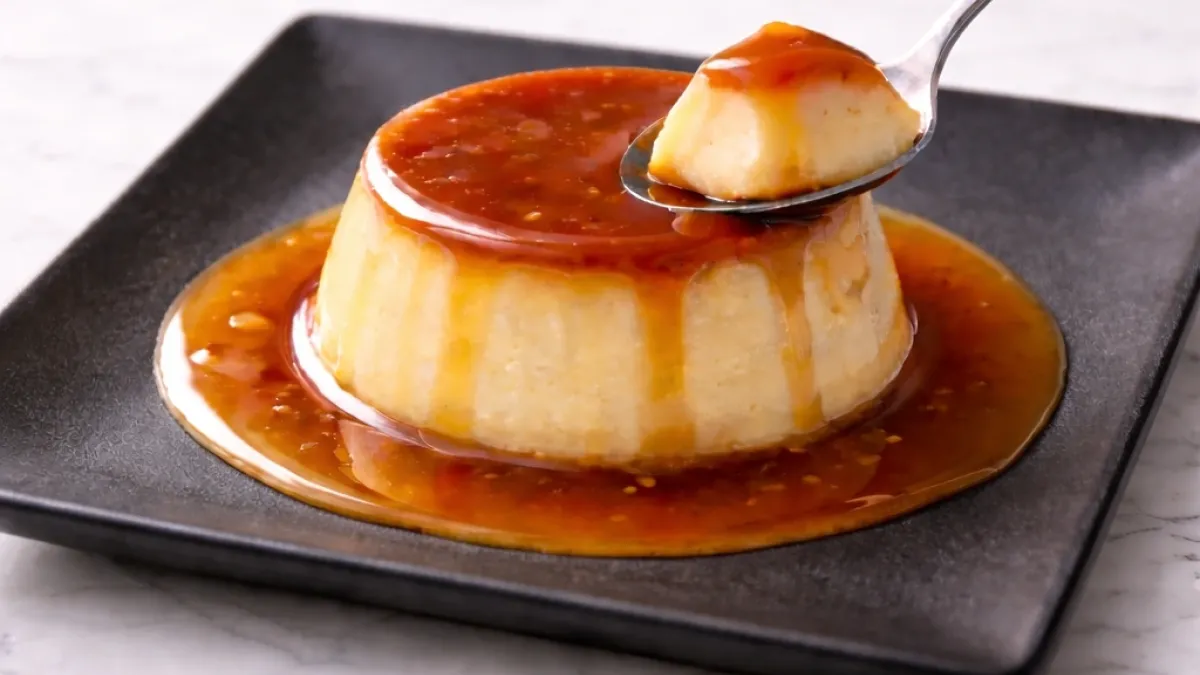
Dinner slows as a spoon slips through the smooth custard and amber caramel spreads across the plate. In a well-made Crème Caramel, the texture stays delicate yet structured, releasing a light caramel aroma with every bite. The dessert brings quiet elegance to the table, where silky cream and gently bitter caramel balance sweetness in a refined French finale.
Silky Custard Structure and Caramel Balance in a Classic French Dessert
How Crème Caramel Achieves Its Smooth Set and Flowing Sauce
A small plate arrives at the table near the end of dinner. The custard stands upright, glossy caramel slowly sliding down its sides. When the spoon presses gently through the surface, the structure yields without resistance and the caramel spreads across the plate. That moment—when the spoon breaks the smooth custard and the sauce flows—is the defining signal of a properly made crème caramel. Among classic French baked custard desserts, this dish is one of the clearest demonstrations of controlled custard coagulation and caramelized sugar balance.
The dessert relies on a quiet technical principle: eggs and dairy slowly set into a delicate structure when heated gently. The caramel, poured first into the mold, later dissolves into a thin sauce that surrounds the custard after unmolding.
Flavor and Texture Profile
Crème caramel is defined by restraint. Its sensory profile is simple but precise.
Key flavor and texture signals include:
- Silky custard body with a smooth, almost gel-like consistency
- Light caramel bitterness balancing the sweetness of the cream
- Warm vanilla aroma supporting the dairy richness
- Clean, cooling finish when served chilled
- Soft spoon resistance, indicating proper custard set
The contrast between the custard’s pale cream interior and the amber caramel sauce is also a visual cue that the dessert is correctly prepared.
Technical Logic of the Dessert
The structure of crème caramel forms through protein coagulation. Egg proteins unfold and bond together as the custard heats, creating a delicate network that traps moisture and fat.
Three mechanisms define the result:
- Protein coagulation: egg yolks thicken the custard when heated gently
- Emulsion stability: cream distributes fat evenly through the custard base
- Caramel dissolution: the hardened sugar layer melts during baking, forming the final sauce
The dessert is baked in a water bath, which stabilizes temperature and prevents rapid protein tightening that would cause curdling or grainy texture.
Difference from Similar Custard Desserts
Although often grouped with other French custards, crème caramel differs from related preparations:
- Crème brûlée: caramelized sugar crust formed after baking
- Pots de crème: thicker custard served directly in the ramekin
- Flan variations: sometimes contain starch or condensed milk
Crème caramel remains distinctive because the caramel sauce forms naturally during baking and release from the mold.
Practical Signs of Quality
A correctly prepared crème caramel shows several clear visual and structural signals:
- Glossy caramel surface without burnt bitterness
- Custard that trembles slightly when the plate is moved
- Clean edges after unmolding without cracks or collapse
- Smooth interior texture when cut or spooned
- Thin caramel sauce pooling naturally around the base
If the custard appears porous, grainy, or overly firm, the baking temperature was likely too high.
Situations Where the Dessert Is Less Suitable
Despite its elegance, crème caramel has practical limitations.
It may not be ideal when:
- the dessert must travel long distances
- service occurs in very warm environments
- rapid preparation is required before service
- plating must remain perfectly stable for extended time
Because the custard structure is delicate, strong movement or heat can affect the final presentation.
Storage and Structural Stability
Crème caramel benefits from controlled chilling after baking. Cooling allows the custard network to stabilize fully.
Best storage conditions:
- keep refrigerated in molds or ramekins
- protect from strong refrigerator odors
- consume within 48 hours for optimal texture
As the dessert rests, the caramel layer continues dissolving slightly, increasing the sauce around the custard. After extended storage, the sauce may become thinner and darker.
Professional Culinary Insight
The success of crème caramel rarely depends on ingredients alone. The decisive factor is temperature control. Custard proteins must set slowly and evenly. When heat remains gentle and stable, the custard becomes smooth, elastic, and spoonable. When heat rises too quickly, proteins tighten and expel moisture.
In professional kitchens, the dessert is respected not for complexity but for precision. The balance between custard structure, caramel fluidity, and controlled heat defines whether the result feels heavy and dense—or quiet, smooth, and perfectly set on the plate.
- Place 100 g sugar and 30 ml water in a small saucepan.
- Heat over medium heat without stirring until the sugar turns deep amber caramel.
- Immediately pour a thin layer of caramel into the bottom of four ramekins and rotate to coat.
- Preheat oven to 150 °C (300 °F).
- Heat heavy cream until steaming but not boiling.
- In a bowl whisk egg yolks, 60 g sugar and salt until smooth.
- Slowly pour the warm cream into the yolk mixture while whisking to temper the eggs.
- Add vanilla extract and mix gently.
- Strain the custard mixture through a fine sieve for a perfectly smooth texture.
- Divide the custard evenly into the caramel-lined ramekins.
- Place ramekins in a deep baking dish.
- Pour hot water into the dish until it reaches halfway up the sides of the ramekins.
- Bake in the oven for 30–35 minutes until the custard is set but slightly trembling in the center.
- Remove ramekins from the water bath and let cool at room temperature.
- Refrigerate for at least 4 hours until completely chilled.
- To serve, run a thin knife around the edge and invert onto a plate so the caramel sauce flows over the custard.
Custard should tremble gently when the ramekin is nudged; if it feels rigid, the proteins tightened too far and the custard structure lost its delicate stability. Careful water-bath heat keeps the texture smooth rather than grainy. This attention to slow coagulation and controlled sweetness is how desserts like crème caramel stay balanced on the plate. That quiet precision reflects the daily kitchen practice of Chef PEKIS, refining classical custards into reliable results through disciplined temperature control and patience.
FAQ questionHow can I tell when crème caramel is properly set in the oven?
A finished custard should look firm at the edges but still show a gentle wobble in the center when the ramekin is moved. The surface must stay smooth and glossy without bubbles or cracks. If the center looks completely rigid, the proteins have over-tightened.
Chef’s tip: Slide the baking dish slightly—if the center trembles like soft gelatin, it is ready to cool.
FAQ questionWhy is baking crème caramel in a water bath important?
A water bath stabilizes the temperature and protects the custard from direct oven heat. Without it, the mixture can cook too quickly, causing grainy custard texture or curdling. Water surrounds the ramekins and keeps the heat even, allowing the egg proteins to set slowly.
Chef’s tip: The water should reach about halfway up the ramekins and remain hot throughout baking.
FAQ questionWhat should I do if my caramel sauce turns bitter or too dark?
Caramel passes quickly from golden to burnt. If it becomes too dark, the flavor develops strong bitterness that overwhelms the custard. The best approach is to stop heating once the sugar reaches a deep amber color and immediately pour it into the molds.
Chef’s tip: Watch for light smoke and a copper color—that is the moment to remove the caramel from heat.
FAQ questionCan crème caramel be made with milk instead of heavy cream?
Yes, but the texture changes noticeably. Milk produces a lighter custard with less richness and a slightly softer structure. Cream adds fat, which stabilizes the custard emulsion and creates the silky mouthfeel typical of classic French versions.
Chef’s tip: If using milk, bake more gently and expect a softer set.
FAQ questionWhy does crème caramel release easily from the mold after chilling?
During baking and resting, the hardened caramel layer gradually dissolves and becomes a thin syrup. This syrup separates the custard from the mold, allowing it to slide out cleanly when inverted.
Chef’s tip: Chill the custard fully before unmolding—the cold custard contracts slightly, helping it release neatly.
Evening settles quietly after the plates are cleared. The last spoon marks remain in the caramel on the dish, catching the soft light from the kitchen. There is a calm satisfaction in that moment of stillness, when conversation slows and the table rests.
Outside, the air feels cooler, carrying the faint scent of night. Inside, the lingering aroma of caramel and warm cream hangs gently in the room. The day has moved forward, and the rhythm of the house becomes slower, softer.
Some desserts leave behind noise and sweetness that lingers too loudly. Others leave a quieter trace. A custard like this belongs to the second kind—measured, balanced, finished with a sense of calm.
The kitchen lights dim. Plates are stacked, the window reflects the last amber tones of evening, and the room returns to its familiar quiet.
- Eggs: present in egg yolks; substitute with egg-free custard base using cornstarch and plant milk.
- Milk: present in heavy cream; substitute with coconut cream or oat cream for dairy-free version.
- Gluten: naturally gluten-free; ensure all ingredients are certified gluten-free if required.
- Vitamin A: 390 µg – supports vision, immune function and skin health.
- Vitamin B12: 1 µg – important for nerve function and red blood cell formation.
- Calcium: 160 mg – contributes to bone strength and muscle function.
- Phosphorus: 150 mg – supports cellular energy production and bone structure.
- Potassium: 210 mg – helps maintain fluid balance and heart rhythm.
- Caramelized sugar compounds: 12 mg – contribute mild antioxidant activity formed during caramelization.
- Vanilla polyphenols: 4 mg – help neutralize free radicals and support aroma complexity.
- Milk peptides: 8 mg – provide minor antioxidant activity supporting cellular protection.
Calculators

Recipes worth trying