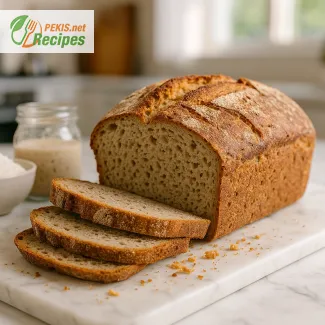
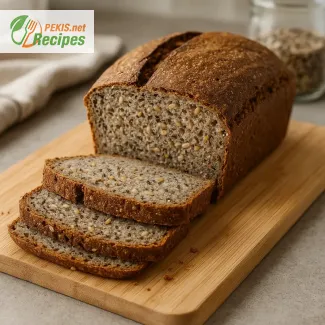
Low-Carb Almond Flour Protein Bread with a Soft, Moist Crumb brings back the familiar comfort of everyday bread with a clean, balanced taste and a tender, resilient crumb. Mildly nutty and easy to pair, it suits toast, sandwiches, or simple spreads, offering a modern low-carb loaf that feels natural in daily meals rather than like a substitute.
Soft Structure, Real Bread Feel
A low-carb loaf that slices, springs, and satisfies
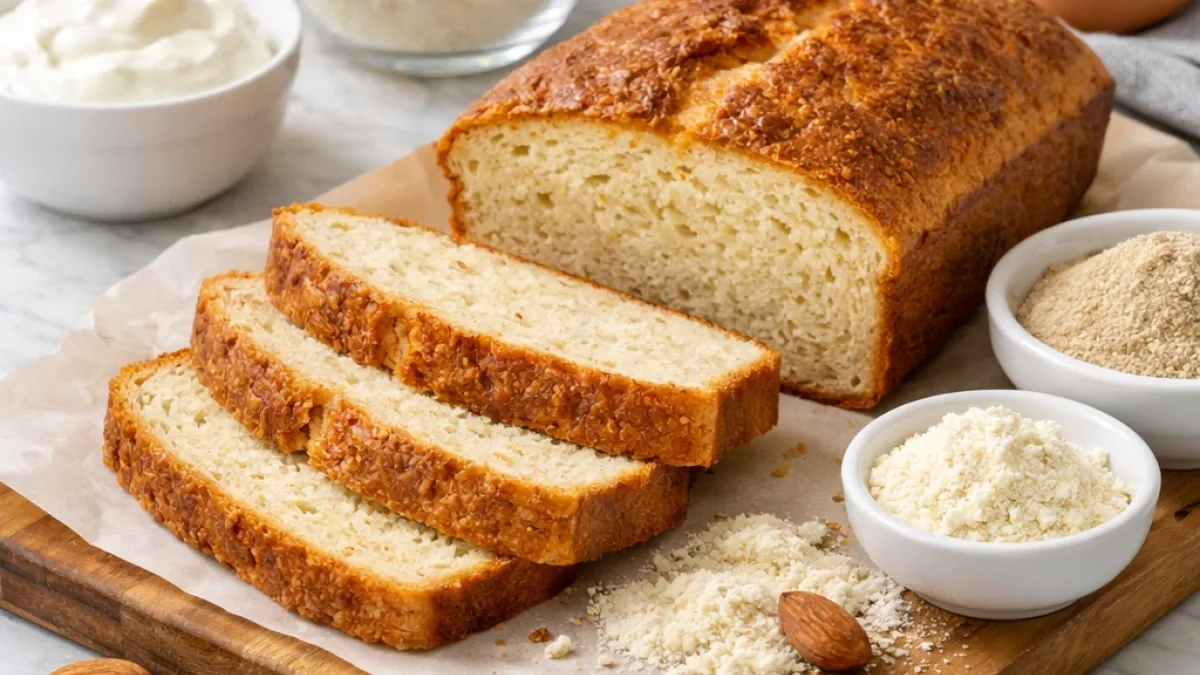
The first slice of Low-Carb Almond Flour Protein Bread with a Soft, Moist Crumb bends slightly under the knife, then gives way with a gentle resistance. The crumb is supple, close, and quietly elastic, closer to everyday sandwich bread than to the brittle loaves often associated with low-carb baking. Warm or cooled, it carries a mild nutty aroma and a clean finish that doesn’t dominate what you pair it with.
In English-speaking kitchens, this style of bread answers a familiar problem: wanting real bread texture without heaviness. It’s the kind of loaf that fits naturally into weekday routines—morning toast, a quick lunch sandwich, or a late-afternoon slice with butter—without feeling like a compromise.
Served simply, it feels most at home lightly toasted, where the surface turns delicately golden while the inside stays tender. It holds spreads smoothly, doesn’t crumble under pressure, and keeps its shape whether sliced thin for breakfast or thicker for an open sandwich. The experience is calm, practical, and reassuring.
What sets this bread apart is restraint. The flavor stays neutral and balanced, letting toppings lead. The crumb stays moist without gumminess, a rare balance that makes it useful beyond novelty baking. This isn’t a showpiece loaf—it’s a dependable one.
Why you’ll love it
- Soft, sliceable crumb that feels familiar
- Neutral flavor that works sweet or savory
- Reliable structure for sandwiches and toast
- Everyday usability, not just occasional baking
PEKIS Chef’s insight
Texture is memory. When bread feels right in the hand, the brain relaxes. This loaf was shaped around that idea—structure first, flavor second, restraint always.
Creatively, it adapts well to seasonal habits. In spring and summer, it pairs effortlessly with fresh spreads and light fillings. In colder months, it toasts beautifully and carries warmth without heaviness. It also sits comfortably alongside other modern breakfast staples like High-Protein Breakfast Waffles with 30g Protein per Serving Easy, offering contrast without overlap.
It’s not ideal when you’re chasing dramatic crust or rustic chew—this bread isn’t about bold fermentation or crackling edges like a classic sourdough. For that experience, a loaf such as Gluten-free sourdough bread without xanthan gum for perfect rise speaks a different language.
For make-ahead cooking, this bread shines. It keeps its softness over time, slices cleanly after cooling, and reheats without drying. Stored properly, it remains practical through the week—something many low-carb loaves fail to do.
PEKIS Chef’s insight
Good bread doesn’t need to announce itself. Like techniques explored in Fluffy Bread with Tangzhong Method – Secrets to Softer Homemade Loaves, softness is built quietly, layer by layer. When the crumb behaves, everything else falls into place.
For lighter mornings or alternative formats, it also complements airy options such as Cloud Bread Breakfast Sandwich – Low-Carb Keto Sandwich for Breakfast, giving your table variety without redundancy.
- Preheat the oven to 175 °C (350 °F) and line a standard loaf pan with baking paper.
- In a large bowl, mix almond flour, whey protein isolate, psyllium husk powder, baking powder, and salt until evenly combined.
- In a separate bowl, whisk eggs, Greek yogurt, water, apple cider vinegar, and olive oil until smooth.
- Pour the wet mixture into the dry ingredients and mix until a thick, uniform batter forms.
- Let the batter rest for 5 minutes to allow full hydration.
- Transfer the batter into the prepared loaf pan and smooth the surface.
- Bake for 60–65 minutes until firm and lightly golden.
- Remove from the oven and let rest in the pan for 10 minutes, then transfer to a rack to cool completely.
A good tip for this loaf: slice it only once fully cooled—this keeps the soft, moist crumb intact and makes every slice feel balanced and natural. I approach breads like this with a focus on texture first, because that’s what decides whether a loaf becomes part of everyday cooking or not.
Created by Chef PEKIS, a professional chef and recipe developer with over 25 years of hands-on experience. Every recipe reflects practical kitchen knowledge, careful testing, and a clear goal: food that fits naturally into real home routines.
FAQ questionWhy does my loaf feel dense even though it’s fully baked?
Density usually comes from under-hydration or cutting too early. This bread needs time to set its crumb as it cools. Chef’s tip: let it rest until completely cool, then slice with a smooth, long knife motion—no sawing. The texture improves noticeably after a few hours.
FAQ questionCan I toast this bread without drying it out?
Yes, but gentle heat matters. Toasting brings out a light nuttiness while keeping the inside tender. Chef’s tip: use a medium setting and toast once, not twice. Over-toasting is the fastest way to lose moisture.
FAQ questionWhat’s the most common mistake people make with this recipe?
Rushing the mix. Skipping the short rest after combining the batter prevents full hydration. Chef’s tip: give the batter a few quiet minutes before baking—this single pause makes the crumb more elastic and sliceable.
FAQ questionIs this bread better for sweet or savory toppings?
It’s intentionally neutral, so both work. In many English kitchens, it shines with simple savory spreads or breakfast fillings, but it also carries honey or nut butter well. Chef’s tip: think of it as a base bread, not a flavored loaf—let the topping do the talking.
The loaf settles into daily life quietly, becoming part of a morning routine or a slow lunch break. Its soft crumb and clean flavor create space rather than demand attention, fitting naturally into moments when food is meant to support, not interrupt.
There’s a calm confidence in bread that behaves as expected. Sliced, toasted, or left plain, this low-carb almond flour bread feels steady and familiar, especially when days call for balance instead of excess.
It pairs well with seasonal habits—lighter in spring, grounding in cooler months—without needing adjustment or reinvention. That sense of ease is what keeps it returning to the table, week after week.
In the end, it’s less about innovation and more about simplicity done well, the kind that quietly earns its place in everyday kitchens.
- Eggs: present
- Milk (dairy): present (Greek yogurt, whey protein)
- Tree nuts: present (almond flour)
- Gluten: not present
Substitutions:
- Replace Greek yogurt with lactose-free yogurt to reduce lactose.
- Use egg-free liquid egg substitute for egg sensitivity (structure will be slightly softer).
- Replace whey protein isolate with pea protein isolate for dairy-free version.
- Vitamin E (mg): 3.2 – supports skin health and antioxidant protection
- Vitamin B12 (µg): 0.9 – contributes to normal energy metabolism
- Calcium (mg): 95 – supports bone strength
- Magnesium (mg): 55 – important for muscle and nerve function
- Phosphorus (mg): 160 – supports bone and cellular health
- Vitamin E compounds (mg): 3.2 – help protect cells from oxidative stress
- Phenolic compounds (mg): 45 – contribute to anti-inflammatory effects
Calculators


Recipes worth trying