Moist Caramelized Pear Cake brings the quiet charm of French home baking to the table, where ripe pears melt into soft caramel and a tender crumb that yields at the lightest touch. There’s comfort in every slice, rooted in seasonal fruit and simple pantry ingredients, yet elevated by deep caramel notes and a texture that stays airy, rich, and inviting long after it cools.
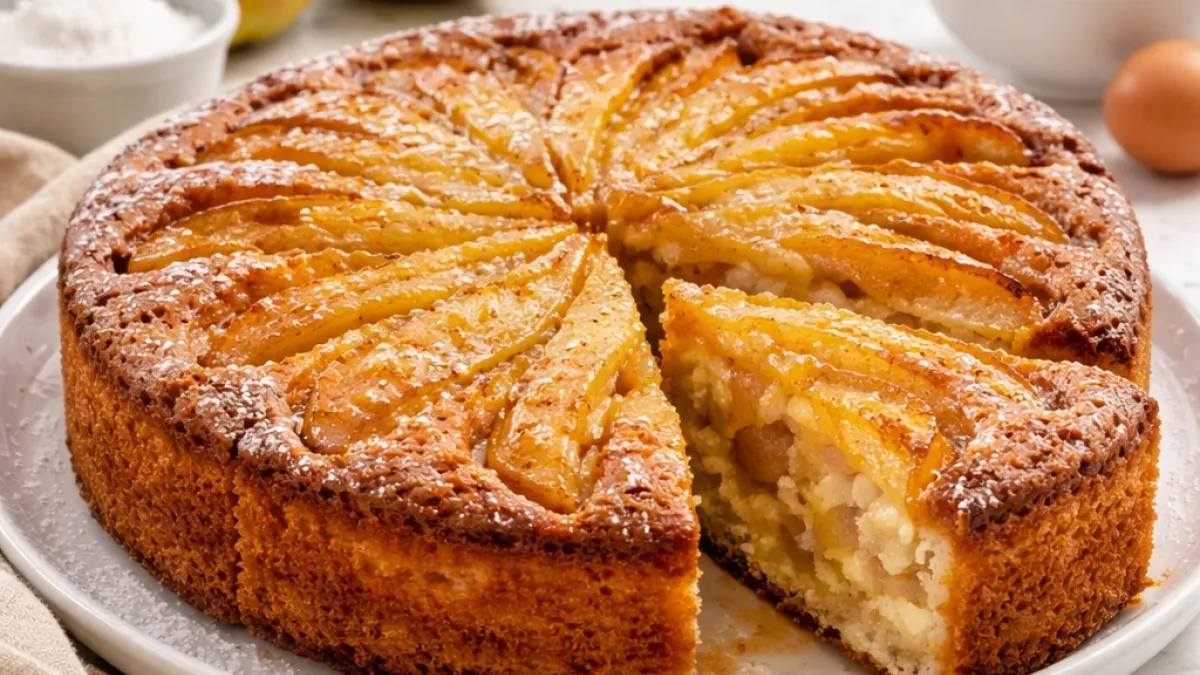
A Soft French Pear Cake with Deep Caramel Notes
An elegant winter dessert built on ripe pears and tender crumb
Warm, silky, and quietly indulgent, this caramelized pear cake leans into comfort without losing its sense of elegance. The first forkful sinks effortlessly through a moist, airy crumb, releasing the mellow sweetness of pears that have slowly melted into caramel tones. There’s a familiar emotion here—calm, reassurance, a hint of nostalgia—balanced by the refinement that defines classic French desserts. Pears bring softness and juiciness, caramel adds depth, and the cake structure holds everything together in a way that feels both generous and precise.
The texture is where this dessert truly speaks. Moelleux in the French sense means more than soft; it’s a cake that stays tender from edge to center, never dry, never heavy. Pears gently collapse as they bake, infusing the batter with natural moisture, while caramelization sharpens their sweetness into something richer and more complex. Each slice holds its shape yet yields instantly, a contrast that makes the dessert feel carefully crafted rather than rustic.
A brief look at the roots of pear cakes
Pear-based cakes have long appeared in French home baking, especially during colder months when apples and pears dominate fruit baskets. Unlike showy pâtisserie creations, these cakes were designed for everyday tables—simple batters enriched by seasonal fruit. Over time, caramelized pears became a way to elevate the idea, adding intensity without complicating the method. This balance between simplicity and refinement is exactly what keeps the dessert timeless.
How the key ingredients shape the result
Pears play a structural role as much as a flavorful one, releasing moisture that keeps the crumb tender. Sugar transforms under heat, creating caramel notes that round out the fruit’s freshness. Fat enriches the batter, ensuring softness, while eggs bind everything into a smooth, stable structure. Together, these elements create a cake that feels light on the palate but deeply satisfying.
For visual inspiration and a different artistic take on baked fruit, there is also a recipe available for Baked Apple Roses: A January Dessert Art, where fruit becomes both flavor and decoration.
Storage and make-ahead practicality
This pear cake keeps its moist texture remarkably well. Stored properly, it stays tender for several days, making it suitable for advance preparation. The flavors often deepen overnight as the caramel notes settle into the crumb, which makes it an excellent choice for planned gatherings or relaxed weekend desserts.
Serving context and pairing ideas
Served slightly warm, the cake feels comforting and rich; at room temperature, it becomes more refined and subtle. It pairs naturally with sauces that echo its softness, such as a Silky homemade vanilla sauce recipe for desserts and puddings, which enhances the pear aroma without overpowering it. For colder evenings, the mood aligns beautifully with cozy baked fruit desserts like Warm Apple Cinnamon Crumble for Cold January Nights.
Why this cake works so well
- Moist texture that stays tender over time
- Natural sweetness from pears balanced by caramel depth
- Elegant appearance without complex techniques
- Familiar flavors presented in a refined form
Creative variations to explore
- Swap part of the caramel profile with honey notes for a softer sweetness
- Introduce warm spices subtly to accent the pears
- Serve alongside fruit-forward cakes like Moist Apple Cinnamon Yogurt Cake – Easy Homemade Dessert Recipe for a seasonal dessert table
- Adjust pear preparation to highlight either juiciness or deeper caramel tones
This dessert sits comfortably between everyday baking and special-occasion elegance, offering a French pear cake that feels timeless, inviting, and quietly confident in its simplicity
- Preheat the oven to 170 °C (338 °F). Grease a round cake pan with a diameter of 24 cm (9.5 inch) using the extra butter.
- Place the sliced pears in a wide pan, sprinkle with 20 g sugar, and cook over medium heat for 6–8 minutes until lightly caramelized. Add the lemon juice, stir gently, then remove from heat and let cool slightly.
- Melt 120 g butter gently and allow it to cool until lukewarm.
- In a large bowl, whisk the eggs with 180 g sugar until pale and slightly thickened.
- Add the melted butter and vanilla extract, mixing until smooth.
- In a separate bowl, combine flour, baking powder, and salt. Gradually fold the dry ingredients into the batter until just incorporated.
- Gently fold half of the caramelized pears into the batter.
- Pour the batter into the prepared pan and evenly distribute the remaining pears on top.
- Bake for 45 minutes, until golden and a toothpick inserted in the center comes out clean.
- Let the cake cool in the pan for 15 minutes, then transfer to a rack to cool completely before slicing.
A quick tip before you start: let the caramelized pears cool slightly before folding them into the batter. This keeps the crumb light and prevents excess moisture from weighing the cake down. Small details like this make a big difference, especially with soft, fruit-based cakes that rely on balance rather than technique.
This recipe comes from Chef PEKIS – a professional chef and recipe developer with over 25+ years of experience. Every dish is created with a practical home kitchen in mind, tested through repetition, adjusted for consistency, and written so it feels natural to cook, not staged or complicated.
FAQ questionHow do I keep Moist Caramelized Pear Cake from turning soggy?
The key is managing pear moisture and caramel temperature. Cook the pear slices until they look lightly glossy and slightly reduced—this drives off excess water while building flavor. Then let the pears cool a bit before mixing them into the batter, so they don’t melt the structure or create wet pockets. Also measure flour accurately; too little flour can make the crumb collapse and feel damp. Finally, cool the cake on a rack so steam can escape—trapped steam is a common reason for a gummy center.
FAQ questionWhich pears work best for caramelizing in a cake?
Choose pears that are ripe but still firm. If they’re too soft, they break down into puree during caramelizing and can flood the batter. Bartlett/Williams can work if slightly firm; Conference pears are great for holding shape; Bosc-style pears are excellent because they stay structured under heat. You want slices that caramelize, soften, and still keep definition so the finished cake has fruit pockets instead of a wet layer.
FAQ questionCan I make this pear cake ahead of time for guests?
Yes, and it often tastes even better the next day. The caramel notes deepen and the crumb settles into a more even tenderness overnight. Bake, cool completely, then store airtight at room temperature. If your kitchen is warm, refrigerate, but bring slices back to room temperature for the best texture. For a “fresh-baked” feel, warm slices briefly so the cake feels soft and fragrant again.
FAQ questionWhy did my cake sink in the middle after baking?
Most sinking comes from the structure not setting in time. Common causes: underbaking, opening the oven too early, overmixing the batter, or using pears that released too much liquid. Make sure the center is done—look for a clean toothpick and a top that springs back lightly. Mix just until the flour disappears to avoid weakening the crumb. If your pears are very juicy, caramelize them a little longer to reduce moisture and strengthen the cake’s internal support.
FAQ questionHow do I get a truly tender, “moelleux” texture?
Focus on gentle mixing and correct fat temperature. Whisk eggs and sugar until slightly thickened to trap air, then add melted butter that’s lukewarm, not hot. Fold in dry ingredients carefully; overmixing develops gluten and makes the cake tighter. Also avoid overbaking—pull the cake when it’s set but still soft in the center, because it continues cooking as it cools.
FAQ questionCan I make this recipe gluten-free or dairy-free without losing texture?
You can, with smart swaps. For gluten-free, use a reliable gluten-free all-purpose blend designed for cakes; it helps mimic wheat’s structure. For dairy-free, replace butter with a quality plant-based alternative that behaves similarly in baking. Keep an eye on moisture: some gluten-free blends absorb differently, so the batter may need a short rest before baking to hydrate evenly. Done well, you still get a tender crumb and clear caramel-pear flavor.
FAQ questionWhat’s the best way to serve caramelized pear cake for an elegant finish?
Serve slightly warm or at room temperature, and keep the presentation simple. A clean slice shows off the pears on top and the moist crumb inside. For a classic French touch, pair it with vanilla sauce or a light cream accompaniment. If you’re plating for guests, warm the slice briefly, add sauce beside (not over) the cake, and let the caramelized pear topping stay visible—those glossy pears are the cake’s natural decoration.
Moist Caramelized Pear Cake captures the kind of quiet elegance that defines memorable home baking. The balance between caramelized pears and a soft, yielding crumb creates a dessert that feels refined without losing its warmth. Every slice reflects careful handling of simple ingredients, where texture and flavor work together rather than compete.
The appeal lies in how naturally the cake fits different moments. It works just as well as a relaxed afternoon treat as it does on a neatly set table after dinner. The pears stay present and juicy, the caramel notes deepen gently, and the cake remains moist and tender long after baking, which makes it dependable and versatile.
Technique matters, but not in a way that feels demanding. Small choices—cooling the fruit, mixing gently, baking with patience—shape a result that feels intentional. This approach keeps the crumb light, the structure stable, and the overall impression balanced and clean.
What stays with you is the texture. The contrast between the delicate interior and the slightly caramelized top gives each bite character. It’s a dessert built on seasonal fruit, thoughtful preparation, and the kind of simplicity that never feels plain.
Allergens present in the recipe:
- Eggs: provide structure and richness
- Milk (butter): contributes to tenderness and flavor
- Gluten (wheat flour): gives the cake its crumb
Allergen and gluten substitution tips:
- Butter: replace with plant-based margarine to remove dairy
- Eggs: use a commercial egg replacer or applesauce (60 g per egg)
- Wheat flour: substitute with a gluten-free all-purpose flour blend
- Vitamin C (mg): 6 – supports immune function
- Vitamin A (µg): 120 – contributes to normal vision
- Potassium (mg): 180 – supports muscle and nerve function
- Calcium (mg): 45 – important for bone health
- Iron (mg): 1.4 – supports oxygen transport in the blood
- Polyphenols (mg): 110 – help protect cells from oxidative stress
- Flavonoids (mg): 35 – support cardiovascular health
- Carotenoids (mg): 0.8 – contribute to cellular protection
Calculators

Recipes worth trying