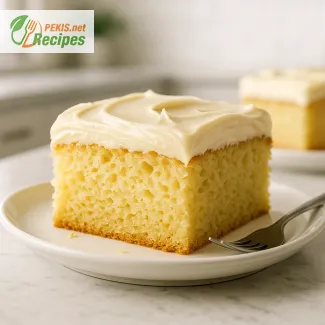
A warm, buttery aroma fills the kitchen as the Ultra Moist Vanilla Sheet Cake with Silky Buttercream rises into a soft, tender crumb that almost melts on the fork. Born from classic American sheet-cake traditions, this vanilla-rich sponge carries a comforting sweetness, topped with a smooth, velvety buttercream that adds a luxurious finish to every bite.
A small reminder that makes a big difference: when working with a buttercream-frosted vanilla cake, always let the sponge cool fully so the frosting stays silky and never melts into the crumb. If you enjoy mastering smooth textures and perfectly balanced flavors, you can learn more about PEKIS and the craft behind consistent results in everyday baking.
PEKIS – a professional chef and recipe developer with more than 25 years of experience in cooking and baking, specializing in European and international cuisine.
Vanilla Sheet Cake Celebration Layers and Silky Cream Moments
A soft, tender vanilla bake wrapped in smooth buttercream comfort
Warm sweetness drifts through the kitchen the moment the vanilla batter hits the pan, carrying that unmistakable buttery aroma that feels like opening a childhood memory. Each slice of this sheet cake sinks gently under the fork, revealing a pillowy crumb that stays moist long after it cools. The surface holds a faint golden sheen, ready to be smothered in silky buttercream that melts into every corner. There’s something comforting about this combination—the simplicity, the softness, the quiet luxury of a cake that feels familiar yet indulgent. Vanilla, when treated right, becomes more than a flavor; it becomes a texture, a mood, a small celebration on its own.
Behind this dessert stands a lineage of American home-baking traditions, where sheet cakes became a staple because they fed large gatherings with minimal fuss. As recipes traveled across regions, bakers refined the balance between fat, liquid, and vanilla extract to create that unmistakable tenderness. Modern versions embraced a higher moisture ratio, creating the lush crumb that makes this style so beloved today. The buttercream follows its own lineage—creamy, whipped, almost satin-like, clinging softly to the sponge without overwhelming it.
Baking a cake like this is about layering textures. Fat brings richness and softness, while sugar binds moisture and helps the crumb stay supple. Vanilla provides warmth and depth, especially when combined with a balanced amount of salt to highlight sweetness. The buttercream transforms the entire experience, adding smoothness that contrasts with the airy sponge. If you’d prefer something even creamier to drizzle over slices, there is also a beautifully smooth vanilla sauce available in the recipe for Silky homemade vanilla sauce recipe for desserts and puddings—a great companion for anyone craving an extra layer of flavor.
The charm of this cake lies in how forgiving and adaptable the core ingredients are. Flour stabilizes the structure, eggs bring a plush lift, and butter creates that delicate melt-in-your-mouth feel. Each component plays a subtle role in shaping the final texture. Moisture levels matter; too little and the cake becomes dry, too much and it loses its body. Striking the right balance is what turns a simple vanilla sheet cake into a decadent, ultra-moist centerpiece worthy of special occasions.
Why this recipe feels so special
- Soft, plush crumb that stays moist for days
- Silky buttercream layer that enhances vanilla depth
- Easy to portion for gatherings and celebrations
- Versatile base for fruit toppings, sprinkles, or drizzle
- Familiar flavors with a refined, bakery-style texture
Storing and making ahead
This sheet cake holds its structure well, making it ideal for advance preparation. Once cooled and frosted, it stays tender when refrigerated in an airtight container. The buttercream can be prepared a day earlier and whipped briefly before spreading. Individual slices also freeze beautifully, maintaining their creamy softness after thawing.
Flavor notes and ingredient impact
Understanding how each component interacts helps create the perfect moisture level and texture:
- Butter builds richness and delicate softness.
- Sugar locks in moisture and promotes a gentle crust.
- Eggs create lift and stability in the crumb.
- Vanilla deepens sweetness with aromatic warmth.
- Milk or buttermilk enhances tenderness and keeps the sponge velvety.
- Buttercream adds a creamy layer that contrasts with the airy sponge.
For an optional finishing element, the frosting pairs beautifully with cream-based toppings. A second option worth exploring is the smooth frosting variation found in Magic Cream – Homemade Frosting for Cakes and Cupcakes, which adds a luscious, whipped texture ideal for creative decorating.
Creative variations
- Add thin layers of fresh berries between the cake and buttercream.
- Infuse the batter with almond extract for a warm, nutty undertone.
- Swirl salted caramel over the frosting for contrast.
- Top with crunchy sprinkles for a celebration-ready finish.
- Replace part of the buttercream with vanilla custard for a creamier interior.
Ingredient and texture insights
Working with vanilla-based bakes brings together foundational baking elements: vanilla extract, high-quality butter, fine-crumb flour, and smooth emulsification. Moisture retention, sugar crystallization, fat distribution, and air incorporation all shape the tender sponge. The buttercream’s creamy, whipped consistency complements the cake’s airy structure, creating a harmonious balance between lightness and richness.
Additional notes for better results
- Mixing until just combined prevents toughness.
- Spreading batter evenly helps maintain level baking.
- Cooling completely before frosting keeps the buttercream silky.
- Using room-temperature ingredients improves texture consistency.
- Preheat the oven to 175°C (Fahrenheit 347°F). Line a sheet pan (approximately 33 × 23 cm (13 × 9 inch)) with parchment paper and lightly grease the sides for even rising.
- In a large mixing bowl, beat the softened butter and sugar until light and fluffy. The mixture should turn pale and slightly aerated.
- Add the eggs one at a time, mixing well after each addition to maintain a smooth texture without curdling.
- Pour in the vanilla extract and mix until fully incorporated.
- In a separate bowl, combine flour, baking powder and salt. Whisk briefly to distribute the leavening agent evenly.
- Add the dry ingredients to the butter mixture in two additions, alternating with the milk. Mix gently until smooth but avoid overmixing to maintain a tender crumb.
- Spread the batter evenly into the prepared pan, smoothing the top.
- Bake for 25 minutes or until the center springs back when pressed lightly. A toothpick should come out clean.
- Allow the cake to cool completely in the pan before adding the frosting.
- For the buttercream, beat the softened butter until creamy and pale. Gradually add powdered sugar, mixing continuously until smooth.
- Add heavy cream, vanilla extract and salt, then whip until the frosting becomes silky and spreadable.
- Spread the buttercream evenly over the cooled cake using an offset spatula. Smooth the top or create gentle swirls depending on your preferred finish.
- Slice into 12 even portions and serve.
FAQ questionHow do I keep my vanilla sheet cake ultra moist, not dry?
Moisture starts with the right fat-to-liquid ratio and gentle mixing. Use enough butter for richness, but balance it with milk or buttermilk to keep the crumb tender. Avoid overmixing once the flour is added, as this develops gluten and makes the cake dense. Bake just until the center springs back and a toothpick comes out with a few moist crumbs, not completely dry. Let it cool in the pan, then cover once cool to lock in natural steam and softness.
FAQ questionWhy is my buttercream grainy instead of silky smooth?
Grainy buttercream usually comes from undissolved sugar or cold butter. Always start with very soft, room-temperature butter, then beat it until pale and fluffy before adding powdered sugar gradually. If the mixture looks rough or sandy, keep whipping; friction will help the sugar melt into the fat. A small splash of cream and a few extra minutes of mixing can transform the texture into a silky, spreadable frosting. Avoid using granulated sugar, which rarely becomes smooth in this style of buttercream.
FAQ questionCan I bake the vanilla sheet cake ahead and frost it later?
Yes, this style of cake is perfect for make-ahead baking. Once the sheet cake is completely cool, wrap it tightly in plastic or store it in an airtight container so it doesn’t lose moisture. You can keep it at room temperature for a day or refrigerate it for 2–3 days. Frost the cake with freshly whipped buttercream shortly before serving for the best texture contrast between soft crumb and creamy frosting. The buttercream layer also helps protect the sponge from drying out.
FAQ questionHow can I adapt this sheet cake for birthdays or celebrations?
This cake is a great blank canvas. You can tint the buttercream with gel colors, add sprinkles on top, or layer thin slices of fresh berries between the cake and frosting. For a more elegant finish, pipe decorative borders or rosettes around the edges. The neutral, vanilla-forward flavor pairs well with fruit sauces, chocolate drizzles or a spoonful of warm vanilla sauce on the plate. Its easy slicing makes it ideal for parties where you need clean, even portions.
FAQ questionWhat’s the secret to a fine, tender crumb in a vanilla sheet cake?
A fine crumb relies on proper mixing and ingredient temperature. Use room-temperature ingredients so they emulsify smoothly and trap small air bubbles in the batter. Cream the butter and sugar until light and fluffy, then add eggs slowly to keep the mixture stable. Sift or whisk the dry ingredients to distribute the baking powder evenly, then fold them in gently. Baking at a steady, moderate temperature helps the cake rise evenly and prevents a coarse or crumbly texture.
FAQ questionCan I change the frosting without losing the character of the cake?
You can easily switch the frosting while keeping the cake’s vanilla identity. A classic choice is a lighter whipped cream–style topping or a richer custard-based cream. For even more variety, consider a smooth vanilla sauce similar to the one used in a silky dessert topping, or a versatile frosting like Magic Cream that can be flavored with citrus, coffee or chocolate. The key is to maintain a creamy, smooth contrast to the soft sponge so every bite feels balanced and indulgent.
A well-made vanilla sheet cake brings together softness, balance and a comforting sense of familiarity. Each component plays its part: the moist crumb, the warm vanilla aroma and the silky buttercream that completes every slice. These elements create a dessert that feels simple but still deeply indulgent, making it a dependable choice for gatherings or quiet evenings at home.
The structure of the cake rewards careful preparation. Gentle mixing preserves the light texture, while controlled baking keeps the sponge tender. The frosting adds a contrasting layer of richness, turning a straightforward vanilla base into something memorable. This harmony of textures is what gives the cake its character and lasting appeal.
Its adaptability makes it even more attractive. With subtle adjustments, the same foundation becomes the backdrop for seasonal toppings, fruit layers or flavored creams. The neutral profile allows the vanilla notes to shine while welcoming creative additions. This flexibility helps the sheet cake fit into many occasions without losing its identity.
The combination of reliability and ease ensures that each bake feels rewarding. A consistent result, supported by thoughtful technique, creates a dessert that is both approachable and refined. The balance between creamy frosting and tender sponge remains the defining element, giving this recipe a timeless place in the kitchen.
Allergens present in the recipe:
- Gluten – from all-purpose flour
- Eggs – used in the cake base
- Milk – butter, milk, heavy cream
- Lactose – dairy-based ingredients
How to remove allergens or gluten:
- Replace wheat flour with a certified gluten-free cake flour blend.
- Use lactose-free milk and dairy-free butter alternatives for a milk-free version.
- Substitute eggs with a professional egg replacer suitable for baking.
- Ensure the powdered sugar is certified gluten-free and dairy-free.
- Vitamin A (µg): 310 – supports vision and skin health
- Calcium (mg): 62 – contributes to bone strength
- Iron (mg): 1.4 – essential for normal oxygen transport
- Potassium (mg): 98 – supports normal muscle function
- Magnesium (mg): 12 – aids energy metabolism
- Phosphorus (mg): 75 – important for bone and cell health
- Vanillin (mg): 8 – provides mild antioxidant effects
- Beta-carotene (mg): 0.12 – linked to immune support
- Polyphenols (mg): 18 – contribute to cell protection
- Flavonoids (mg): 5 – support cardiovascular well-being
Recipes worth trying