Potato gratin captures the quiet pleasure of thinly sliced potatoes baked slowly in cream until the layers soften into a unified, silky interior beneath a golden crust. Rooted in European home kitchens, this dish balances patience and simplicity, where butter, dairy, and gentle heat transform humble ingredients into a deeply comforting texture that feels rich, warm, and unmistakably familiar.
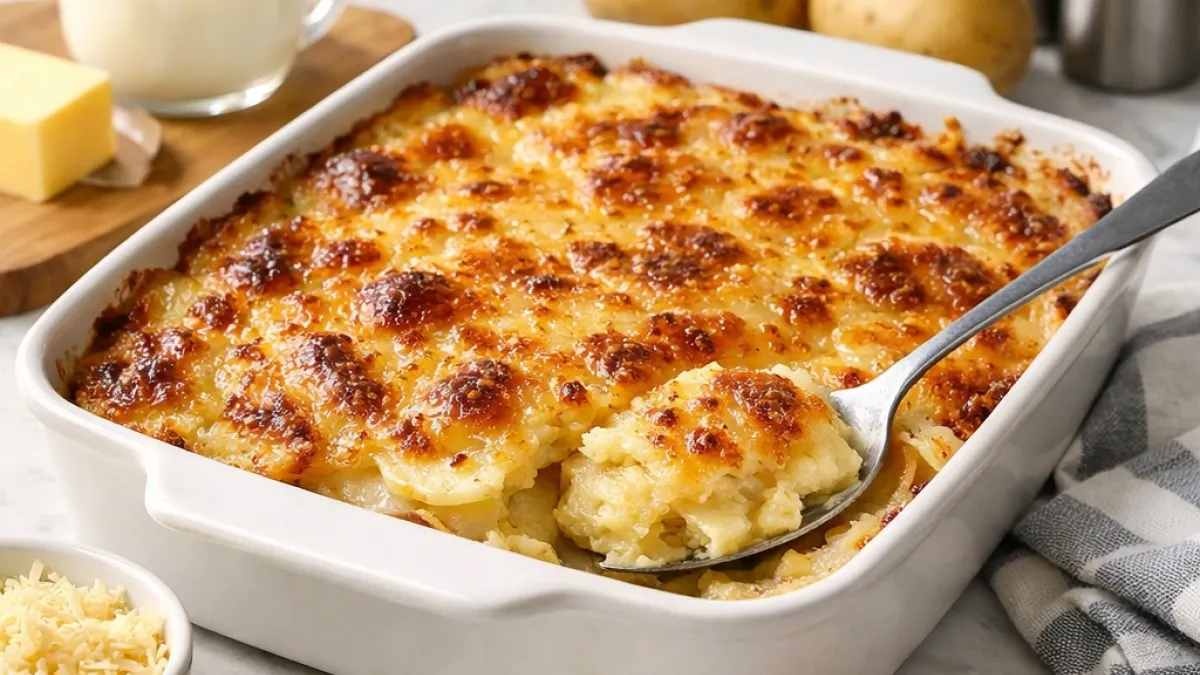
Baked layers of comfort with a golden, bubbling finish
When tender potatoes meet cream, heat, and patience
The moment potato gratin slides out of the oven, something unmistakable fills the room. A quiet crackle from the surface, a slow release of steam carrying the scent of warm cream and potatoes, and that first glimpse of a golden crust that promises depth beneath. Cut into it and the knife meets gentle resistance before sinking into soft, layered slices that hold together just enough to feel indulgent. This is not just a side dish; it’s a moment of comfort built slowly, layer by layer, where texture matters as much as flavor.
Gratin has always been about contrast. The top forms a deeply caramelized crust, while underneath stays silky and moist, almost spoonable. Potatoes absorb the cream and aromatics gradually as they bake, transforming from simple slices into something cohesive and luxurious. Butter rounds the edges, dairy brings richness, and gentle heat allows everything to meld without rushing. That balance is what gives potato gratin its unmistakable character—rich without heaviness, structured yet tender.
A dish shaped by European kitchens
Across Europe, potato gratin appears in many forms, most famously in French home cooking, where thinly sliced potatoes are baked slowly with cream until unified. Over time, the idea traveled and adapted, but the principle stayed the same: humble ingredients elevated through technique. Unlike mashed potatoes, which rely on agitation and emulsification, gratin depends on stillness. The layers stay intact, the starch thickens the cream naturally, and the oven does the rest.
In colder seasons, potato gratin earned its place next to roasts and braised dishes, offering warmth and substance. Yet it also works as a centerpiece for simpler meals, proving that potatoes alone—handled carefully—can feel complete.
How the core ingredients shape the result
Potatoes are the structure. When sliced evenly, they cook at the same pace, creating a uniform interior that holds together without turning gluey. Cream adds body and softness, coating each slice so the layers bake into one cohesive whole. Butter enriches and encourages browning, while gentle seasoning keeps the focus on the potato itself. Optional aromatics—such as garlic or herbs—don’t dominate; they underline the natural sweetness that develops as the gratin bakes.
The oven is just as important as the ingredients. Steady heat allows moisture to evaporate slowly, forming that iconic crust while protecting the interior from drying out. Too fast, and the top burns before the center softens. Too cool, and the layers never quite fuse.
Why this style of potato dish stands apart
Potato gratin sits comfortably between other classics, offering something neither mashed nor fried can replicate. If you enjoy smoother textures, there’s also a recipe available for Creamy mashed potatoes with butter and cream – A classic side dish for all winter meals, where the potato becomes airy and whipped rather than layered. For crisp edges and skillet-driven flavor, a recipe is available for Perfect Pan-Fried Potatoes with Onion – Boiled First for Extra Flavor, built on contrast and heat instead of cream.
Gratin, by comparison, is patient. It rewards time, layering, and restraint.
Why you’ll love this potato gratin
- Deep, comforting texture that stays creamy beneath a crisp surface
- Naturally rich flavor developed through slow baking rather than heavy seasoning
- Elegant structure that slices cleanly yet feels soft on the fork
- Versatility as both a supporting side and a stand-alone dish
- Consistent results when prepared with care and even slicing
Creative variations that still respect the dish
Potato gratin invites interpretation without losing its identity. Swapping part of the cream for milk lightens the texture while keeping cohesion. Introducing subtle cheeses adds depth without overpowering the potato. Root vegetables layered among the slices bring sweetness and color. Even changing the cut—from ultra-thin to slightly thicker—shifts the final mouthfeel from refined to rustic.
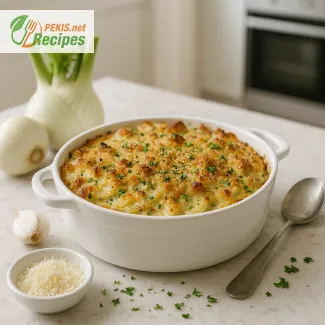
For a vegetable-forward alternative built on the same technique, a recipe is also available for Italian-style oven-baked fennel gratin with golden crust, where fennel replaces potatoes but the gratin method remains central.
Make-ahead and storage insight
Potato gratin handles preparation in advance exceptionally well. As it rests, the layers settle and flavors deepen, making it ideal for planned meals. Gentle reheating restores the creamy interior while refreshing the crust, provided the heat stays controlled. This stability is one reason gratin remains a favorite for gatherings—it improves with patience, not haste.
A classic built on technique, not excess
At its core, potato gratin is a study in restraint. No complicated methods, no aggressive flavors—just precision, balance, and time. Each layer matters. Each minute in the oven contributes to the final texture. That quiet confidence is what keeps potato gratin relevant, comforting, and endlessly returned to, generation after generation.
- Preheat the oven to 180 °C (356 °Fahrenheit). Grease a baking dish approximately 30 × 20 cm (12 × 8 inch) with half of the butter.
- Slice the potatoes evenly to ensure uniform cooking. Keep them submerged in cold water briefly, then drain and pat completely dry.
- In a saucepan, gently heat the heavy cream and milk together. Add garlic, salt, black pepper, and nutmeg. Warm until steaming but do not boil.
- Arrange one layer of potatoes in the prepared dish, slightly overlapping. Spoon a portion of the warm cream mixture over the potatoes.
- Repeat layering potatoes and cream until all ingredients are used, finishing with cream on top.
- Dot the surface with the remaining butter. If using cheese, sprinkle evenly over the top (topping).
- Cover loosely with foil and bake for 50 minutes.
- Remove the foil and continue baking for 30 minutes until the top is deeply golden and the potatoes are tender when pierced.
- Rest for 10 minutes before serving to allow the layers to set.
A common mistake with potato gratin is rushing the bake, which leads to a browned top and undercooked layers. Slow, even heat allows the potatoes to soften gradually and the cream to thicken naturally, creating that cohesive, silky texture. This method works because it respects the starch and moisture balance instead of forcing color too early.
Created by PEKIS – a professional chef and recipe developer with more than 25 years of experience in cooking and baking, specialized in European and international cuisine.
FAQ questionWhat makes potato gratin different from scalloped potatoes?
Potato gratin is defined by its browned top layer and a richer, more structured finish. Traditionally, gratin focuses on a golden crust created by baking until the surface caramelizes, often helped by dairy fat and sometimes a light cheese layer. Scalloped potatoes are usually softer on top and lean more heavily on a creamy sauce without aiming for that pronounced crust. In practice, the difference comes down to the final texture: gratin should feel silky underneath with a distinct baked surface, while scalloped potatoes tend to be uniformly creamy.
FAQ questionWhich potatoes are best for potato gratin?
Choose potatoes with enough starch to help the cream thicken naturally and bind the layers. Medium-to-starchy varieties are ideal because they soften evenly and create that cohesive, sliceable interior. Very waxy potatoes can stay firm and separate, which may taste fine but won’t give you the classic gratin structure. The real key is consistency: even slicing matters more than chasing a perfect variety, because uneven slices cook at different speeds and break the texture.
FAQ questionWhy is my potato gratin watery?
Watery gratin usually happens when there’s too much moisture and not enough time for it to reduce and set. Common causes include potatoes that weren’t dried after rinsing, a baking dish that’s too deep, or pulling it from the oven before the layers fully tenderize. Another culprit is overheating the dairy too quickly—if it boils hard, it can separate instead of thickening smoothly. The fix is simple: dry the slices well, bake long enough for the liquid to reduce and thicken, and let the gratin rest so the sauce can set into the layers.
FAQ questionShould I rinse potatoes before making gratin?
Rinsing removes surface starch, which can help prevent clumping while you layer. But it’s only helpful if you follow through: you must dry the slices thoroughly or you’ll introduce extra water that weakens the cream base. If you slice and layer immediately, rinsing is optional—many cooks skip it because the starch can also support a thicker, more unified interior. The best approach is whichever keeps your process clean and controlled: either rinse and dry well, or don’t rinse and layer right away.
FAQ questionCan I make potato gratin ahead of time?
Yes—and it often gets better. You can bake it earlier, cool it, and reheat gently so the interior returns to creamy softness without splitting. For best results, reheat covered first to warm the center, then uncover briefly to refresh the top. If you’re preparing for guests, making it ahead reduces stress and gives you consistent slices because the gratin has time to firm up and settle.
FAQ questionHow do I know when potato gratin is fully cooked?
Use a thin knife or skewer and test the center. When it slides through with little resistance, the potatoes are tender. Visual cues help too: the top should be golden and the liquid around the edges should look thicker, not thin and sloshy. If the top browns too fast but the center isn’t ready, cover loosely and continue baking—this protects the crust while the interior finishes cooking.
FAQ questionWhy did my cream split in the oven?
Splitting happens when dairy is pushed too hard—either the oven temperature is too aggressive, the cream mixture was boiled, or the gratin baked uncovered at high heat too early. It can also happen if the dish is very shallow and the liquid reduces too fast. The strategy is gentle control: warm the dairy until steaming (not boiling), bake at steady heat, and use a cover early on if needed. That protects the emulsion and helps you get a smooth, stable cream base instead of a broken sauce.
Potato gratin stands on a balance of time, temperature, and layering, where each step quietly shapes the final texture. Thin slices cook evenly, cream thickens naturally, and the oven does its work without force. What emerges is a dish defined by structure and softness, not shortcuts.
The method rewards patience. Gentle heat allows moisture to reduce instead of separating, creating a cohesive interior beneath a surface that browns gradually. Resting after baking is not optional—it’s the moment when the layers settle and the gratin becomes cleanly sliceable rather than loose.
Flavor develops through restraint. Potatoes carry subtle sweetness, dairy adds depth, and seasoning stays measured so nothing overwhelms the base. This approach keeps the focus on texture and balance, not intensity.
Across meals and seasons, potato gratin adapts easily. It pairs with simple plates or richer mains, reheats without losing character, and holds its form when prepared ahead. Consistency, clarity, and controlled technique are what keep it reliable and familiar, yet always satisfying.
Allergens present in the recipe
- Milk (dairy): From cream, milk, butter, and cheese; may trigger lactose or milk-protein intolerance.
- Gluten: Naturally gluten-free; risk only from cross-contamination.
Allergen and gluten substitution tips
- Milk (dairy): Replace cream and milk with full-fat coconut milk or oat cream; use plant-based butter and vegan cheese alternatives.
- Gluten: Use certified gluten-free dairy alternatives and ensure cookware is free from cross-contamination.
- Vitamin A (µg): 320 – Supports vision and immune function.
- Vitamin B6 (mg): 0.4 – Contributes to energy metabolism and nervous system health.
- Vitamin C (mg): 14 – Aids collagen formation and immune defense.
- Calcium (mg): 220 – Essential for bone strength and muscle function.
- Potassium (mg): 720 – Supports fluid balance and heart health.
- Phosphorus (mg): 210 – Important for bone structure and energy storage.
- Chlorogenic acid (mg): 18 – Helps reduce oxidative stress and supports metabolic health.
- Carotenoids (mg): 0.6 – Contribute to cellular protection and eye health.
Calculators
Recipes worth trying