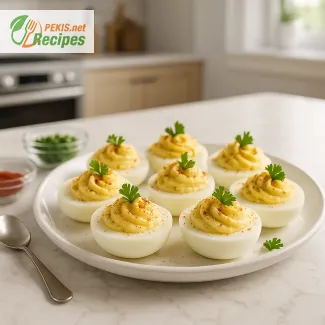
Hard-Boiled Eggs with Clean Cuts for Salads, Lunch Boxes, and Platters focus on firm whites and evenly set yolks that slice cleanly and hold their shape. Rooted in everyday European cold-kitchen habits, they bring balance to salads, calm to packed lunches, and order to shared platters, offering a neutral, dependable base that adapts easily across meals and moments without demanding attention.
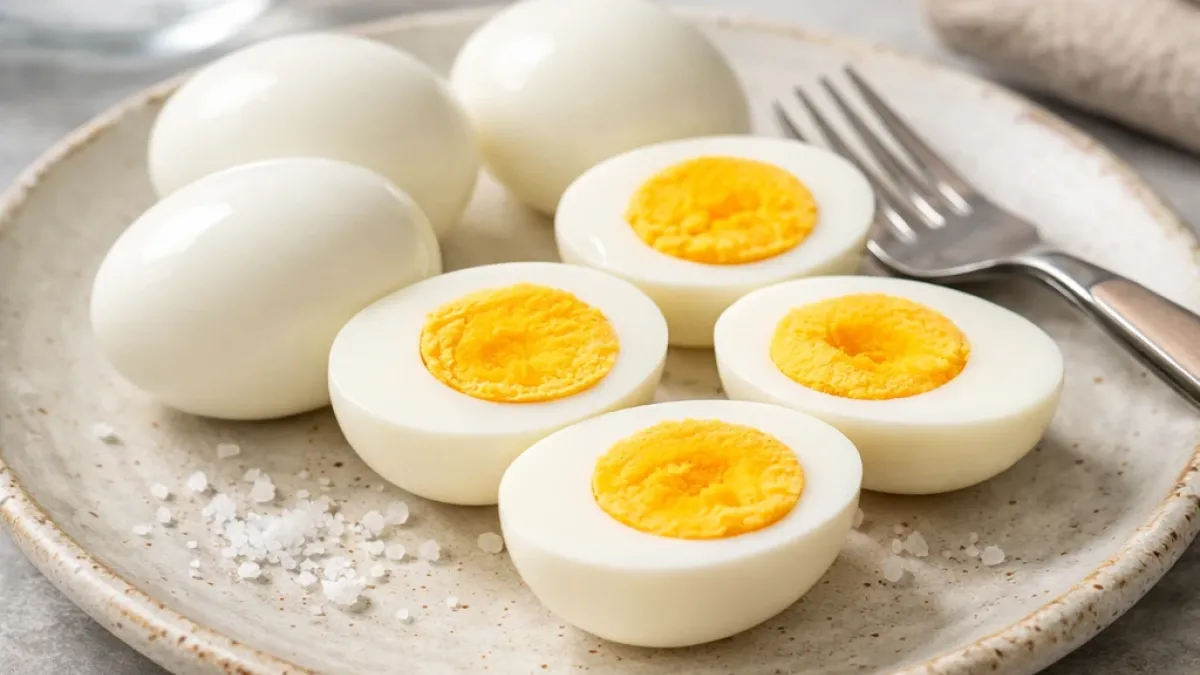
Clean cuts matter more than you think
Where firm whites, precise yolks, and everyday use quietly meet
The surprise with hard-boiled eggs isn’t the flavor—it’s the cut. When the blade passes through cleanly, the yolk stays intact, the white doesn’t tear, and suddenly an ordinary egg feels deliberate. Anyone who packs lunches, builds composed salads, or plates cold dishes knows this moment: the egg behaves exactly as expected, no crumbling, no sulfur note, just a quiet firmness that holds its shape.
Entering the dish
At room temperature, a peeled egg gives off almost nothing—no aroma, no drama. Slice it, and the texture tells the story. The white is smooth and resilient; the yolk is matte, even, almost chalk-free. This is what makes hard-boiled eggs dependable. They don’t ask for attention, yet they reward precision.
A short local background
Across Northern and Central Europe, hard-boiled eggs have long lived in the space between meals—cold kitchens, pantry tables, early lunches. They were never the centerpiece but always present: in school lunches, picnic tins, workday salads. That cultural habit shaped expectations: clean, firm, neutral, ready to combine with whatever the season offered.
How they are served, in feeling
On a lunch plate, they bring calm. In a lunch box, reassurance. In a salad bowl, balance. Hard-boiled eggs don’t dominate; they anchor. Their surface catches dressing lightly, their yolk absorbs just enough moisture to soften without dissolving. This makes them ideal for cold serving, slicing ahead, or arranging neatly on platters.
What makes them different
The difference lies in control. Not softness, not richness—but predictability. When eggs are cooked to this standard, every slice looks the same. That consistency matters, especially when precision carries into baking and portioning, where even small variations count—something explored further in How Much Does an Egg White Weigh for Baking Accuracy.
Why you’ll like them
- Reliable texture that slices cleanly every time
- Neutral flavor that pairs with acids, fats, or herbs
- Visual order on plates, boards, and lunch boxes
- Make-ahead confidence without quality loss
PEKIS chef’s insight — working kitchens don’t guess
In professional prep, eggs are judged by how they behave under a knife. A clean cut saves time, avoids waste, and keeps plating consistent. That same logic applies at home, especially when eggs move from one use to another—today a salad, tomorrow something filled, like the structure required for Classic Deviled Eggs with Paprika – Easy Party Appetizer Recipe.
Creative variations
Once the structure is right, form becomes flexible. Eggs can be pressed, shaped, or re-cut without falling apart, opening playful but controlled options such as Magical egg shapes – heart, flower, star and dome recipe. The base remains the same; only the presentation shifts.
When this dish isn’t ideal
Hard-boiled eggs are not meant for warmth or richness. If a dish relies on creaminess, flow, or sauce integration, their firmness can feel too strict. They shine in cold or room-temperature contexts, less so in dishes demanding softness.
Storage and preparation ahead
This is where they quietly excel. Peeled or unpeeled, they hold their integrity, making them ideal for batch preparation. Their stability also explains why egg components are measured so precisely in baking discussions across Europe, including detailed breakdowns like How Much Does an Egg White Weigh for Baking Accuracy.
PEKIS chef’s insight — rhythm over perfection
Hard-boiled eggs fit the rhythm of real kitchens. They wait. They adapt. They don’t rush the meal. Prepared once, they serve many moments—morning packing, midday plates, evening leftovers. Their value isn’t excitement; it’s quiet readiness.
- Place the eggs in a single layer in a saucepan.
- Pour over the water until the eggs are fully submerged by at least 3 cm (1 inch).
- Add the salt to the water.
- Heat on medium until the water reaches a gentle boil (about 212°F / 100°C).
- Once boiling starts, reduce to a light simmer and cook for 10 minutes.
- Immediately transfer the eggs to an ice bath.
- Cool completely for 10 minutes, then remove, dry, and store or peel as needed.
If your hard-boiled eggs don’t slice cleanly, the issue isn’t seasoning—it’s timing and restraint. I’ve learned that precision beats force every time: when eggs behave under the knife, everything else falls into place. That mindset runs through my work as Chef PEKIS, professional chef and recipe developer with over 25+ years of hands-on kitchen experience, where every recipe is tested with real home use in mind, not theory.
FAQ questionWhy do my hard-boiled eggs sometimes crack before they’re even sliced?
Small cracks usually come from sudden temperature stress or eggs knocking into each other as the water heats. Keep them in a single layer and let the heat rise steadily. Chef’s tip: older eggs crack more easily but also peel cleaner—use them when looks matter more than the shell.
FAQ questionIs there a professional trick for getting perfectly clean cuts every time?
Yes—wipe the knife between cuts and slice in one calm motion, not back and forth. A slightly warm blade glides better through the white and yolk. Chef’s tip: one confident cut beats ten careful ones.
FAQ questionWhat if I need to cook the eggs ahead for a few days—will the texture suffer?
Not if they’re stored properly. Keep them unpeeled and sealed in the fridge; they hold firmness well. Once peeled, cover them lightly so the surface doesn’t dry out. Chef’s tip: peel only what you’ll use that day.
FAQ questionIn many European kitchens eggs are boiled the night before—does that really make sense?
It does. Boiling ahead fits the rhythm of packed lunches and cold plates. The egg sets fully overnight, making slicing more reliable the next day. Chef’s tip: this habit is about calm mornings, not shortcuts.
Evening kitchens have a way of softening the day. On the counter, a few hard-boiled eggs rest without urgency, already prepared for tomorrow’s quiet moments. There’s comfort in knowing something simple is ready, waiting without asking for attention.
In cooler seasons, their steadiness feels right. They bring balance to meals that don’t need embellishment—just clarity and restraint. Nothing competes, nothing rushes. The plate stays calm.
What remains is a sense of order. Clean lines, familiar textures, a food that fits into the rhythm of real days. Not everything needs to impress; some things just need to be dependable.
And when the kitchen finally goes still, that reliability lingers. A small, composed element, ready to return when it’s needed again.
- Eggs: present
- Gluten: naturally gluten-free
- Substitution: no direct substitute for whole eggs; for egg-free salads, use firm tofu slices or chickpea-based egg alternatives.
- Vitamin A (µg): 80 – supports vision and immune function
- Vitamin D (µg): 1.1 – contributes to bone health and calcium absorption
- Vitamin B12 (µg): 0.6 – essential for nerve function and red blood cell formation
- Iron (mg): 0.9 – supports oxygen transport in the body
- Selenium (µg): 15 – important for thyroid function and antioxidant defense
- Phosphorus (mg): 95 – supports bones and energy metabolism
- Lutein (µg): 250 – supports eye health and protects against oxidative stress
- Zeaxanthin (µg): 200 – helps protect retinal cells from light damage
- Selenium (µg): 15 – contributes to antioxidant enzyme activity
Calculators

Recipes worth trying