Oven-Roasted Yogurt-Marinated Chicken with Crispy Skin brings together slow marination and high oven heat for a balanced result: tender meat infused with gentle acidity and a deeply golden, crackling surface. The yogurt works quietly beneath the skin, while garlic and paprika add warmth. It’s a clean, structured roast that feels equally at home on a weeknight table or a relaxed Sunday dinner.
Crisp Skin, Tender Core: The Quiet Power of Yogurt
When Oven Heat Meets Slow Marinade
The first thing you notice is the sound. Not the oven timer, not the knife on the board — but the dry, faint crackle as the blade presses into the skin. It resists for a second, then gives way. Oven-roasted yogurt-marinated chicken with crispy skin is built on contrast: cool acidity meeting high heat, creamy marinade turning into a deeply golden crust.
This is not heavy roast chicken. The yogurt works quietly, tenderizing without announcing itself. By the time the chicken comes out of the oven, the surface is burnished and blistered, yet the interior stays moist and structured. It smells faintly of garlic and sweet paprika — warm, savory, familiar.
A Familiar Technique with Deeper Roots
Marinating poultry in yogurt has long been a practical method in home kitchens. The lactic acidity softens the surface fibers while keeping the flavor clean. In American family cooking, this technique often bridges comfort and precision — it feels rustic, yet the result looks intentional.
Unlike cream-based coatings or sugary glazes, yogurt leaves no sticky finish. It bakes into the meat. The flavor becomes part of the structure rather than sitting on top.
How It Arrives at the Table
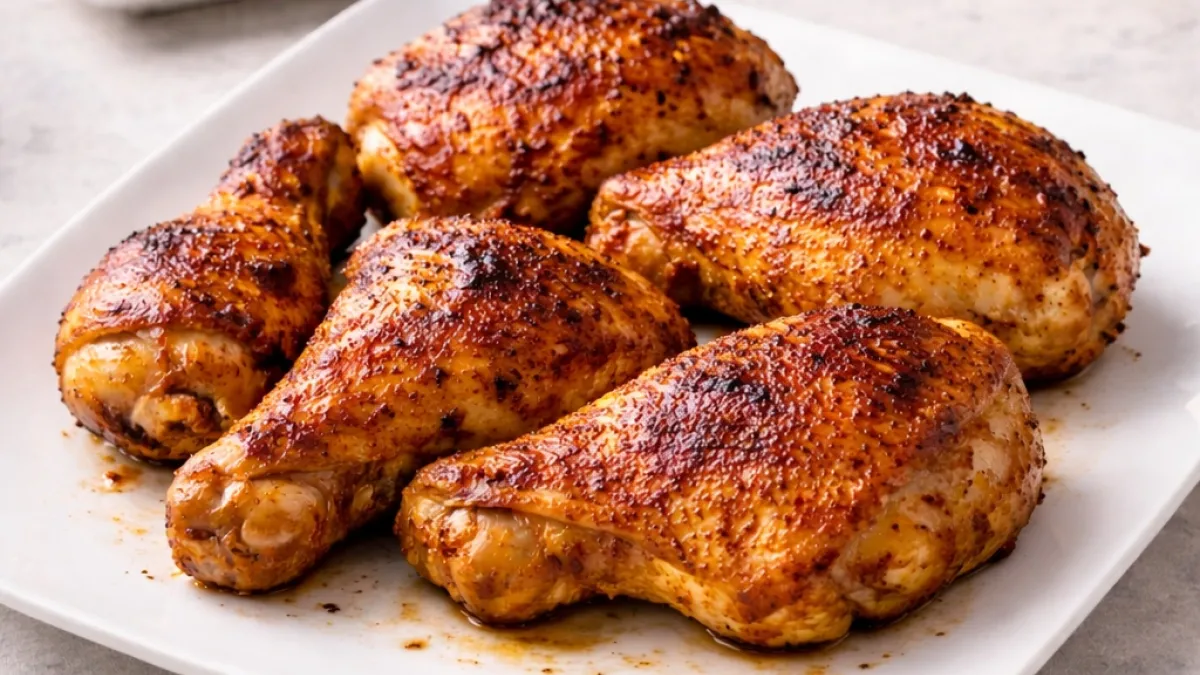
On a square white plate, the chicken sits without garnish. No sauce pooled underneath. Just four pieces, skin-side up, crisp and confident. Lemon wedges nearby — optional, never mandatory.
This dish fits naturally into a busy evening, much like a simple One-pan chicken and carrots dinner for busy evenings – easy recipe, but it carries a different rhythm. It feels slightly more deliberate. A little more Sunday than Tuesday.
If you prefer a quicker, appliance-focused version, the texture contrast appears again in Crispy Air Fryer Chicken Tenders with Yogurt Marinade for Dinner — same marinade logic, different heat strategy.
What Makes It Different
The difference is in the restraint.
There is no crust of flour. No breadcrumb armor. No honey glaze. The skin crisps because moisture escapes properly and heat is controlled. The marinade seasons the meat from within.
You taste:
- Clean acidity rather than sourness
- Deep golden skin instead of charred bitterness
- Tender structure without shredding softness
It is a roast that respects texture.
Why This Dish Wins People Over
- It feels lighter than traditional roast chicken
- The skin stays crisp even after resting
- It pairs easily with flatbreads or salads
- Leftovers remain flavorful the next day
Wrapped in a warm tortilla with a spoon of Easy Homemade Tzatziki for Wraps, the chicken becomes something entirely new — cool, fresh, balanced.
For a more bread-forward meal, it also sits naturally beside Best Homemade Tortilla Recipe – Soft, Fresh & Easy, turning a roast into a flexible dinner format.
PEKIS Chef’s Insight: On Crisp Skin
In professional kitchens, crisp skin is rarely about adding more heat. It is about removing moisture at the right pace. Yogurt seems counterintuitive — creamy, wet — yet it helps create dryness where it matters. Once roasted properly, the skin blisters instead of steaming.
If the chicken looks glossy rather than matte, it needed more air, not more temperature.
Creative Variations That Stay True
The base remains stable, but subtle changes shift the mood:
- A pinch of smoked paprika for deeper color
- Extra black pepper for sharper warmth
- Lemon zest added just before serving
None of these alter the core identity: acid-marinated chicken finished with crisp skin.
When It’s Not the Right Choice
This is not a quick 20-minute dinner. The marination matters. If you need immediate results, a direct roast without resting time may suit better.
It is also not ideal for heavy sauce lovers. The beauty here is dryness on the surface and moisture inside — sauce would soften that balance.
Storing and Planning Ahead
Roasted pieces hold well in the refrigerator for two days. Reheat uncovered at high heat to restore surface texture. Avoid microwaving if crispness matters.
Marinated chicken can also rest overnight without issue, which makes this a strong candidate for planned gatherings.
PEKIS Chef’s Insight: Rhythm of Heat and Rest
There is a rhythm to roasting. High heat builds the crust. Resting secures the interior. Interrupt either, and the structure changes. Respect both, and the dish settles into balance — crisp outside, tender within, quiet but confident on the plate.
- In a large bowl, mix yogurt, minced garlic, lemon juice, olive oil, salt, black pepper, and sweet paprika until smooth.
- Add chicken pieces. Coat thoroughly on all sides and gently lift the skin to spread some marinade underneath.
- Cover and refrigerate for at least 8 hours (up to overnight).
- Remove chicken from refrigerator 30 minutes before baking to bring closer to room temperature.
- Preheat oven to 210°C (410°F), convection setting.
- Lightly shake off excess marinade from chicken. Do not wipe clean.
- Place chicken skin-side up on a wire rack over a baking tray to allow air circulation.
- Roast for 35 minutes at 210°C (410°F).
- Increase oven temperature to 230°C (445°F) and roast an additional 10–15 minutes until skin is deeply golden and internal temperature reaches 78°C (172°F).
- Remove from oven and rest uncovered for 10–12 minutes before serving.
Let the chicken rest uncovered before slicing — that’s where the crisp skin holds and the juices settle properly. I’ve tested yogurt marinades in busy home kitchens and in professional settings, and timing always matters more than extra seasoning.
I’m Chef PEKIS — a professional chef and recipe developer with over 25 years of experience. I focus on structure, texture, and results you can repeat confidently at home, without unnecessary steps or trends.
FAQ questionCan I skip the long marinating time if I’m short on time?
You can reduce it to 2–3 hours, but the texture won’t be the same. The yogurt needs time to gently tenderize the surface and carry seasoning inward. Without enough rest, the chicken may roast well but taste more surface-seasoned than infused.
Chef’s tip: if time is limited, make shallow cuts near the bone before marinating — this helps the yogurt penetrate faster without changing the structure.
FAQ questionWhy isn’t my chicken skin getting truly crispy in a home oven?
The usual reason is moisture. Too much marinade left on the surface or crowding the pan creates steam instead of dry heat. The skin must be exposed and elevated so air circulates underneath.
Chef’s tip: always roast on a wire rack and avoid lining the tray tightly around the chicken. If needed, finish with a short high-heat boost at the end — but only after the fat has rendered.
FAQ questionWhat if I usually cover roast chicken with foil, like many American home cooks do?
For this recipe, avoid covering it. Foil traps steam and softens the very texture you’re building. Unlike classic gravy-based roasts, this dish depends on dry surface heat for structure.
Chef’s tip: let the chicken rest uncovered as well. Tent only if the room is very cold and you’re worried about temperature, not texture.
By the time the plates are cleared, the scent of roasted garlic and warm paprika still lingers in the kitchen. The skin has done its work — crisp, quiet, structured — while the meat stays tender beneath it. Oven-roasted yogurt-marinated chicken leaves behind that rare balance of comfort and control.
There’s something steady about a roast like this. No glaze, no excess. Just clean acidity, dry heat, and the simple satisfaction of properly rendered skin. It fits early autumn evenings as easily as a late spring dinner with the windows slightly open.
The lemon on the side feels optional, almost symbolic. A small squeeze if you want brightness, or nothing at all if the balance already feels right. The beauty sits in restraint.
And when the house grows quiet again, the memory is not of complexity, but of texture — that gentle crackle, the warmth of the oven fading, and the calm rhythm of a meal that knew exactly what it needed to be.
Allergens present in the recipe:
- Milk (dairy) – from yogurt
- No gluten-containing ingredients
Gluten-free substitution:
Recipe is naturally gluten-free. Ensure yogurt is certified gluten-free if required.
Dairy-free substitution:
Replace yogurt with unsweetened coconut yogurt (same quantity). Texture remains tender, flavor slightly milder
- Vitamin B6 (mg): 0.8 – supports protein metabolism and energy production
- Vitamin B12 (µg): 1.2 – supports red blood cell formation
- Niacin (mg): 12 – contributes to normal energy metabolism
- Phosphorus (mg): 320 – essential for bone structure
- Selenium (µg): 28 – supports immune defense
- Potassium (mg): 520 – supports muscle and nerve function
- Calcium (mg): 110 – contributes to bone health
- Vitamin E (mg): 2.1 – protects cells from oxidative stress
- Flavonoids (mg): 8 – from paprika and garlic, support cellular protection
- Carotenoids (mg): 1.5 – contribute to immune function
- Allicin derivatives (mg): 4 – from garlic, support antioxidant activity
Calculators

Recipes worth trying