A warmly spiced French Christmas pain d’épices with honey, citrus zest and aromatic winter spices creates a tender, slightly dense crumb that feels nostalgic and festive. Its origins reach back to medieval honey breads, and every slice carries a fragrant blend of cinnamon, ginger and anise for a deeply comforting holiday treat.
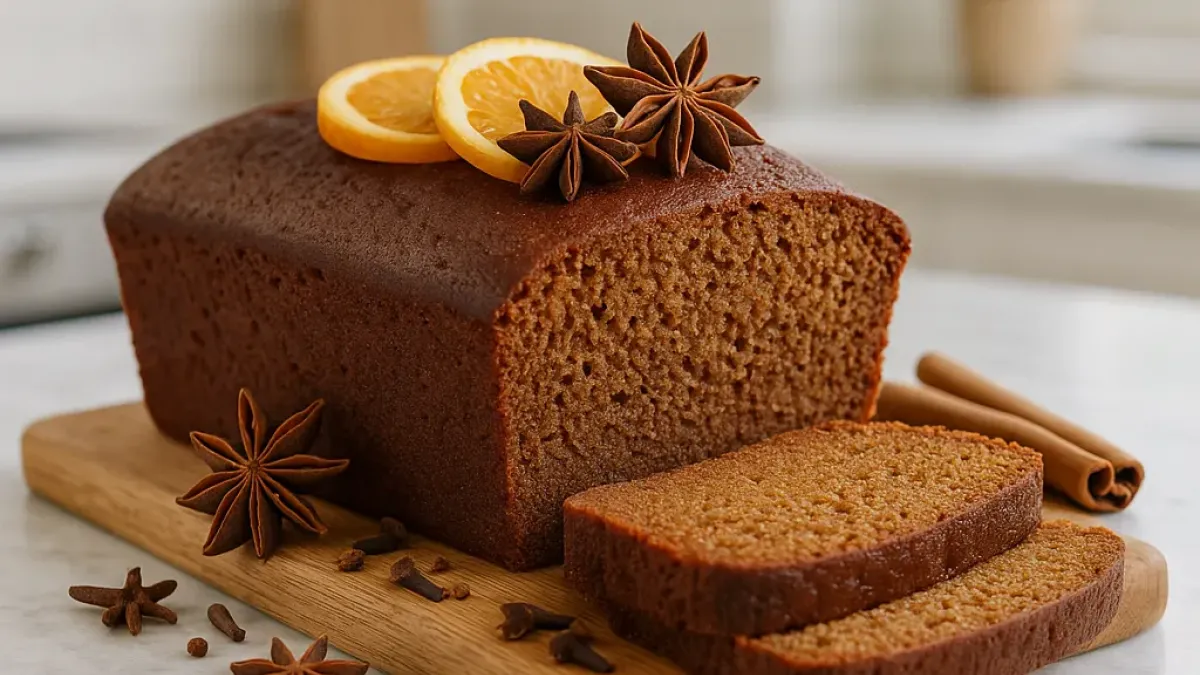
French spiced holiday loaf inspired by classic festive traditions
A warm, fragrant Christmas bread enriched with honey, citrus and aromatic spices
When the first slice is cut, the aroma rises in a soft, warming cloud of honey, citrus zest and deep winter spices, wrapping the room in a feeling that sits somewhere between childhood memories and holiday anticipation. The texture is tender yet slightly dense, holding just enough moisture to feel luxurious without being heavy. Every bite has that subtle crackle from the caramelised edges, followed by a slow release of ginger, cinnamon, anise and clove, creating the unmistakable charm that gives French pain d’épices its identity. This is the kind of festive bake that becomes part of a household tradition the moment it cools on the counter.
Originally crafted in medieval France, this spice-laden loaf grew from a simple honey bread inspired by Eastern traders who once crossed Europe carrying exotic spices and dried citrus. Over centuries, it became a regional treasure, especially in Alsace, where winter markets still celebrate the comforting perfume of freshly baked pain d’épices. Although rustic in origin, its flavour spectrum is surprisingly layered: the sweetness of honey brings depth, spices add warmth, and citrus introduces brightness. Together they create a balanced holiday centrepiece that feels both nostalgic and refined.
The natural ingredients used for this loaf work in harmony. Honey provides moisture and a glossy crumb, allowing the spices to mellow into a rounded, fragrant profile. A touch of citrus zest lightens its richness, while the blend of warm spices shapes that signature festive character. Flour forms a sturdy yet delicate structure, helping the loaf slice cleanly without crumbling. A gentle fat component gives softness, ensuring each bite feels smooth, aromatic and deeply comforting. Nothing is overpowering; the flavours unfold slowly, which is exactly what makes this bread ideal for long December evenings.
Ingredient Notes and Culinary Behaviour
Behind its simplicity lies smart flavour layering. The spice blend influences the aroma intensity and warmth. Honey locks in moisture and adds natural sweetness that deepens during baking. Citrus zest provides freshness, preventing the loaf from tasting heavy. A small amount of fat helps achieve a smooth crumb, and flour selection affects density and chew. Together, these elements create a balanced, soulful Christmas loaf.
Why You’ll Love This Holiday Pain d’Épices
- Warm, festive flavours that turn the kitchen into a winter market.
- Tender crumb that stays moist for days due to honey.
- Beautifully spiced aroma perfect for holiday gatherings.
- Versatile serving options from breakfast to dessert platters.
- Naturally long shelf life, making it ideal as a make-ahead treat.
Creative Variations You Can Explore
- Add small chunks of candied orange for extra brightness.
- Incorporate finely chopped nuts for a more textured slice.
- Use a richer spice profile with cardamom or nutmeg for added depth.
- Add a thin citrus glaze to enhance the festive feel.
- Mix in ginger marmalade for a fragrant twist and smoother crumb.
Storage and Make-Ahead Guide
Pain d’épices keeps beautifully. Wrap tightly once cooled and store at room temperature for several days; the flavour even improves as the spices settle. It can be baked ahead for gifting, and it also freezes well, maintaining its soft, aromatic texture after thawing.
Aromatic French Christmas Spice Loaf
This loaf sits at the intersection of French holiday baking, warm winter spices, honey-based festive breads, and traditional European Christmas recipes. It complements fruit compotes, creamy spreads, and pairs especially well with a warm drink on cold evenings.
During the holidays, many families enjoy exploring different festive desserts. If you love traditional seasonal bakes, you may also like the rich chocolate swirl and festive design of the Ultimate Chocolate Yule Log Cake Recipe, a classic centrepiece.
For a more delicate biscuit-style treat perfect for gifting and cookie trays, there is also the recipe for Traditional Linzer Cookies with Jam Filling for Perfect Holiday Baking, another timeless favourite.
The structure of pain d’épices makes it perfect not only as a loaf served on its own but also as a base for warm spreads or gentle toppings. Pairing it with creamy elements highlights the spice contrasts, while serving it plain emphasises the honeyed depth and subtle citrus fragrance that define this French Christmas classic.
- Preheat the oven to 170 °C (338 Fahrenheit). Line a loaf tin (about 24 cm / 9.4 inch) with parchment.
- Warm the honey gently until fluid, then mix with the melted butter and milk. The mixture should be smooth but not hot.
- In a separate bowl combine the all-purpose flour, rye flour, baking powder, brown sugar, salt and all spices. Mix thoroughly to distribute the aromatics evenly.
- Add the orange zest to the dry ingredients to release its essential oils.
- Pour the warm honey mixture into the dry ingredients and fold until a thick, cohesive batter forms. Avoid overmixing to keep the loaf tender.
- Transfer the batter into the prepared tin and smooth the top.
- Bake for 45–50 minutes, or until the surface is deep golden and a skewer inserted into the centre comes out clean.
- Allow the loaf to cool in the tin for 10 minutes, then transfer onto a rack to cool completely.
- For best flavour, wrap the cooled loaf and let it rest overnight to deepen the spice profile before slicing.
Small details often make the biggest difference, and one reliable trick is gently warming the honey before mixing—it unlocks a deeper aroma and gives pain d’épices its naturally silky crumb. This approach brings out the full character of the spices and keeps the loaf beautifully moist for days.
PEKIS – professional chef and recipe developer with over 25 years of experience in cooking and baking, specialising in European and international cuisine.
FAQ questionWhat makes French Christmas pain d’épices different from regular gingerbread?
French Christmas pain d’épices is traditionally honey-based, which gives it a deeper, more rounded sweetness compared to regular gingerbread that relies mostly on sugar or molasses. The texture is usually slightly dense yet tender, more like a spiced honey loaf than a cookie or cake. The spice blend often includes cinnamon, ginger, anise and cloves, sometimes with a hint of citrus zest, creating a warm, perfumed aroma rather than a sharp, spicy kick. It’s also designed to mature over time, so the flavour develops and becomes richer after a day or two.
FAQ questionHow do you keep pain d’épices moist and soft for several days?
The key is the combination of honey, gentle baking and proper storage. Honey acts as a natural humectant, pulling in moisture and keeping the crumb soft. Baking the loaf at a moderate temperature prevents it from drying out or forming a hard crust. Once completely cooled, it should be wrapped tightly in parchment and stored in an airtight container. Pain d’épices often tastes better the next day, as the spices meld and the loaf becomes even more aromatic and moist.
FAQ questionWhich spices are essential for an authentic pain d’épices flavour?
The classic character comes from a balanced blend of cinnamon, ginger, anise and cloves. Cinnamon gives a warm, comforting base, ginger adds a gentle heat, anise contributes that distinctive, slightly liquorice note, and cloves bring depth and intensity. Some versions include nutmeg or cardamom for extra nuance, but the heart of the recipe is this core mix of warm winter spices combined with honey and citrus zest. The goal is a harmonious, layered aroma, not one overpowering spice.
FAQ questionCan pain d’épices be made ahead as an edible Christmas gift?
Yes, pain d’épices is perfect for making ahead and gifting. Because it’s honey-rich and spice-heavy, it actually benefits from resting for 24–48 hours after baking. During this time, the crumb relaxes, and the flavours become more smooth and complex. Baked in a neat loaf shape, it can be wrapped in parchment and tied with a ribbon, or sliced and packed into small boxes. Its longer shelf life compared to many cakes makes it ideal for holiday gift baskets, postal gifts or party favours.
FAQ questionWhat’s the best way to serve French Christmas pain d’épices?
Pain d’épices is extremely versatile. It can be served plain, in thick slices with tea or coffee, or lightly toasted to bring out the caramelised honey notes. For a more indulgent touch, it pairs beautifully with soft butter, cream cheese, mascarpone or orange marmalade. It also works as a sophisticated dessert element: thin slices can accompany poached pears, roasted apples, vanilla ice cream or chocolate sauces. The subtly sweet, spiced crumb balances richer components without being overwhelming.
FAQ questionIs it possible to make a lighter or dairy-free version of pain d’épices?
A lighter version can be created by reducing the fat slightly and using a mix of all-purpose flour and a small portion of wholegrain flour to keep structure without heaviness. For a dairy-free loaf, butter and milk are easy to replace with neutral plant-based oil and plant milk, while keeping the same honey and spice profile. The key is to maintain the right liquid-to-flour ratio so the crumb stays moist and tender, and to keep the spice blend and honey at the centre of the flavour.
The balanced warmth of cinnamon, ginger, anise and cloves gives this French Christmas loaf its unmistakable festive character. Each ingredient supports the next, creating a gently spiced flavour that becomes richer as the loaf rests. The natural sweetness of honey ties everything together and keeps the texture soft and moist.
The combination of citrus zest and winter spices adds brightness while preserving the comforting depth that defines traditional pain d’épices. This balance makes it suitable for both simple holiday moments and more elaborate seasonal spreads. Its structure remains tender, allowing clean slices without crumbling.
Because the flavours continue to develop over time, the loaf fits beautifully into make-ahead holiday planning. Wrapped well and stored properly, it becomes even more aromatic and smooth, making it ideal for gifting or serving during festive gatherings.
Whether paired with warm drinks, creamy accompaniments or enjoyed on its own, the refined blend of honey, spice and gentle sweetness ensures a timeless Christmas treat that remains satisfying and memorable.
Allergens present in the recipe:
- Gluten: from all-purpose flour and rye flour
- Dairy: butter and milk
How to adapt for allergies and gluten-free needs:
- Replace wheat and rye flour with a certified gluten-free flour blend of equal weight.
- Swap butter for plant-based butter; use plant-based milk instead of dairy milk.
- Vitamin B2 (mg): 0.07 – supports energy metabolism
- Vitamin B6 (mg): 0.04 – contributes to normal nervous system function
- Calcium (mg): 38 – essential for bone strength
- Iron (mg): 1.3 – supports oxygen transport
- Magnesium (mg): 22 – important for muscle function
- Potassium (mg): 180 – supports fluid balance
- Polyphenols (mg): 45 – contribute to cellular protection
- Flavonoids (mg): 18 – support antioxidant defence
- Phenolic acids (mg): 22 – help reduce oxidative stress
Calculators




Recipes worth trying