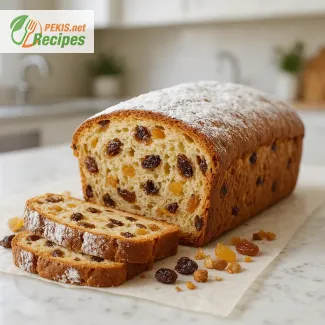
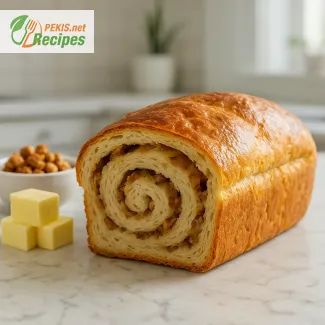
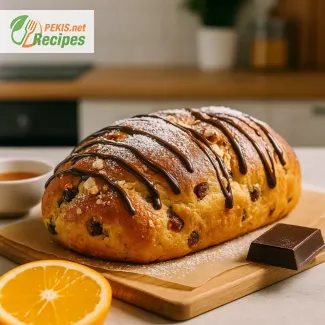
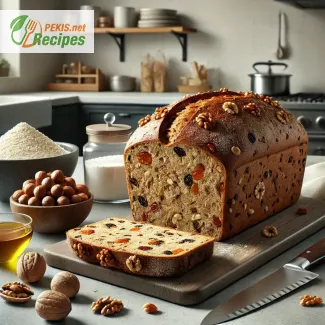
A gently sweet and comforting Christmas Bread with Raisins and Honey that fills the kitchen with a warm, nostalgic aroma. Soft, airy, and lightly golden, it blends floral honey, juicy raisins, and a touch of festive citrus—echoing old European holiday loaves shared on winter mornings. Its tender crumb and subtle richness make each slice feel like a cozy seasonal moment.
A small trick that always helps with enriched doughs: keep the liquid ingredients slightly warmer than room temperature so the yeast wakes up smoothly and the dough becomes naturally softer. It’s a simple adjustment that gives Christmas breads a beautifully tender crumb and a more even rise.
Learn more about the creator behind these recipes at PEKIS.
PEKIS – a professional chef and recipe developer with over 25 years of experience in cooking and baking, specializing in European and international cuisine.
A Warmly Spiced Holiday Loaf for Cozy Winter Mornings
A fragrant, honey-kissed Christmas bread that brings nostalgic comfort to the table
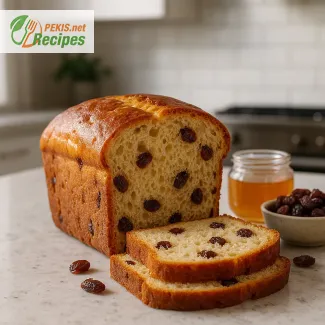
The first slice breaks with a soft, airy crumb that releases a gentle cloud of warmth—golden honey, plump raisins, and a faint buttery aroma wrapping around the senses like a winter memory. The surface has that subtle festive sheen that makes each piece feel celebratory, while the center stays beautifully moist, carrying a mellow sweetness that lingers softly on the palate. This Christmas bread feels like something passed from one pair of hands to another during cold mornings, a recipe that grew out of long-standing traditions where grains, dried fruit, and honey symbolized comfort and abundance. Its texture is tender yet structured, giving the loaf a delicate fluffiness that makes every bite quietly indulgent.
In older European kitchens, enriched breads served as a sign of generosity, especially during the winter season. Honey was one of the earliest natural sweeteners used in celebratory loaves, and raisins were treasured ingredients that added brightness and softness. Over time, the combination evolved into a holiday staple—an approachable, warm, and familiar bake that fits beautifully on any festive table.
How the core ingredients shape the character of the bread
Honey adds a deep floral sweetness and keeps the crumb tender even days after baking. Raisins bring gentle acidity and bursts of juiciness. Butter enriches the dough, making it supple and smooth. Warm liquids help activate the yeast, ensuring a consistent rise, while carefully balanced spices provide an understated aromatic layer without overshadowing the natural flavors. Each element supports the bread’s structure and creates a comforting, festive balance.
A lovely complement to this loaf is a fragrant spiced holiday classic like the Traditional French Christmas pain d’épices, also available as a full recipe in English: Traditional French Christmas pain d’épices with festive spices. Its warming spice profile makes it a natural companion for readers who enjoy seasonal baking.
Storage and make-ahead guidance
This bread stores exceptionally well because of its honey content, which naturally preserves moisture. Wrapped tightly, it stays tender for several days at room temperature. It also freezes beautifully when sliced beforehand, allowing individual portions to be thawed gently for spontaneous festive moments. Preparing the dough a day ahead and letting it slowly rise in the refrigerator deepens the flavor and makes the final bake even more fragrant.
Holiday baking notes and ingredient insights
- Raisins: add juicy sweetness and create contrast within the soft dough.
- Honey: enhances browning, preserves moisture, and provides floral depth.
- Butter: enriches the texture, making the crumb tender and silky.
- Yeast: ensures a steady rise and contributes to the subtle aroma of fermentation.
- Milk or warm liquid: improves softness and helps develop a smooth dough.
Why you will love this recipe
- Festive flavor profile with natural sweetness and gentle spice.
- Soft, moist texture that stays tender for days.
- Approachable technique suitable for both beginners and experienced bakers.
- Perfect for gifting, breakfast spreads, or holiday brunch tables.
- Beautifully fragrant and visually inviting for seasonal gatherings.
Creative variations
- Add orange zest for a brighter citrus aroma.
- Replace raisins with cranberries for a sharper, fruitier contrast.
- Use a mix of almonds or walnuts for added crunch and nuttiness.
- Incorporate a swirl of cinnamon-honey butter for extra richness.
- Glaze the top lightly with warm honey to enhance shine and flavor.
For a different festive bread experience, you can also explore a delightful Italian-inspired treat: Mini Panettone in a muffin tin. These individual soft cakes offer a charming variation for holiday mornings and complement the flavors of this Christmas bread beautifully.
Additional festive context with natural culinary entities
Holiday breads across Europe often share a foundation of enriched doughs—ingredients like honey, dried fruit, winter spices, yeast, and butter form the backbone of traditional seasonal baking. Cultural variations such as German Stollen, Italian Panettone, French pain d’épices, and Eastern European raisin loaves each reflect regional preferences while sharing a common intention: creating warmth and abundance during the coldest months of the year. This Christmas bread belongs to that family, offering a comforting aroma, balanced sweetness, and the timeless joy of handmade seasonal baking.
- Warm the milk until lukewarm and whisk in the honey and yeast. Let the mixture stand for 10 minutes until foamy.
- In a separate bowl, combine the flour and salt. Add the melted butter, eggs, vanilla extract, and lemon zest.
- Pour the yeast mixture into the dry ingredients and knead until the dough becomes smooth and elastic.
- Fold in the raisins, making sure they are evenly distributed throughout the dough.
- Cover the dough and let it rise in a warm place for 60 minutes, or until doubled in size.
- Shape the dough into a loaf, place it into a greased loaf pan, and let it rise again for 30 minutes.
- Preheat the oven to 180 °C (356 °F).
- Bake for 35–40 minutes until golden brown and fragrant.
- Allow the bread to cool completely before slicing.
FAQ questionHow do I keep Christmas bread with raisins and honey soft for several days?
The key to long-lasting softness is proper hydration and fat content. Honey naturally attracts and retains moisture, while butter and milk enrich the crumb and slow down drying. Once baked and completely cooled, wrap the loaf tightly in baking paper and then in an airtight bag or container to prevent moisture from escaping. Avoid storing it in the fridge, as cold air dries out the crumb. If the bread does firm up slightly, a short warming in a low oven or a quick toast will revive the tender, fluffy texture and reawaken the aroma of honey and raisins.
FAQ questionCan I use different dried fruits instead of raisins in this Christmas bread?
Yes, the dough is quite forgiving and works beautifully with other dried fruits. You can replace some or all of the raisins with dried cranberries, chopped apricots, candied orange peel, or sultanas. Just make sure the pieces are similar in size so they distribute evenly and don’t sink. For very dry or firm fruits, a short soak in warm water, juice, or a splash of rum will soften them and prevent them from pulling moisture out of the crumb. This way, the bread stays moist, aromatic, and pleasantly studded with fruit in every slice.
FAQ questionWhat makes this Christmas bread different from a classic fruitcake or panettone?
This Christmas bread is typically lighter and less dense than a traditional fruitcake and far simpler than panettone. While fruitcake often relies on high amounts of dried fruit and sometimes alcohol, this loaf focuses on a balanced ratio of dough to fruit, with honey providing gentle sweetness rather than heavy sugar. Compared to panettone, the dough structure is usually less complex and doesn’t require multiple long rises or special molds. The result is a soft, sliceable bread that feels festive but still everyday-friendly—ideal for breakfast, snacks, or a simple holiday dessert.
FAQ questionHow do I stop the raisins from sinking to the bottom of the loaf?
Raisins tend to sink if the dough is too wet or if they’re added too early. To keep them evenly distributed, make sure the dough has a soft but elastic consistency that holds its shape. Pat the raisins dry if you’ve soaked them, then toss them lightly in a spoonful of flour before folding them in; this helps them cling to the dough instead of slipping downward. Adding them after the first few minutes of kneading also helps, because the gluten network is already forming and can better support the fruit throughout the loaf.
FAQ questionCan I prepare the dough the day before and bake the bread fresh in the morning?
Absolutely. This type of enriched dough responds very well to a slow, cold rise in the refrigerator, which deepens the flavor and makes your schedule more flexible. After kneading and folding in the raisins, place the dough in a lightly oiled bowl, cover it tightly, and chill overnight. The next day, bring it back to room temperature, shape it, let it rise until puffy, and then bake. The long, gentle fermentation enhances the honey and yeast aromas, giving the bread a more complex, bakery-style taste while still keeping the crumb soft and delicate.
FAQ questionWhat is the best way to serve Christmas bread with raisins and honey?
This bread shines when served slightly warm or at room temperature. It’s wonderful simply sliced and enjoyed as is, but you can take it further with a thin layer of butter, cream cheese, or lightly whipped mascarpone. For a more indulgent treat, toast the slices briefly until the edges turn lightly crisp, then drizzle with a touch of extra honey. It also pairs perfectly with coffee, hot chocolate, black tea, or spiced winter drinks, turning an ordinary moment into a cozy, festive pause.
Golden slices of Christmas Bread with Raisins and Honey bring together everything people love about winter baking: soft crumb, gentle sweetness, and the familiar aroma of warm dough coming out of the oven. Each bite combines the floral depth of honey, the juicy burst of raisins, and the subtle richness of butter, creating a bread that feels both festive and homely at the same time. It’s the kind of loaf that looks beautiful on the table, yet invites casual second slices without hesitation.
On cold mornings or quiet evenings, a warm slice with a little butter or a touch of extra honey turns into a small ritual of comfort. The balanced sweetness makes it perfect for breakfast, brunch, or a light dessert, and it works just as well alongside coffee, tea, or hot chocolate. The straightforward method means even less experienced bakers can achieve a reliable, impressive result without complicated steps.
The combination of enriched dough, dried fruit, and gentle spice links this bread to a long European tradition of holiday loaves. It fits naturally next to classics like spiced gingerbread, fruit-studded cakes, and aromatic festive breads, while still keeping its own identity built around honey and raisins. With thoughtful variations—like citrus zest, nuts, or different dried fruits—it can easily become a signature holiday bake that returns to the table year after year.
Baked ahead and shared with family, offered as a gift, or enjoyed slice by slice over several days, this Christmas bread adds a quiet but memorable touch to the season. The mix of texture, flavor, and aroma makes it more than just another sweet loaf; it becomes part of the rhythm of winter, a small, reliable source of warmth whenever a festive moment is needed.
Allergens present in the recipe
- Gluten: from wheat flour
- Eggs: present in the dough
- Milk: from butter and warm milk
Suggestions to make the recipe allergen-free
- Replace wheat flour with a certified gluten-free flour blend.
- Replace eggs with unsweetened applesauce or flaxseed gel.
- Use plant-based milk and dairy-free butter alternatives.
- Vitamin B2 (mg): 0.15 – supports energy metabolism
- Vitamin B6 (mg): 0.08 – contributes to nervous system function
- Calcium (mg): 40 – essential for bone maintenance
- Iron (mg): 1.2 – contributes to oxygen transport
- Potassium (mg): 120 – supports normal muscle function
- Polyphenols (mg): 25 – support cellular protection
- Flavonoids (mg): 8 – contribute to reduced oxidative stress
- Carotenoids (mg): 0.3 – support immune function
Recipes worth trying