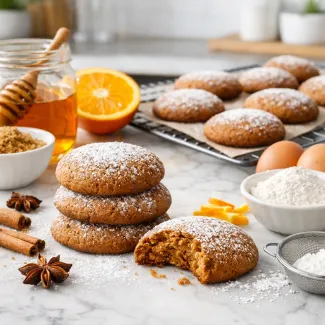
A tray of Gingerbread Crinkle Cookies for a Cozy January brings quiet winter comfort straight from the oven, where old European gingerbread traditions meet a modern crinkled finish. Warm ginger, cinnamon, cloves, and dark molasses melt into a dough that bakes into crisp, sugar-cracked tops with soft, tender centers. Each bite feels calming yet deeply flavorful, carrying the aroma of slow afternoons, shared kitchens, and the simple pleasure of spiced cookies made to be enjoyed one by one.
Crinkled Gingerbread Cookies That Warm Up January
Deeply spiced winter cookies with soft centers and dramatic crackled tops
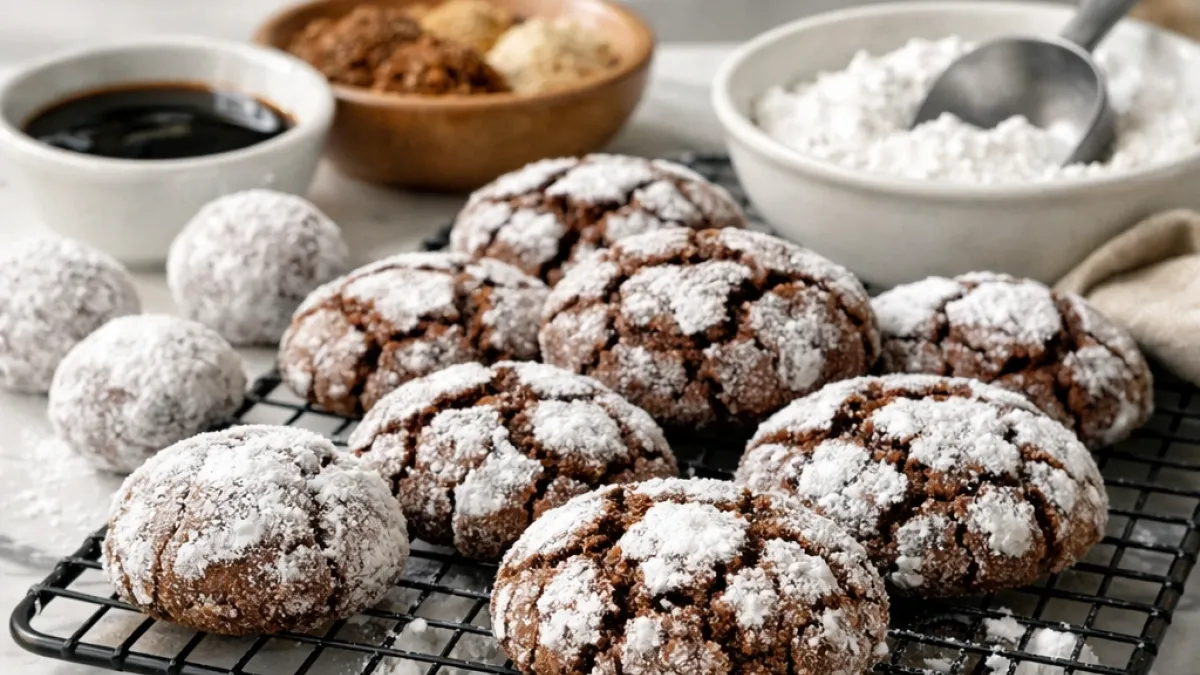
The first bite delivers warm spice, a gentle molasses depth, and that unmistakable moment when a soft, almost brownie-like center yields under a thin, crackled crust dusted in sugar. Gingerbread crinkle cookies carry emotion as much as flavor — the calm of slow winter afternoons, the quiet joy of baking while January settles in, and the comforting aroma that fills the kitchen long before the oven timer rings. The texture is where the magic lives: crisp edges, tender interior, and a surface that fractures naturally as the dough expands, creating that iconic crinkle pattern that feels both rustic and refined.
These cookies trace their roots back to traditional European spiced gingerbread, where warming spices were once prized for both flavor and preservation. Over time, the crinkle style emerged as bakers embraced higher moisture doughs and sugar coatings that react dramatically to oven heat. The result is a cookie that looks indulgent but feels honest — imperfect cracks, deep color, and a balance between chew and softness that makes each piece slightly different from the last.
Flavor profile and ingredient harmony
The character of gingerbread crinkle cookies comes from how familiar pantry ingredients interact rather than from complexity. Ginger, cinnamon, cloves, and nutmeg provide layered warmth, while molasses anchors the sweetness with depth and color. Butter and eggs soften the crumb and carry flavor, while sugar on the outside creates contrast — visual and textural — as it melts, cracks, and sets. Every component has a role, shaping aroma, moisture, and structure without overpowering the whole.
Why these cookies feel right in January
January baking leans toward comfort, reflection, and slower rhythms. Gingerbread crinkle cookies fit naturally into this mood:
- Warm spices that feel grounding after the holidays
- A soft texture that stays tender for days
- Visual appeal that feels handmade, not polished
- Flavors that pair effortlessly with tea, coffee, or milk
They sit comfortably between indulgence and restraint — rich enough to satisfy, familiar enough to feel calm.
Why you’ll love this recipe
- Soft, moist centers with naturally cracked tops
- Balanced spice that’s present but not aggressive
- Dough that performs reliably in home ovens
- Cookies that store well and improve in flavor over time
Creative variations to explore
- Add a hint of orange zest to lift the spice blend
- Roll the dough in fine raw sugar for deeper crunch
- Use dark molasses for bolder color and aroma
- Shape slightly larger cookies for a more dramatic crinkle
Storage and make-ahead notes
These cookies are well-suited for advance preparation. The dough benefits from resting, allowing spices to bloom and moisture to balance. Once baked, the cookies keep their softness when stored airtight, making them ideal for gradual enjoyment across the week — a small daily ritual rather than a one-day indulgence.
Seasonal pairings and inspiration
Gingerbread crinkle cookies shine alongside other January desserts that emphasize warmth and contrast. If you’re looking to extend the winter dessert table, a comforting option like Cozy January Bread Pudding with Vanilla Sauce offers a spoon-soft counterpoint. For moments that call for pure indulgence, Decadent Hot Fudge Sundae Cake for January Celebrations leans fully into richness. And when the month calls for something lighter yet still satisfying, January Detox Green Tea Matcha Cookies bring freshness and balance without losing the pleasure of baking.
Each of these variations reflects a different January mood, but gingerbread crinkle cookies remain the anchor — spiced, soft, and timeless, carrying winter forward one crackled bite at a time.
- In a mixing bowl, cream the unsalted butter and brown sugar until light and smooth.
- Add the egg and molasses, mixing until fully emulsified and glossy.
- In a separate bowl, combine flour, ginger, cinnamon, cloves, baking soda, and salt.
- Gradually fold the dry ingredients into the wet mixture until a soft, slightly sticky dough forms.
- Cover the dough and chill for 60 minutes to firm up and enhance spice flavor.
- Preheat the oven to 180 °C (356 °Fahrenheit). Line a baking tray with parchment paper.
- Scoop portions of dough (about 25 g each), roll into balls, then coat generously in powdered sugar.
- Place cookies on the tray, spacing them about 5 cm (2 inch) apart.
- Bake for 10–12 minutes until the tops crack and the centers remain soft.
- Cool on the tray for 5 minutes, then transfer to a rack to cool completely.
A simple trick makes these cookies shine: chill the dough long enough so the spices deepen and the crinkles form naturally in the oven. It’s a small step that brings calm control and better texture, especially on cold winter days when baking slows you down in the best way.
Chef PEKIS is a professional chef and recipe developer with more than 25+ years of hands-on experience. Every recipe is carefully tested and written to feel approachable, reliable, and enjoyable in a real home kitchen.
FAQ questionWhy do gingerbread crinkle cookies crack on top?
The cracks form when cold dough hits a hot oven. The outside sets quickly while the inside continues to expand, pushing through the surface. Sugar coating dries the exterior slightly, helping create that dramatic crinkle pattern. Chef’s tip: always chill the dough well and bake at a fully preheated temperature for the best contrast.
FAQ questionHow do I keep gingerbread crinkle cookies soft inside?
Soft centers come from the right balance of fat, molasses, and baking time. Molasses holds moisture, while butter keeps the crumb tender. Pull the cookies out when the edges are set but the center still looks slightly underbaked. Chef’s tip: cookies finish cooking from residual heat on the tray.
FAQ questionCan I make the dough ahead of time?
Yes, gingerbread dough actually improves with time. Chilling overnight allows spices to bloom and flavors to deepen. The dough can be refrigerated for up to 48 hours. Chef’s tip: if the dough becomes too firm, let it sit at room temperature for a few minutes before shaping.
FAQ questionWhy is molasses important in gingerbread crinkle cookies?
Molasses provides deep flavor, moisture, and color that sugar alone can’t replace. It also reacts with baking soda to help the cookies rise and crack properly. Chef’s tip: dark molasses gives a bolder taste, while lighter molasses keeps flavors softer and sweeter.
FAQ questionHow do I prevent the cookies from spreading too much?
Excess spreading usually means the dough is too warm or the butter too soft. Proper chilling keeps the structure intact. Chef’s tip: if your kitchen is warm, chill the shaped dough balls briefly before baking to maintain a thicker cookie.
FAQ questionWhat’s the best way to store gingerbread crinkle cookies?
Store baked cookies in an airtight container at room temperature for up to five days. They often taste even better on day two as the spices settle. Chef’s tip: adding a small piece of parchment between layers prevents sticking without affecting texture.
Gingerbread crinkle cookies belong to those winter bakes that slow the pace and bring quiet comfort into the kitchen. The warmth of ginger and cinnamon, balanced by deep molasses notes, creates a flavor that feels familiar yet never boring. Their crackled tops and soft centers give each cookie its own character, making them as enjoyable to look at as they are to eat.
What makes these cookies stand out is the contrast in texture. A lightly crisp exterior gives way to a tender, moist middle that stays soft for days. This balance makes them ideal for January baking, when desserts are meant to feel grounding rather than flashy, and every bite carries a sense of calm indulgence.
The dough itself encourages patience. Resting and chilling allow the spices to develop naturally, turning simple ingredients into a layered, aromatic result. It’s a reminder that small, thoughtful steps often shape the final experience more than complexity ever could.
Served with coffee, tea, or enjoyed on their own, these cookies fit seamlessly into everyday moments. They don’t demand an occasion; they create one quietly, through warm aroma, gentle sweetness, and familiar spice that lingers long after the last crumb is gone.
Allergens present
- Gluten: wheat flour, affects people with celiac disease or gluten sensitivity
- Milk: butter, may trigger dairy intolerance
- Eggs: whole egg, common allergen
Allergen & gluten substitution tips
- Gluten-free: replace wheat flour with a certified gluten-free all-purpose flour blend
- Dairy-free: use plant-based butter alternative with similar fat content
- Egg-free: substitute egg with 60 g applesauce or a flaxseed gel (10 g ground flaxseed + 30 ml water)
- Iron (mg): 0.9 – supports oxygen transport and energy metabolism
- Calcium (mg): 18 – contributes to bone health
- Magnesium (mg): 9 – supports muscle and nerve function
- Potassium (mg): 65 – helps regulate fluid balance and heart function
- Polyphenols (mg): 35 – derived mainly from molasses and spices, help combat oxidative stress
- Gingerols (mg): 4 – from ginger, known for anti-inflammatory effects
- Cinnamaldehyde compounds (mg): 2 – from cinnamon, contribute to antioxidant activity
Calculators


Recipes worth trying