A slow, glossy spoonful of Homemade Ginger and Honey Cough Syrup Recipe brings instant comfort, where fresh ginger releases gentle warmth and raw honey wraps it in smooth sweetness. Rooted in old kitchen traditions, this syrup feels thick, soothing, and deliberate—crafted from ginger, honey, water, and lemon to coat the throat and carry calm with every sip.
A common mistake with ginger and honey syrups is adding honey while the liquid is too hot, which dulls flavor and texture. Keeping the infusion gently warm before mixing is what makes this method work—ginger stays aromatic, honey remains smooth, and the syrup keeps its silky consistency instead of turning flat or grainy.
Created by PEKIS – a professional chef and recipe developer with over 25 years of experience in cooking and baking, focused on European and international cuisine, with a hands-on, detail-driven approach shaped by everyday kitchen practice.
A Warming Kitchen Tonic Rooted in Tradition
Ginger, honey, and the slow comfort of homemade remedies
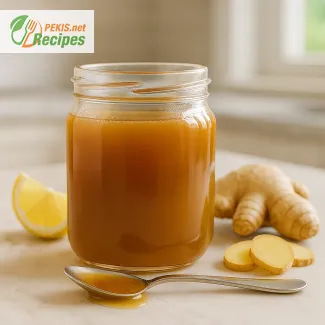
A glossy amber syrup slides slowly from the spoon, clinging with a silky, resin-like texture that coats the throat before the warmth even arrives. Ginger leads with a gentle heat, honey follows with round sweetness, and together they create that familiar kitchen aroma that signals care, patience, and a quiet pause. This homemade ginger and honey cough syrup belongs to the kind of cooking done in calm moments—when jars are sterilized, roots are sliced, and time is allowed to do its work. The mouthfeel is thick yet fluid, never sharp, designed to soothe rather than shock, with layers that unfold gradually.
Across cultures, ginger and honey have long shared the same shelf. In European home kitchens, sliced ginger simmered gently with honey was a cold-season staple. In parts of Asia, fresh ginger infusions were used to balance warmth and circulation, while raw honey preserved and carried flavor. What unites these traditions is restraint: no rush, no excess, just two powerful ingredients allowed to express themselves fully.
How the core ingredients shape flavor and feel
Ginger contributes more than heat. When handled gently, it releases aromatic oils that feel warming rather than aggressive. Honey acts as both sweetener and carrier, binding flavors into a smooth, cohesive syrup that lingers pleasantly. The balance between the two determines whether the syrup feels sharp or rounded, thin or luxuriously viscous. Small adjustments—how thinly ginger is cut, how long warmth is applied—change the entire character.
This approach connects naturally with other slow kitchen traditions, such as Fermented garlic honey: easy immune-boosting kitchen tonic, where time transforms simple ingredients into something deeper and more complex.
A short note on origin and continuity
While no single region can claim this syrup, its spirit mirrors centuries of domestic practice. Before commercial syrups existed, households relied on what stored well and delivered comfort. Ginger traveled trade routes; honey remained local. Their meeting point became a remedy passed quietly from one generation to the next, adapted to taste and climate but always recognizable.
Storage and make-ahead considerations
This syrup is naturally suited to preparation in advance. Honey’s preserving qualities help maintain flavor, while ginger continues to infuse gently over time. Stored in a clean, airtight glass jar in a cool place, the texture stays stable and glossy, and the aroma deepens rather than fades. Preparing a small batch ahead of colder weeks means the syrup is ready the moment it’s needed, with no loss of character.
Why this syrup fits into a wider kitchen tradition
Homemade cough syrup sits comfortably beside other comforting, technique-driven dishes and tonics:
- It shares patience and timing with fermentation practices discussed in Why Is Fermentation Suddenly a Hot Trend in Home Kitchens?.
- It pairs naturally with gentle, soothing foods like Prežganka (Slovenian browned-flour soup) – simple soothing home remedy, where simplicity and warmth take priority over complexity.
Why you’ll appreciate this preparation
- Balanced warmth without harshness
- Silky, spoon-coating texture that feels comforting
- Minimal ingredients with clear, expressive roles
- Easy to prepare ahead and keep on hand
- Adaptable to personal taste without losing identity
Creative variations to explore
- Add citrus peel for a brighter aromatic edge
- Combine with mild spices for a deeper winter profile
- Blend with other honey-based tonics for layered use
Ingredient relationships and culinary context
Ginger appears widely in both savory and sweet traditions, from broths to baked goods, while honey bridges dessert, preservation, and seasoning. Their pairing in syrup form highlights how texture, aroma, and temperature interact more than sweetness alone. This same philosophy underpins other honey-centered preparations, including Fermented garlic honey: easy immune-boosting kitchen tonic, where time and balance remain central.
Each spoonful of this syrup reflects a broader culinary language—one where slow methods, careful handling, and respect for ingredients create comfort that feels intentional and enduring.
- Peel the fresh ginger and slice it thinly to maximize surface area and flavor extraction.
- Place the sliced ginger and water into a small saucepan.
- Heat gently over medium heat until it reaches a light simmer (95–98 °C / 203–208 Fahrenheit). Do not boil vigorously.
- Simmer for 15 minutes, allowing the liquid to reduce slightly and become aromatic.
- Remove the saucepan from the heat and let the ginger infusion cool to lukewarm (below 40 °C / 104 Fahrenheit).
- Strain out the ginger slices using a fine sieve.
- Stir the honey slowly into the warm (not hot) liquid until fully dissolved.
- Add the lemon juice and mix thoroughly.
- Pour the finished syrup into a sterilized glass jar, seal, and refrigerate.
FAQ questionHow long does homemade ginger and honey cough syrup last?
Stored in a clean, airtight glass jar in the refrigerator, it typically keeps its best flavor and texture for 2–3 weeks. Honey helps with stability, but the added water and fresh lemon juice make refrigeration important. If you notice fermentation bubbles, an unusually sour smell, or a sharp change in taste, discard it and make a fresh batch.
FAQ questionCan I give ginger and honey cough syrup to children?
Honey is not suitable for infants under 12 months. For older children, smaller servings are usually preferred, and the ginger’s warmth can be intense depending on sensitivity. Keep the syrup mild by using gentler ginger simmering and avoid adding extra spice. If a child has allergies, asthma, or you’re unsure, choose a simpler option and consult a qualified professional.
FAQ questionWhy did my syrup turn thin instead of thick and glossy?
Thickness comes from two things: reduction (slightly concentrating the ginger infusion) and enough honey to create a cohesive syrup. If the simmer was too short or the water ratio was high, it will stay runny. Also, adding honey to very hot liquid can make the syrup feel “flat” and less structured—aim for lukewarm infusion before mixing for the best body.
FAQ questionShould I boil the honey with ginger?
It’s better not to. High heat can mute honey’s delicate aroma and shift the flavor toward a cooked sweetness. The more reliable method is to simmer ginger in water, cool the liquid to below 40 °C / 104 Fahrenheit, then stir in honey. This preserves a bright honey profile and keeps the texture smooth.
FAQ questionCan I make it without lemon juice?
Yes. Lemon adds brightness and helps balance sweetness, but the syrup still works without it. If you skip lemon, the flavor may feel heavier and less lifted. A gentle alternative is a small splash of mild fruit juice, or simply rely on the ginger’s natural sharpness.
FAQ questionWhat’s the best way to take it for comfort?
Most people use small servings so the syrup can coat the throat. Let it sit briefly on the tongue before swallowing, and avoid chasing it with very cold drinks right away. If you prefer a lighter feel, stir a spoonful into warm water (not hot) to create a soothing drink while keeping the honey flavor intact.
Gentle warmth, slow infusion, and a smooth, spoon-coating texture define the character of this ginger and honey cough syrup. Each step focuses on balance rather than intensity, allowing ginger to release its warmth gradually while honey binds everything into a calm, rounded finish that feels deliberate and comforting.
The strength of this preparation lies in method over force. Careful temperature control protects aroma, preserves mouthfeel, and keeps the syrup glossy instead of dull. Small details—cooling before adding honey, slicing ginger correctly—shape the final result more than extra ingredients ever could.
This syrup also fits naturally into a broader kitchen tradition built on time, patience, and simplicity. It connects easily with other honey-based tonics and gentle comfort foods, forming a quiet rhythm of seasonal cooking that values restraint and clarity of flavor.
Taken slowly, stored thoughtfully, and prepared with intention, the syrup remains consistent, adaptable, and reliable. Its appeal comes from texture, warmth, and familiarity, making it a natural companion to calm routines and mindful home cooking.
Allergens present in the recipe:
- Honey: natural bee product; unsuitable for infants under 1 year
Gluten information:
- Gluten: not present
Allergen & gluten substitution tips:
- Honey alternative: replace with maple syrup or agave syrup for vegan suitability
- Citrus sensitivity: replace lemon juice with mild apple juice concentrate
- Vitamin C (mg): 2.1 – supports immune defense and tissue repair
- Vitamin B6 (mg): 0.05 – contributes to energy metabolism
- Potassium (mg): 22 – helps maintain normal fluid balance
- Magnesium (mg): 2 – supports muscle and nerve function
- Gingerols (mg): 6.5 – contribute to warming sensation and oxidative balance
- Shogaols (mg): 1.8 – formed during gentle heating, supporting cellular protection
- Polyphenols (mg): 12 – naturally occurring compounds from honey and ginger
Recipes worth trying