Velvety and gently crisp, January Detox Matcha Green Tea Cookies bring a sense of calm indulgence into the quiet rhythm of winter baking. Inspired by Japanese tea traditions, finely milled matcha lends a deep green hue and a clean, slightly bitter note that balances natural sweetness. Each cookie bakes into a delicate shell with a soft, tender center, offering a composed texture and a refined green-tea aroma that lingers long after the last bite.
A Fresh Start with Matcha Green Tea Cookies
Clean flavors, tender crumb, and a quietly indulgent January ritual
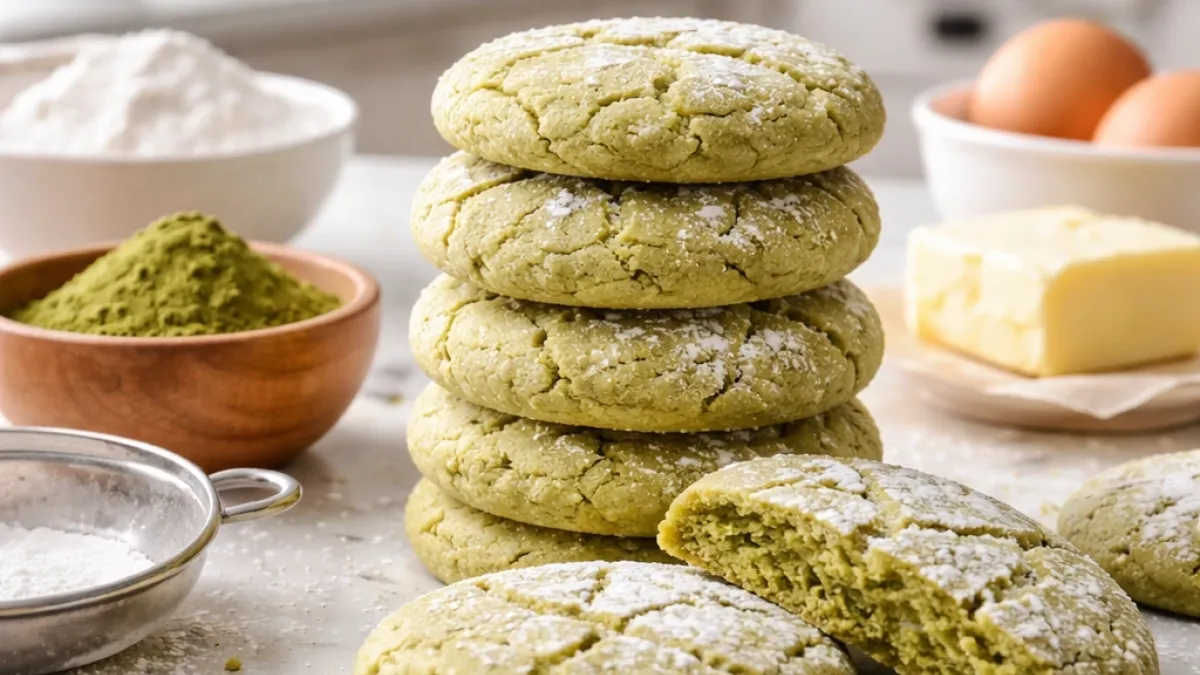
Velvety green dough cracks gently at the edges as it bakes, releasing a soft vegetal aroma that feels both calming and indulgent. These matcha green tea cookies strike a rare balance: lightly crisp on the outside, tender and almost creamy inside, with a depth of flavor that lingers rather than overwhelms. January is the moment when cravings shift—away from excess and toward clarity, balance, and intention—and this cookie answers that moment without sacrificing pleasure.
Matcha brings more than color. Its finely milled green tea leaves deliver a clean, slightly bitter backbone that reins in sweetness and gives structure to the cookie’s flavor. Sugar softens the edges, fat carries aroma and mouthfeel, while flour creates a delicate crumb that lets matcha stay front and center. The result is restrained, elegant, and deeply satisfying—a dessert that feels composed rather than heavy.
The quiet story behind matcha in baking
Matcha has long been part of Japanese tea culture, valued for its ceremonial preparation and meditative calm. Its move into baking came later, when pastry chefs realized how well its earthy bitterness pairs with dairy, eggs, and gentle sweetness. In cookies, matcha behaves differently than cocoa or spices: it doesn’t dominate; it layers. That makes it ideal for January baking, where subtlety matters more than intensity.
Texture and flavor balance that defines these cookies
What makes these cookies memorable isn’t just taste—it’s structure. The dough bakes into a surface that sets quickly, while the interior stays soft and cohesive. Matcha’s natural dryness tightens the crumb just enough, preventing greasiness and keeping the cookie light on the palate. Each bite feels intentional, clean, and controlled.
Why simplicity matters here
This is where restraint becomes an advantage. Recipes like this thrive on few, well-chosen ingredients, each playing a clear role. The philosophy mirrors what’s explored in
Why simple dishes often taste better than complex recipes, where clarity of flavor creates confidence in the final result. Matcha cookies don’t need layers of fillings or glazes—their strength lies in precision, not excess.
Storage and make-ahead notes
- Baked cookies keep their texture best when stored airtight at room temperature.
- The dough can be prepared ahead and chilled, which actually deepens the matcha aroma.
- Slightly underbaking preserves the soft interior even after storage.
Why you’ll love this recipe
- Balanced sweetness that never masks matcha
- Soft, refined texture with clean edges
- Feels indulgent yet appropriate for a lighter season
- Elegant color and aroma without decoration
- Ideal with tea, coffee, or as a quiet afternoon treat
Creative variations worth exploring
- Pair matcha with white chocolate notes for roundness
- Add citrus zest to lift the green tea aroma
- Roll the dough edges in sugar for extra surface contrast
- Shape smaller cookies for a more delicate bite
Practical flexibility for everyday baking
Whether you’re baking for yourself or sharing, scaling matters. If you need to adjust batch size without losing balance, the
How to Adjust Recipe Portions Easily with Our Interactive Portion Calculator helps keep texture and flavor consistent, even when quantities change.
These January detox matcha green tea cookies don’t announce themselves loudly. They invite you in quietly, reward attention, and leave a clean finish—exactly what this time of year asks for.
- In a medium bowl, sift together the flour, matcha powder, baking powder, and salt until evenly combined and lump-free.
- In a separate bowl, cream the softened butter with the cane sugar until pale, smooth, and airy. This step ensures a tender cookie texture.
- Add the egg and vanilla extract to the butter mixture and mix until fully incorporated and glossy.
- Gradually fold the dry ingredients into the wet mixture, mixing just until a uniform, soft dough forms. Avoid overmixing to keep the cookies delicate.
- Cover the dough and refrigerate for 30 minutes to stabilize the structure and enhance the matcha aroma.
- Preheat the oven to 170 °C (340 °F). Line a baking tray with parchment paper.
- Shape the dough into balls of approximately 25 g each. Roll lightly in powdered sugar if using for coating.
- Place the dough balls on the tray, spacing them evenly. Gently flatten slightly with your palm.
- Bake for 12 minutes, until the edges are set but the centers remain soft.
- Remove from the oven and allow the cookies to rest on the tray for 5 minutes, then transfer to a wire rack to cool completely.
A small but crucial tip: don’t overmix the dough. The most common mistake with matcha cookies is aggressive mixing, which dulls the color and tightens the texture. This method works because the dough is handled gently and briefly chilled, allowing matcha to bloom while keeping the crumb soft and composed. The result is a balanced cookie where flavor and texture stay in harmony.
Created by PEKIS – a professional chef and recipe developer with over 25 years of experience in cooking and baking, focused on European and international cuisine, with a strong emphasis on precision, technique, and reliable results.
FAQ questionWhy do my matcha cookies turn brown instead of staying green?
Matcha is sensitive to heat, oxidation, and overbaking. Browning usually comes from a too-hot oven, baking too long, or using matcha that’s already stale. Keep the bake short so the centers stay set but soft, and avoid placing the tray too high in the oven where heat is harsher. Another common culprit is overmixing—too much friction and air exposure can dull the color. For the best shade, sift matcha into the flour, mix only until combined, and cool the cookies away from steam and sunlight.
FAQ questionWhat kind of matcha is best for baking cookies?
Choose matcha labeled culinary grade for consistent flavor and color at a reasonable cost. If you want a cleaner taste with less bitterness, a higher-quality culinary matcha (sometimes sold as “premium”) works well. Ceremonial matcha can be used, but it’s usually better saved for drinking because heat can mute its delicate notes. Whatever you choose, freshness matters most—look for a vibrant green powder and store it airtight.
FAQ questionHow do I keep matcha cookies soft in the center?
Soft centers come from controlled baking time and proper fat-to-flour balance. Pull the cookies when the edges are set but the middle still looks slightly underdone; residual heat finishes the bake. Chilling the dough briefly also helps the cookies hold shape and prevents them from spreading too thin, which can dry them out. Once baked, store them airtight at room temperature so the crumb stays tender.
FAQ questionCan I make these matcha green tea cookies without butter?
Yes—swap butter for a plant-based baking butter with similar fat content. The key is texture: you want a fat that creams well with sugar to trap air and create a lighter bite. Avoid thin oils for this recipe style, since they can lead to excessive spread and a greasy crumb. If using vegan butter, chill the dough a little longer to stabilize the shape.
FAQ questionHow can I make January Detox Matcha Green Tea Cookies less sweet?
You can reduce sugar slightly, but do it carefully because sugar affects spread, browning, and tenderness. A small reduction keeps the structure stable while letting matcha’s clean bitterness come through more clearly. Another trick is skipping any sugary coating and focusing on matcha quality—fresh matcha naturally tastes fuller and needs less sweetness to feel balanced.
FAQ questionDo matcha cookies need to rest or chill before baking?
Chilling is strongly recommended because it improves texture and flavor clarity. Resting the dough lets flour hydrate and matcha distribute evenly, giving a smoother crumb and more consistent color. It also helps the cookies bake thicker, which supports that soft center. Even a short chill makes shaping easier and reduces over-spread.
FAQ questionHow should I store matcha cookies so they stay fresh?
Store them in an airtight container at room temperature, away from light and heat. Matcha aroma fades with exposure, so keeping air out preserves that distinct green-tea fragrance. If you stack cookies, place parchment between layers to protect the surface. For longer storage, freeze the baked cookies and thaw covered to prevent condensation from softening the exterior too much.
January Detox Matcha Green Tea Cookies bring together matcha green tea, balanced sweetness, and a texture that lands between gentle crisp edges and a soft center. The flavor stays clean and focused, so each ingredient has a clear role in the final bite.
For consistent results, matcha is treated as a delicate ingredient: it’s sifted for even color, mixed briefly to avoid a tight crumb, and baked just until the cookies set. A short chill supports shape and keeps the interior tender while the surface forms a light shell.
The cookie profile works well for small batches or larger baking sessions because portioning and timing are easy to standardize. The same dough can be shaped uniformly, baked in predictable minutes, and cooled to lock in aroma without drying out.
If you want a controlled variation, adjust sweetness slightly, add a citrus note, or choose a higher-grade matcha for a cleaner finish. The core method stays the same: minimal mixing, short chilling, and precise baking time for stable texture and flavor.
- Gluten: wheat flour; replace with a certified gluten-free flour blend to eliminate gluten.
- Eggs: whole egg; substitute with 40 g applesauce or a flaxseed egg for egg-free preparation.
- Milk: butter; replace with plant-based butter to remove dairy.
- Vitamin A (µg): 52 – supports vision and immune function.
- Vitamin B2 – Riboflavin (mg): 0.08 – contributes to normal energy metabolism.
- Iron (mg): 0.9 – essential for oxygen transport in the blood.
- Calcium (mg): 22 – supports bone strength and muscle function.
- Magnesium (mg): 9 – aids muscle relaxation and nervous system balance.
- Catechins (mg): 55 – help protect cells from oxidative stress.
- EGCG – Epigallocatechin gallate (mg): 32 – supports metabolic balance and cellular protection.
- Chlorophyll (mg): 6 – contributes to natural detoxifying processes.
Calculators


Recipes worth trying