Golden on the outside and tender at the center, Juicy Air Fryer Chicken Breast in 15 Minutes, Perfect Every Time brings together chicken breast, olive oil, and warm spices in a way that feels both comforting and modern. The air fryer locks in moisture while creating a lightly bronzed surface, turning a simple cut into a satisfying, weeknight-ready dish with clean flavor, gentle aroma, and a texture that stays succulent with every slice.
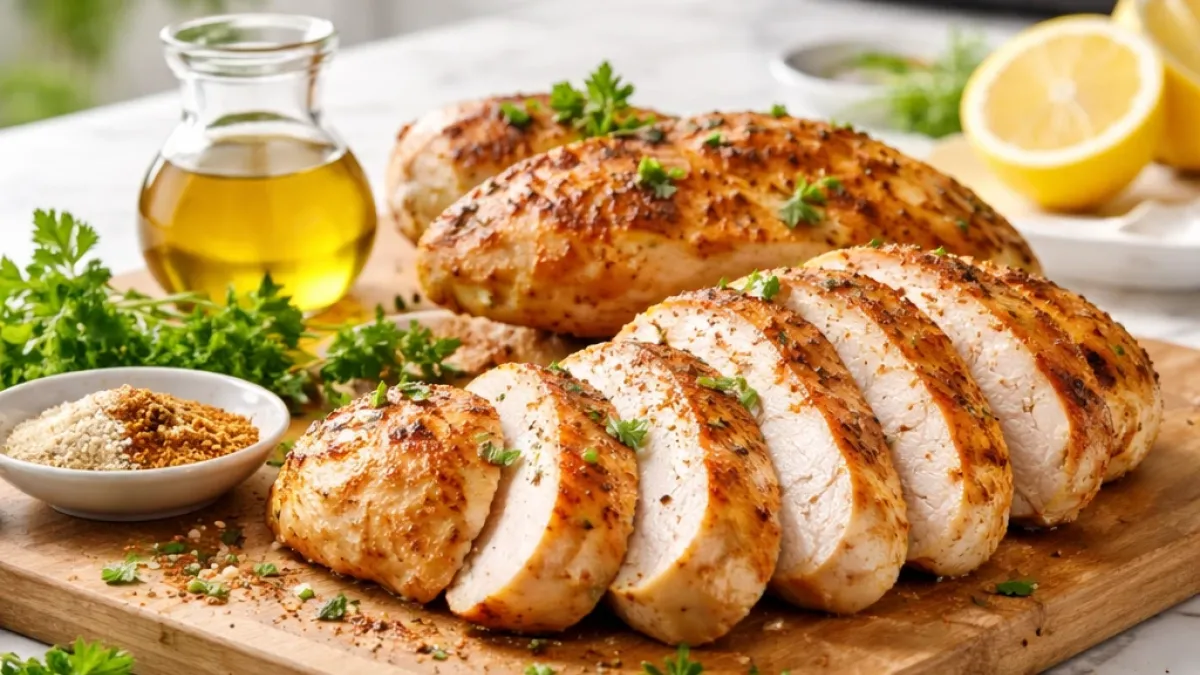
Golden, Juicy Chicken Breast Straight from the Air Fryer
A fast, reliable way to achieve tender texture and deep flavor in minutes
The moment the air fryer chicken breast comes out, the surface looks lightly bronzed and taut, while the inside stays juicy, soft, and fragrant. A gentle press reveals that unmistakable spring that signals perfect doneness. Steam escapes slowly, carrying savory aromas that feel both comforting and modern. This dish belongs to busy evenings and confident cooks alike—when you want food that tastes carefully prepared, even though it fits effortlessly into real life.
Chicken breast has long been valued for its clean flavor and versatility, but it also has a reputation for drying out. The air fryer changes that relationship entirely. By circulating hot air evenly and intensely, it seals moisture inside the meat while building a delicate outer layer that feels almost pan-seared. What once required constant attention now becomes a dependable routine: consistent heat, predictable timing, and repeatable results.
Across Europe and North America, the air fryer has quietly reshaped how home cooks approach lean proteins. Inspired by convection ovens and professional kitchen airflow, it brought restaurant-style control into everyday kitchens. Chicken breast naturally became one of its most popular uses—quick to cook, forgiving when seasoned well, and adaptable to countless flavor profiles.
Why this preparation works so well
- Even airflow surrounds the chicken, reducing dry spots
- Short cooking time preserves natural juices
- High surface heat encourages light browning without excess fat
- Minimal handling lowers the risk of overcooking
Seasonings play a supporting but crucial role. Salt enhances natural savoriness, while a small amount of fat helps carry heat and flavor across the surface. Herbs and spices bloom rapidly under circulating heat, creating aroma without bitterness. Acidity—whether from citrus or fermented elements—balances richness and keeps the meat tasting fresh.
Why you’ll love this approach
- Consistently juicy chicken breast, even for beginners
- Fast preparation that fits weeknight schedules
- Clean flavors that work with many side dishes
- Easy to repeat, no guesswork involved
For cooks who enjoy exploring variations, this method acts as a foundation rather than a limitation.
Creative variations to explore
- Mediterranean direction with herbs and subtle citrus notes
- Smoky profile using paprika and warm spices
- Light garlic-forward version finished with fresh herbs
- Mildly spiced option that pairs well with yogurt-based sides
Storage and make-ahead use
Air fryer chicken breast stores exceptionally well. Once cooled, it keeps its tender structure and reheats without becoming fibrous. Sliced cold, it works in salads and wraps; gently rewarmed, it remains moist and flavorful. This makes it ideal for advance preparation without sacrificing quality.
Explore related versions and guides
If you’re looking for the classic version, the full recipe is available here:
Air Fryer Chicken Breast
For precision and confidence across different models, this reference helps fine-tune results:
Ultimate air fryer time and temperature chart – your complete cooking guide
To expand possibilities with the same core technique, try a crispier, marinade-based variation:
Crispy Air Fryer Chicken Tenders with Yogurt Marinade for Dinner
And if you want to upgrade consistency and workflow, discover tools that subtly improve outcomes:
Air Fryer must-have tools: lesser-known accessories that upgrade your cooking
- Pat the chicken breast fillets dry with kitchen paper. This step is essential for even browning and proper texture.
- Place the chicken in a bowl and drizzle with olive oil. Massage gently so the surface is evenly coated.
- Sprinkle salt, black pepper, paprika powder, and garlic powder evenly over the chicken. Rub the spices in so they adhere well.
- Preheat the air fryer to 190 °C (375 °F). Proper preheating ensures consistent cooking from the start.
- Arrange the chicken breast fillets in a single layer in the air fryer basket, leaving space between them for airflow.
- Cook for 7 minutes, then turn the fillets carefully.
- Continue cooking for another 6–8 minutes until the chicken is fully cooked, juicy inside, and lightly golden on the outside.
- Remove the chicken from the air fryer and let it rest for 2–3 minutes before slicing. Resting allows the juices to redistribute evenly.
One common mistake with chicken breast is rushing the heat, which pushes moisture out before the surface has time to set. This method works because steady airflow, proper resting, and restrained seasoning let the meat stay juicy while developing flavor naturally. The air fryer becomes a controlled environment, not a shortcut.
Created by PEKIS – a professional chef and recipe developer with over 25 years of experience in cooking and baking, focused on European and international cuisine, with a clear preference for precise methods that work reliably in real home kitchens.
FAQ questionHow do I keep air fryer chicken breast juicy?
Start with evenly sized fillets so the heat hits them at the same pace. Pat the surface dry, then coat lightly with oil and seasonings—this helps form a thin layer that reduces moisture loss. Cook with consistent airflow (single layer, space between pieces), and rely on carryover heat by resting the chicken a few minutes after cooking. That short rest is where juices redistribute instead of spilling out onto the board when you slice.
FAQ questionWhat temperature should I use for chicken breast in an air fryer?
A moderate-high setting works best because it builds surface color without drying the center too quickly. For most air fryers, 190 °C (375 °F) is a strong default: hot enough to set the outside, controlled enough to keep the interior tender. If your air fryer runs very hot, you can slightly reduce heat and extend time a touch—what matters is stable cooking, not maximum heat.
FAQ questionHow long does chicken breast take in the air fryer?
Timing depends on thickness more than weight. A typical chicken breast fillet often lands around 13–15 minutes total, flipping halfway, when cooked at a steady heat. Very thick pieces take longer; thin cutlets cook faster. The reliable way to avoid overcooking is to treat time as a guide and focus on reaching doneness, then resting so the texture stays soft and moist.
FAQ questionDo I need to preheat the air fryer?
Preheating helps a lot for chicken breast because it prevents a slow warm-up that can dry the meat before browning starts. A brief preheat lets the chicken hit consistent heat immediately, improving browning and timing accuracy. If your model doesn’t require preheating, you can still do it for best repeatability—especially when you want the same result every time.
FAQ questionShould I flip chicken breast in the air fryer?
Yes—flipping improves even cooking and surface texture. Air fryers circulate heat well, but the basket and airflow pattern still create hotter zones. Turning halfway helps avoid one side getting too dry while the other stays pale, and it supports a more uniform golden exterior.
FAQ questionCan I marinate chicken breast before air frying?
You can, but keep it balanced. A thin, well-drained marinade enhances flavor without steaming the surface. Very wet marinades can reduce browning because excess moisture blocks direct heat. If you do marinate, pat the surface lightly before cooking and use just enough oil to help seasonings cling, so you still get clean flavor and a lightly bronzed finish.
FAQ questionHow do I store and reheat air fryer chicken breast without drying it out?
Cool it fully, store it airtight, and reheat gently. The best approach is short reheating at moderate heat so the center warms without overcooking. Slicing before reheating can speed things up, but don’t cut too thin—thin slices lose moisture faster. For meal prep, keeping the breast whole and slicing just before serving helps preserve juiciness and texture.
Juicy air fryer chicken breast proves that precise heat and simple seasoning can deliver reliable, repeatable results without extra steps. Even airflow, controlled temperature, and short resting time work together to keep the meat tender inside while forming a light, flavorful surface.
This approach fits naturally into everyday cooking because it balances speed and control. The method adapts well to different air fryer models and chicken sizes, making it easy to scale up or down while maintaining texture and flavor consistency.
The clean profile of chicken breast allows it to pair smoothly with vegetables, grains, or fresh sauces. That flexibility turns a single preparation into a foundation meal, useful for quick dinners, meal prep, or simple plated dishes.
Focusing on timing, airflow, and resting transforms a lean cut into something dependable and satisfying. When these elements stay in balance, the result is juicy, well-structured chicken that holds its quality from the first slice to the last.
Allergens present in the recipe
- None: This recipe is naturally free from common allergens such as milk, eggs, nuts, soy, and gluten.
Gluten information
- Gluten-free: No ingredients containing gluten are used.
Allergen and gluten substitution tips
- Spice sensitivity: Replace paprika with dried herbs if sensitive to peppers.
- Low-sodium option: Reduce salt or use a low-sodium salt alternative.
- Vitamin B6 (mg): 0.9 – Supports normal metabolism and nervous system function.
- Vitamin B12 (µg): 0.6 – Essential for red blood cell formation and energy metabolism.
- Niacin / Vitamin B3 (mg): 14 – Contributes to normal energy production and skin health.
- Phosphorus (mg): 320 – Important for bone strength and cellular energy transfer.
- Selenium (µg): 32 – Supports immune function and antioxidant defense.
- Selenium (µg): 32 – Acts as an antioxidant, protecting cells from oxidative stress.
- Phenolic compounds from paprika (mg): 18 – Help reduce oxidative damage and support overall cellular health.
Calculators

Recipes worth trying