Warm and gently soothing, Thyme Lemon Syrup for Cough Relief brings together fragrant thyme, fresh lemon, and golden honey in a smooth, velvety syrup that slowly coats the throat. Rooted in European home traditions, this simple preparation balances herbal depth with citrus brightness, creating a comforting texture that feels calm and reassuring, especially on cold evenings when the body craves something both tender and effective.
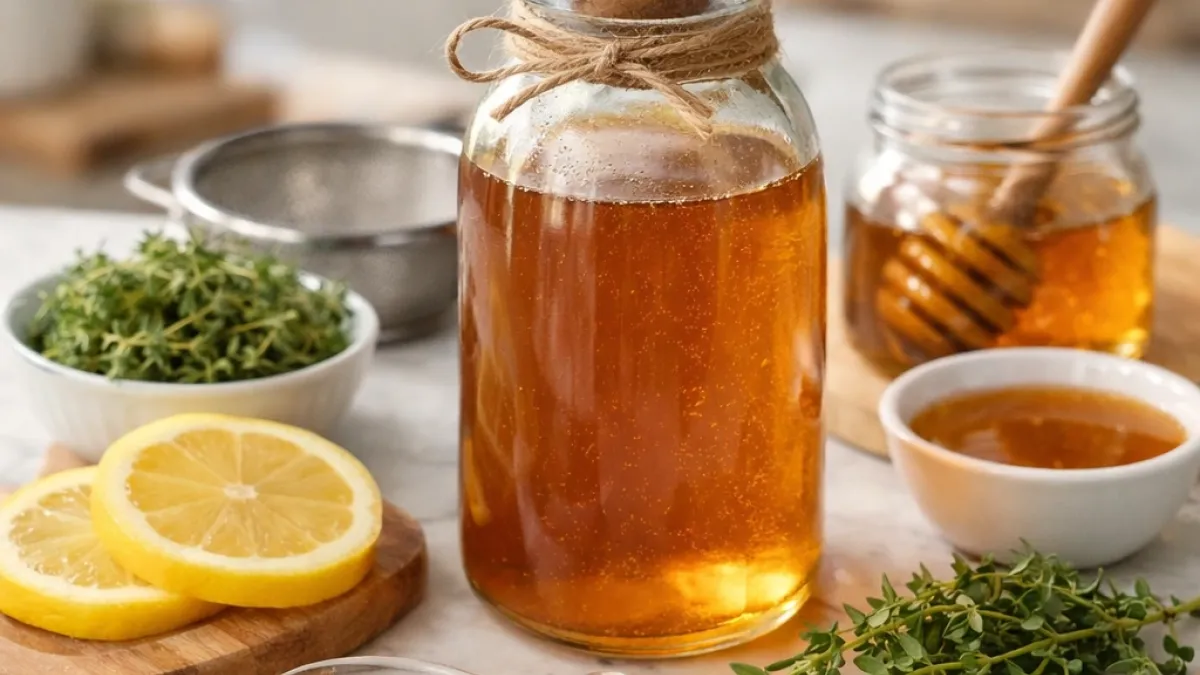
A Gentle Herbal Syrup That Soothes and Warms the Throat
Why thyme and lemon have remained a trusted home remedy for generations
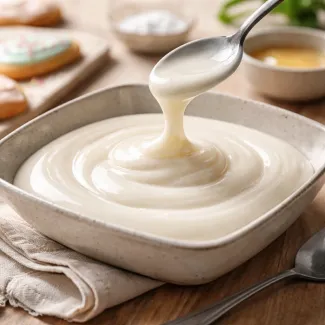
Warm, fragrant, and softly herbal, thyme lemon syrup coats the throat with a silky texture that feels comforting from the very first spoon. There’s a quiet reassurance in its aroma: fresh thyme releasing its essential oils, lemon adding brightness, and the syrup itself settling slowly, almost velvety, as it’s swallowed. This is the kind of remedy that belongs to cold evenings, wool blankets, and the instinctive care passed down through families long before pharmacies existed. Its texture is smooth but not heavy, gently clinging, designed to calm irritation without overwhelming the senses.
For centuries, thyme has been valued in European folk kitchens not as a spice, but as a functional herb. In Mediterranean regions and across Central Europe, thyme infusions were simmered when coughs lingered, while lemon was added later as trade routes expanded and citrus became more accessible. Together, they formed a balanced combination: aromatic, slightly resinous notes from thyme paired with the clean acidity of lemon, all softened into a syrup that’s easy to take even when the throat feels raw.
A closer look at the core ingredients
Each component plays a clear role in how the syrup feels and performs:
- Thyme contributes its naturally aromatic character and a warming sensation that feels grounding rather than sharp.
- Lemon brings freshness and a light astringency that helps the syrup feel clean and bright on the palate.
- A natural sweet base rounds everything out, creating a smooth, spoonable texture that coats rather than drips.
The result isn’t candy-sweet, nor aggressively herbal. It’s balanced, restrained, and intentionally gentle, which is why this syrup is often chosen for both adults and children when a softer approach is preferred.
Origin and tradition
Herbal syrups like this one appear in old European household notebooks, often listed simply as “thyme syrup” or “herb syrup for winter cough.” Lemon was sometimes optional, depending on availability, but over time it became essential for both flavor and preservation. Unlike sharp decoctions or bitter tinctures, syrups were meant to be pleasant enough to take regularly, which explains their lasting popularity.
Storage and make-ahead preparation
This syrup is particularly well-suited to batch preparation. Once ready, it can be stored cool and protected from light, making it practical to prepare before cold season peaks. Its consistency remains stable, and the flavor often becomes more rounded after a short rest.
Why this syrup stands out
- Naturally soothing texture that coats the throat
- Balanced herbal flavor without bitterness
- Gentle enough for repeated use
- Rooted in traditional home practice, not trends
- Easy to pair with other natural remedies if needed
Creative variations you can explore
- Swap part of the lemon for orange peel to soften acidity
- Combine thyme with a touch of wild herbs for a deeper aroma
- Adjust sweetness to create a lighter or more coating syrup, depending on preference
Related gentle home remedies
If you’re exploring natural approaches to cough relief, you may also find it useful to look at other time-tested options. A classic example is the Natural Onion Cough Syrup for Dry and Wet Cough Relief, known for its deep, savory sweetness. For a warming alternative with a sharper profile, there’s also a Homemade Ginger and Honey Cough Syrup Recipe. Those interested in fermentation-based kitchen tonics often turn to Fermented garlic honey: easy immune-boosting kitchen tonic, while traditional comfort seekers may appreciate Prežganka (Slovenian browned-flour soup) – simple soothing home remedy for its warmth and simplicity.
All of these share the same philosophy as thyme lemon syrup: simple ingredients, gentle preparation, and a focus on comfort rather than intensity.
- Rinse the fresh thyme thoroughly under cold running water and gently pat dry.
- Wash the lemon carefully, then slice it thinly, keeping the peel intact.
- Pour water into a saucepan and add the thyme and sliced lemon.
- Bring to a gentle simmer over medium heat, then reduce heat and cook slowly for 20 minutes, allowing the liquid to extract flavor and aroma.
- Remove from heat, cover, and let the mixture steep for 10 minutes.
- Strain the liquid through a fine sieve, pressing lightly to extract all liquid; discard solids.
- While the liquid is still warm (not hot), stir in the honey until fully dissolved.
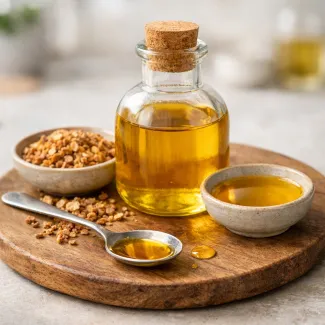
- Pour the syrup into a clean glass bottle and allow to cool completely before sealing.
A common mistake with herbal syrups is boiling too hard, which flattens the aroma and makes the flavor dull. Keeping the heat gentle lets thyme slowly release its character while the syrup stays smooth and rounded. That’s why this method works so well: it respects the ingredients and builds texture without force.
PEKIS is a professional chef and recipe developer with over 25 years of hands-on experience in cooking and baking, focused on European and international cuisine, and known for a precise yet relaxed kitchen approach.
PEKIS
FAQ questionHow do you take thyme lemon syrup for cough relief?
Use it in small, consistent amounts so the syrup can coat the throat and stay in contact with irritated tissue. A typical serving is 15 ml (1 tbsp). Take it slowly, letting it sit on the tongue for a moment before swallowing. Many people prefer it in the evening because the syrup’s smooth, protective texture can feel especially comforting when the throat is dry.
FAQ questionHow long does homemade thyme lemon syrup last?
When stored in a clean, sealed glass bottle in the refrigerator, it commonly keeps 7–10 days. Honey helps with stability, but freshness still depends on clean handling, proper cooling before sealing, and avoiding contamination (for example, never dipping a used spoon back into the bottle). If you notice bubbling, off smell, or mold, discard it.
FAQ questionCan you make thyme lemon syrup without honey?
Yes. If you need an alternative, replace honey with maple syrup in the same amount for a similar pourable consistency and gentle sweetness. The flavor will be different—less floral, more caramel-like—but the syrup will still provide a soothing, coating feel. Avoid using low-sugar sweeteners if you want the same syrup texture.
FAQ questionShould you boil thyme and lemon hard or simmer gently?
Always simmer gently. A hard boil can drive off delicate aromatic compounds in thyme and can make the lemon taste harsh. Gentle heat extracts flavor gradually, giving you a syrup base that’s fragrant, balanced, and smooth. This is the key step for getting that velvety mouthfeel instead of a thin, sharp liquid.
FAQ questionCan you use dried thyme instead of fresh thyme?
You can, but fresh thyme tends to give a cleaner, brighter aroma. If you only have dried thyme, use a smaller amount because it’s more concentrated. The finished syrup may taste more earthy and less fresh, but it can still be effective as a warm herbal syrup. Strain carefully, because dried herbs can leave fine particles.
FAQ questionIs this syrup suitable for children?
It can be, but honey is not suitable for infants under 12 months. For older children, many families choose this kind of syrup because it’s gentle and easy to take, but portion size should be smaller and taken less frequently. If a child has allergies to bee products or citrus, choose alternatives and consult a professional.
FAQ questionCan you freeze thyme lemon syrup?
Yes, freezing can extend storage. Pour into small portions (for example, ice-cube style portions) so you can thaw only what you need. Thaw in the refrigerator and shake gently if it separates. Freezing helps preserve the syrup when you want a ready-to-use homemade remedy during colder months.
There is a quiet confidence in a syrup that relies on simple ingredients and patient preparation. Thyme and lemon come together in a way that feels balanced, offering comfort through aroma, texture, and warmth rather than intensity. The slow simmer and gentle infusion allow the syrup to develop a smooth, coating consistency that feels natural and familiar.
What makes this approach appealing is its flexibility. The syrup can be prepared in advance, adjusted in sweetness, or adapted with subtle variations, all while keeping its core character intact. Its flavor stays clear and restrained, making it easy to return to whenever the throat needs something calm and supportive.
The method itself respects tradition without feeling dated. Careful heat, proper timing, and mindful handling of the ingredients are what shape the final result. These small details are what turn a handful of everyday components into a reliable homemade remedy with lasting appeal.
In the end, the value lies in the experience as much as the syrup. The process, the aroma filling the kitchen, and the first slow spoonful all reinforce why thyme lemon syrup continues to hold a place in home kitchens, especially when warmth and simplicity matter most.
Allergens present in the recipe
- Honey: may cause reactions in individuals allergic to bee products
Gluten content
- Gluten: not present
Ingredient substitution tips for allergens and gluten
- Honey replacement: use maple syrup in the same quantity for those sensitive to bee products
- Gluten: no substitution required, recipe is naturally gluten-free
- Vitamin C (mg): 3.2 – supports immune function and antioxidant protection
- Vitamin A (µg): 12 – contributes to mucosal and skin health
- Potassium (mg): 18 – supports normal muscle and nerve function
- Calcium (mg): 6 – contributes to bone maintenance
- Thymol (mg): 1.1 – natural antioxidant compound from thyme
- Flavonoids (mg): 2.4 – support cellular protection against oxidative stress
Calculators


Recipes worth trying