Royal icing recipe for cookies and cakes brings quiet elegance to decorating, where sugar and egg whites transform into a smooth, firm finish that locks every line in place. Rooted in classic European confectionery, this icing dries to a porcelain-like shell while staying precise under the piping tip. The texture flows, settles, and sets with intention—turning simple bakes into refined, celebration-ready pieces.
The art of royal icing with a flawless, sculpted finish
From glossy peaks to crisp lines that define classic cookie decoration
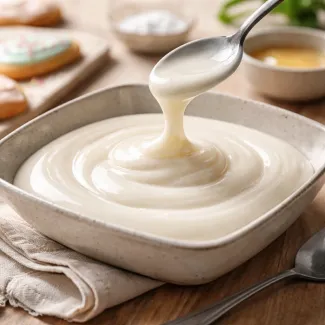
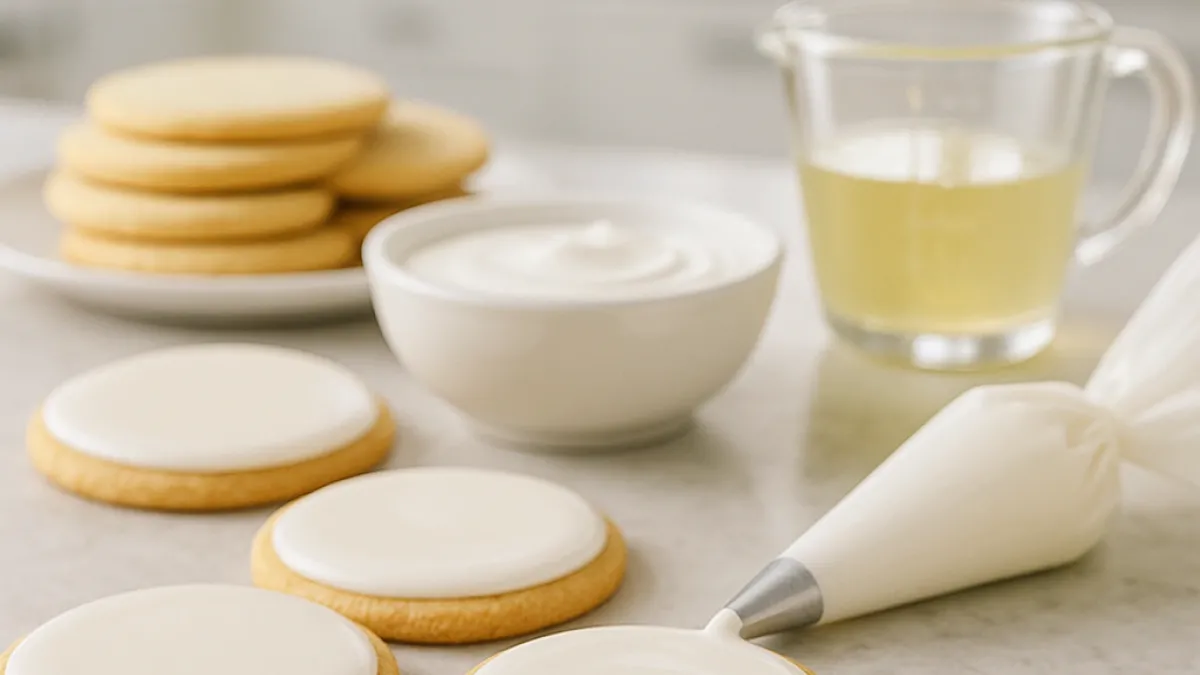
Royal icing arrives with a quiet drama. The surface dries into a smooth, porcelain-like shell, while the interior keeps a controlled firmness that holds every line, dot, and swirl exactly where you place it. As the bowl is mixed, the texture shifts from airy foam to silky precision, creating that unmistakable moment when a spoon lifts and the icing falls back in a clean ribbon. The scent is neutral, almost ceremonial, allowing the decorated cookie or cake to speak through color, shape, and restraint rather than sweetness alone. This balance is what makes royal icing timeless: elegant without excess, decorative without distraction.
Historically, royal icing gained prominence in European confectionery during the 18th and 19th centuries, when sugar refinement made fine decorations possible. Its name is often linked to formal celebration cakes, yet its real legacy lives in hand-decorated cookies, festive gingerbread, and meticulously piped borders. The method survived generations because it offers control—over drying time, line sharpness, and structural stability—that few other frostings can match.
Royal icing behaves differently from butter-based creams. Egg whites or their modern alternatives provide structure, powdered sugar contributes body, and careful mixing creates a matrix that sets firmly once exposed to air. The result is an icing that welcomes patience and rewards accuracy. When used thoughtfully, it transforms simple bakes into keepsake-level desserts.
Why this style of icing still defines professional decoration
Royal icing is often chosen when clarity matters more than softness. Borders remain crisp, lettering dries legibly, and layered colors can be built without bleeding. This makes it a natural companion to refined cupcake designs such as Professional vanilla cupcakes with stable swirl frosting recipe, where structure and visual balance are essential.
It also pairs beautifully with classic cookies. Traditional cut-outs, sandwich cookies, and festive shapes benefit from an icing that locks in detail and preserves the design long after decorating. For example, delicate lines and filled centers echo the elegance found in Traditional Linzer Cookies with Jam Filling for Perfect Holiday Baking, even when the finishes differ.
Storage and make-ahead handling
Royal icing is well suited to advance preparation. Once mixed, it can be stored airtight and reworked gently to restore smoothness. Decorated items keep their finish for days, making it ideal for staged baking schedules, gifting, and large events. Dry environments preserve the clean snap of the set icing, while humidity softens edges and requires thoughtful timing.
Where royal icing fits among modern decorating styles
Today’s baking world blends tradition with creativity. Royal icing often shares the stage with softer finishes, offering contrast and definition. Sculpted cookies shaped and colored like fruit, such as those in Peach-Shaped Cookies Recipe – Traditional Red & Yellow "Breskvice", rely on firm coatings to maintain illusion and color separation.
Alongside alternative frostings—like the versatile Magic Cream – Homemade Frosting for Cakes and Cupcakes—royal icing remains the choice when precision outranks softness.
Why you’ll love working with royal icing
- Sharp definition for piping, lettering, and borders
- Reliable setting that preserves designs over time
- Neutral flavor profile that highlights the baked base
- Flexible consistency adaptable for flooding or fine lines
- Professional appearance with minimal decoration elements
Creative variations and uses
- Tinting with restrained palettes for architectural cookie sets
- Layering flooded surfaces with raised accents for depth
- Using textured tips to create lace-like patterns
- Combining matte and gloss finishes for visual contrast
- Applying minimalist designs that let negative space shine
Royal icing remains a quiet authority in baking—subtle, disciplined, and endlessly expressive when handled with intention.
- Place the egg whites in a clean mixing bowl and begin whisking at medium speed until lightly foamy and opaque.
- Gradually add the powdered sugar in several additions, whisking continuously to avoid lumps. The mixture will become thick, smooth, and bright white.
- Add the lemon juice, which stabilizes the structure and improves setting. Mix until fully incorporated.
- Adjust the consistency with water, adding it gradually. For piping outlines, keep the icing thick and firm; for flooding cookies, thin it slightly until it flows smoothly but still holds shape.
- Cover the bowl with an airtight lid or damp cloth when not in use to prevent drying. Use immediately for decorating cookies and cakes.
A small tip that makes a big difference: always control consistency, not speed. The most common mistake is over-thinning royal icing too early, which leads to spreading instead of clean lines. This method works because sugar structure and gentle mixing create stability first, flow second. Developed by PEKIS – a professional chef and recipe developer with over 25 years of experience in cooking and baking, focused on European and international cuisine, where precision and repeatable results matter every time.
FAQ questionWhat is royal icing made of?
Royal icing is built on a simple structure: egg whites (or an alternative that mimics their proteins), powdered sugar, and a small acidic boost like lemon juice. The egg-white proteins form a stable network when mixed, while the sugar creates body and the signature smooth, firm finish as it dries. The acid helps tighten the structure and keeps the icing looking clean rather than dull.
FAQ questionHow do I get the right consistency for piping vs flooding?
Think in two working textures: stiff for outlines and looser for flooding. A thicker icing holds sharp edges, lettering, and borders without slumping. Flooding icing should flow enough to level out into a flat surface, but still stop where you guide it—so it doesn’t run off the cookie. The key is adding water in tiny amounts and testing: you want controlled flow, not thin liquid icing.
FAQ questionWhy is my royal icing grainy or full of lumps?
Graininess usually comes from powdered sugar that wasn’t sifted, or from adding it too quickly so it can’t hydrate evenly. Lumps can also happen if the bowl or tools have moisture pockets that clump sugar instantly. Sift the sugar, add it gradually, and mix until the icing turns silky and uniform. If lumps appear, let it rest briefly, then mix again gently to smooth it out.
FAQ questionHow long does royal icing take to dry hard?
Drying depends on humidity, icing thickness, and how much surface area is exposed. Thin flooded layers set faster on the surface; thicker piped details take longer to harden through. In a dry room, you’ll often get a touch-dry surface within an hour or two, while full hardness can take several hours to overnight. For stacking or packaging, aim for fully hardened icing, not just a dry top.
FAQ questionCan I make royal icing without raw egg whites?
Yes. You can use pasteurized liquid egg whites for a safer approach, or replace egg whites with aquafaba for an egg-free version. The goal is still the same: a protein base that stabilizes the sugar into a set structure. Aquafaba can work very well, but you may need slightly longer mixing to reach stable peaks and a firmer set.
FAQ questionHow do I store royal icing so it doesn’t dry out?
Royal icing dries quickly when exposed to air, so storage is all about sealing. Keep it in an airtight container, press plastic wrap directly onto the surface, and cover piping bags with a clip when not in use. If it thickens, loosen it with a few drops of water and mix until the texture returns to pipeable consistency.
FAQ questionWhy is my royal icing cracking after it dries?
Cracking often happens when icing dries too fast in a very dry environment, when it’s spread too thickly, or when the cookie base flexes while the icing is rigid. Keeping flood layers moderate, avoiding excess drying heat, and letting cookies cool completely before decorating helps prevent stress fractures. For delicate designs, build in thinner layers and allow even drying between steps.
Royal icing stands out through structure, control, and visual clarity, offering a decorating medium that rewards patience and intention. Its ability to dry into a smooth, firm surface makes it ideal for cookies and cakes where detail matters more than softness. Each element—from mixing to drying—works together to preserve shape, color, and precision.
The balance between flow and stability defines successful results. When consistency is tuned correctly, outlines stay crisp, flooded areas level naturally, and layered designs hold without bleeding. This balance allows decorators to move confidently between fine piping, clean fills, and sculpted accents.
Timing plays a quiet but decisive role. Allowing icing to set fully before stacking, packaging, or adding new layers protects the finish and keeps designs intact. Environmental awareness—especially humidity and airflow—supports even drying and long-lasting results.
Used with intention, royal icing becomes more than a coating. It functions as a structural design tool, transforming simple baked bases into refined, presentation-ready pieces that communicate care, craft, and restraint through every clean line and polished surface.
Allergens present in the recipe:
- Eggs: Egg whites are a structural base and common allergen.
- Gluten: Naturally gluten-free, but cross-contamination may occur depending on sugar processing.
Allergen and gluten substitution tips:
- Eggs: Replace egg whites with pasteurized liquid egg whites or aquafaba (chickpea cooking liquid) for an egg-free version.
- Gluten: Ensure certified gluten-free powdered sugar to eliminate cross-contamination risk.
- Potassium (mg): 20 – supports normal muscle and nerve function.
- Calcium (mg): 5 – contributes to bone and teeth health.
- Phosphorus (mg): 10 – important for energy metabolism.
Vitamin C (mg): 0.5 – from lemon juice, supports cellular protection against oxidative stress.
Calculators
Recipes worth trying