Homemade Pizza Dough with a Crisp Edge and Soft Center is built for high heat and calm, confident baking at home. The dough delivers a dry, crackling rim with a flexible, airy middle that folds without breaking, letting toppings shine without overload. Rooted in classic pizza tradition and tuned for domestic ovens, it’s designed for balanced flavor, clean structure, and slices meant to be eaten hot, by hand, in the moment.
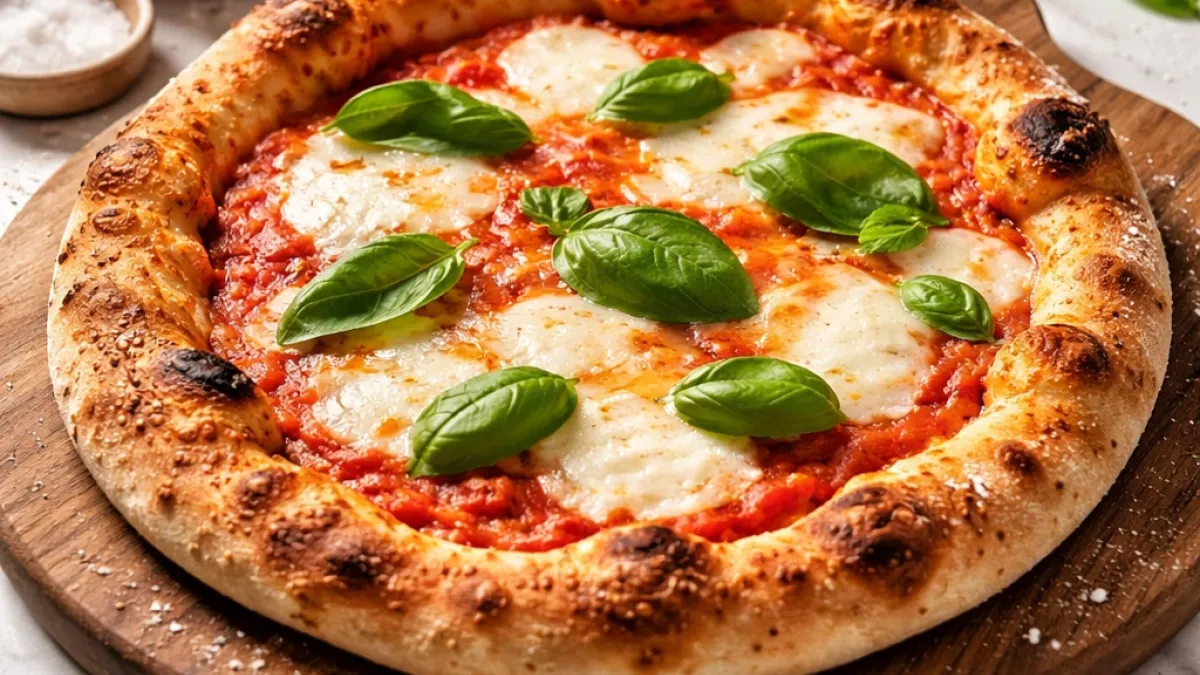
When the crust speaks before the topping
A home-baked pizza dough built for heat, stretch, and quiet confidence
The first thing you notice isn’t the topping—it’s the sound. A dry crackle as the blade cuts through the edge, followed by the gentle resistance of a soft, elastic center. This contrast surprises many home bakers. Most expect pizza dough to be either crisp or soft. In practice, the best dough lives exactly in between, where heat, time, and restraint meet.
This Homemade Pizza Dough with a Crisp Edge and Soft Center is designed for that moment when the oven is fully charged, the kitchen smells faintly of toasted wheat, and dinner feels intentional rather than rushed. It’s not about speed. It’s about control.
A dough shaped by history, adapted for home kitchens
Pizza’s roots are inseparable from restraint—few ingredients, clear purpose, no excess. From street ovens in Naples to domestic ovens across Europe and North America, the dough evolved with its environment. What stayed constant was structure: flour, water, salt, fermentation. If you want the long arc, the broader cultural frame sits quietly behind every stretch of dough—worth revisiting in the History of Pizza when context matters as much as technique.
This version respects that lineage while accepting the limits of a home oven. It’s calibrated for stones and steels, for predictable heat and repeatable results, not for showmanship.
How it’s served—and why that matters
This dough isn’t meant to carry weight. It works best when topped lightly, baked hard, and served immediately. The edge stays dry and crisp, the base remains flexible, and the center folds without cracking. It’s the kind of pizza you eat with your hands, standing at the counter, slices cooling just enough to release steam.
Paired with a restrained sauce—something clean and cooked down, like a classic Homemade Tomato Sauce for Pasta, Pizza and Stews—the dough does its job quietly. It frames flavor instead of chasing it.
What makes this dough different
Many home doughs rely on shortcuts: sugar for color, oil for tenderness, heavy yeast for speed. This one doesn’t. The structure comes from hydration and time, not additives. Fermentation does the heavy lifting, building aroma and extensibility while keeping the flavor clean.
The result is a dough that stretches without fighting back, bakes without drying out, and cools without collapsing.
Why you’ll like it
- Reliable in domestic ovens, even without extreme temperatures
- Crisp edge with real structure, not brittle crunch
- Soft, open center that folds and springs back
- Neutral flavor that supports both classic and seasonal toppings
PEKIS Chef’s insight (localized experience)
In professional kitchens, dough tells you when it’s ready. At home, we often rush that conversation. I learned early that the best pizza nights weren’t loud or complicated—they were quiet, built around dough that had time to settle. (Chef’s insight: practical kitchen timing)
Creative variations worth exploring
This dough adapts easily to the season. In summer, it shines with minimal toppings and fresh finishes added after baking. In colder months, it supports roasted vegetables or aged cheeses without losing balance. The structure stays the same; the expression changes.
If you’re curious how this compares to a more traditional framework, it’s useful to contrast it with a classic Italian pizza dough—same language, different dialect.
When this dough is not ideal
It’s not built for pan pizzas, deep-dish styles, or overloaded slices. If you want thickness or richness, this isn’t the right base. It prefers heat, space, and restraint.
Make-ahead rhythm and storage
This dough rewards planning. Made ahead, it becomes more predictable, more forgiving, easier to shape. Cold storage deepens aroma and improves handling, making pizza night calmer, not more complicated.
PEKIS Chef’s insight (food rhythm & season)
Good dough follows a rhythm, not a clock. Once you align your baking with that rhythm, pizza stops feeling like a project and starts feeling like part of the week. (Chef’s insight: food rhythm and season)
- Autolyse
In a large bowl, mix the flour with 360 g (1 ½ cups) of the water until no dry flour remains. Cover and rest 30 minutes. - Yeast incorporation
Dissolve the fresh yeast in the remaining 30 g (2 tbsp) water. Add to the dough and mix until fully absorbed. - Salt incorporation
Add the salt and knead until the dough becomes smooth and elastic, about 8–10 minutes by hand or 5–6 minutes with a mixer. - Bulk fermentation
Cover and let rest at room temperature for 30–45 minutes until slightly expanded. - Cold fermentation
Transfer the dough to a lightly oiled container, cover tightly, and refrigerate at 3–5 °C (37–41 °F) for 16–48 hours. - Portioning
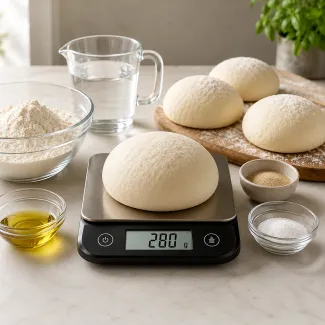
Divide the cold dough into 3 equal portions (300 g each). Shape into tight balls. - Final rest
Place dough balls on a lightly floured surface, cover, and rest at room temperature for 60–90 minutes. - Shaping
Gently stretch each dough ball into a round pizza base, preserving air in the edge. Do not use a rolling pin. - Baking
Bake on a preheated pizza stone or steel at 300–320 °C (575–610 °F) for 5–7 minutes, until the edge is crisp and blistered and the center is soft and flexible.
If your dough feels tense or tears easily, give it more rest before shaping and let time do the work. Small adjustments like this are what separate decent pizza from one that bakes with calm confidence and clean structure. I approach pizza dough the same way at home as I do professionally: observe, adapt, and trust the process.
Chef PEKIS is a professional chef and recipe developer with more than 25 years of hands-on experience, creating and refining recipes that work reliably in real home kitchens.
FAQ questionWhy does my pizza dough spring back when I try to stretch it?
This usually means the gluten is still tight. Let the dough rest longer at room temperature so it can relax naturally. Chef’s tip: if the dough feels elastic rather than soft, step away for 10 minutes—time fixes more dough problems than extra flour.
FAQ questionCan I use all-purpose flour instead of bread flour?
You can, but expect a softer edge and less oven spring. Bread flour gives stronger structure, especially in home ovens. Chef’s tip: if using all-purpose flour, reduce stretching and handle the dough more gently.
FAQ questionWhat if my home oven doesn’t get hot enough?
Preheat longer and bake on the lowest rack with a stone or steel. The goal is stored heat, not just air temperature. Chef’s tip: heat the baking surface at least 45 minutes for better bottom color.
FAQ questionIs long cold fermentation really worth it for home pizza?
Yes. It improves stretch, aroma, and baking control without extra effort. Chef’s tip: cold-fermented dough is more forgiving and easier to shape, especially for beginners.
FAQ questionDo I need to oil the dough balls before resting them?
A light oil helps prevent drying, but too much will soften the surface. Chef’s tip: a thin brush or lightly oiled container works better than coating the dough itself.
FAQ questionWhy do many home bakers in the US overload pizza with toppings?
It’s common, but heavy toppings trap moisture and soften the crust. Chef’s tip: fewer toppings bake faster and let the dough do its job.
FAQ questionCan I make the dough ahead for a weekend pizza night?
Absolutely. Dough made one or two days ahead is easier to manage and more predictable. Chef’s tip: bring it fully to room temperature before shaping for best results.
The oven cools, the kitchen quiets, and what remains is the faint warmth of baked dough in the air. A pizza like this leaves no need for explanation—just the memory of a crisp edge, a soft fold, and the calm satisfaction of something made with care.
There’s comfort in how naturally it fits into an evening. No rush, no excess. Just balanced structure, clean flavor, and the kind of simplicity that feels intentional rather than minimal.
As seasons shift, this rhythm stays the same. The dough adapts quietly, welcoming lighter toppings in warmer months and deeper notes when the air turns cooler, always keeping its soft center and steady character.
When the last slice is gone and the counter wiped clean, the moment lingers. Not as a recipe remembered, but as a small, well-made pause in the day.
- Gluten: present (wheat flour)
- Substitution: use a gluten-free bread flour blend with added psyllium husk to replace gluten structure.
- Iron (mg): 3.4 – supports oxygen transport in the body
- Magnesium (mg): 48 – contributes to muscle and nerve function
- Phosphorus (mg): 180 – essential for bone and energy metabolism
- Potassium (mg): 160 – helps regulate fluid balance and muscle contractions
- Phenolic compounds (mg): 35 – contribute to cellular protection
- Ferulic acid (mg): 8 – supports antioxidant defense and gut health
Calculators
Recipes worth trying