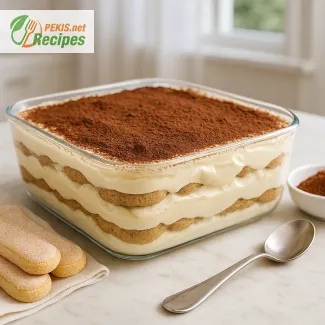
A clean slice reveals a dense, vanilla-scented interior that holds its shape without losing creaminess. In Flan Parisien Baked Custard Tart with Stable Slice, the surface stays matte and evenly golden, the crust crisp beneath a compact custard core. Served cool at the table, it offers precision, calm sweetness, and the quiet confidence of classic French pâtisserie.

Custard Stability and Clean Slices in a Classic Parisian Tart
Understanding the Structure Behind Flan Parisien
Late in the evening, when the tart has cooled and the room grows quiet, the knife presses gently into the surface of Flan Parisien. The blade moves through the baked custard with calm resistance, leaving behind a smooth, defined slice that stands upright on the plate. The surface barely trembles, while the interior reveals a creamy yet stable structure. This moment—when the custard holds its shape without collapsing—is the defining character of this classic French baked tart. Within the wider tradition of French baked custard desserts with silky texture, Flan Parisien represents the structured, sliceable end of the spectrum.
The dessert carries a quiet elegance. Its appearance is minimal—often a pale golden top, smooth custard interior, and thin pastry base—yet its technical balance determines whether the tart becomes dense and rigid or soft and flowing. Properly made, it sits between those extremes: firm enough to cut, delicate enough to melt slowly on the tongue.
Flavor and Texture Profile
Flan Parisien is defined by restraint rather than intensity. The flavor profile is clean and balanced, allowing the dairy custard to remain the central element.
Key sensory characteristics include:
- Aroma: warm milk and cream with subtle vanilla notes
- Taste balance: gentle sweetness with a faint egg-custard depth
- Texture: dense yet creamy custard that cuts cleanly without cracking
- Mouthfeel: smooth and cohesive, without graininess or excess firmness
- Surface finish: lightly caramelized top that adds mild roasted notes
Unlike lighter custard desserts, Flan Parisien relies on structural thickness rather than delicate wobble. The custard feels substantial on the fork but dissolves gradually once warmed by the palate.
Technical Logic of the Structure
The distinctive sliceable texture of Flan Parisien emerges from controlled custard physics. Several processes interact during baking to create the final structure.
Protein coagulation
Egg proteins bind when heated, forming a network that stabilizes the custard.
This network determines firmness and prevents the mixture from remaining liquid.
Starch stabilization
Most versions of Flan Parisien include starch (often cornstarch) which thickens the custard before baking.
This step ensures that the custard sets evenly and remains stable during slicing.
Slow oven heat
Gentle baking allows the custard to set gradually.
If the temperature rises too quickly, proteins tighten excessively and the texture becomes rubbery.
Moisture balance
Milk and cream provide the fluid base of the custard, but excessive evaporation must be avoided.
Maintaining a stable baking environment prevents surface cracking and preserves the creamy interior.
Together these mechanisms produce the firm custard block characteristic of a classic Parisian bakery tart.
Difference from Other Custard Desserts
Although it belongs to the family of French custard desserts, Flan Parisien differs significantly from related preparations.
- Crème caramel: softer structure and inverted presentation with liquid caramel
- Crème brûlée: thinner custard layer designed for spoon service rather than slicing
- Pots de crème: served in individual vessels with a much softer set
Flan Parisien, in contrast, is designed as a cuttable tart. The pastry shell supports the custard, creating a dessert that can be portioned cleanly for bakery display or plated service.
Practical Signals of Quality
A well-made Flan Parisien reveals its success through several visible and tactile cues.
- Clean slice edges: custard holds its shape without spreading
- Smooth interior: uniform texture without air pockets or curdling
- Lightly bronzed surface: gentle caramelization without burning
- Stable center: minimal wobble when the tart is moved
- Balanced thickness: custard layer deep but evenly set
If the custard collapses when cut or releases liquid, the internal protein structure has not stabilized correctly.
Situations Where the Tart Is Less Suitable
Despite its stability, Flan Parisien has certain limitations.
- High ambient heat can soften the custard excessively.
- Long transport may damage the smooth surface.
- Extremely thin pastry bases may absorb moisture and lose crispness.
- Over-refrigeration can tighten the custard texture and mute the aroma.
For these reasons, the tart performs best in controlled serving environments such as cafés, bakeries, or dinner tables where temperature remains moderate.
Storage and Structural Stability
After baking, Flan Parisien undergoes an important resting period. Cooling allows the custard network to fully stabilize.
Recommended handling:
- Chill the tart thoroughly before slicing.
- Store under refrigeration to maintain firmness.
- Protect the surface from drying with light covering.
- Allow brief tempering at room temperature before serving to restore creaminess.
During refrigeration the custard becomes slightly firmer, while the flavor deepens as dairy notes settle into a smoother profile.
Professional Culinary Insight
In professional pastry kitchens, the defining challenge of Flan Parisien is not flavor but structural equilibrium. Too little heat and the custard collapses; too much and it becomes rigid. Experienced bakers monitor subtle signals: the gentle dome forming on the surface, the moment when the center barely trembles, and the quiet firmness that appears as the tart cools. Mastery lies in recognizing that the perfect slice is not created by ingredients alone, but by precise control of temperature, time, and protein stability within the custard.
- Mix flour, powdered sugar and salt in a bowl.
- Rub in cold butter until sandy.
- Add egg and form a smooth dough.
- Wrap and refrigerate 30 minutes.
- Roll dough and line a 22–24 cm tart ring.
- Chill 15 minutes.
- Blind bake at 170°C (338°F) for 20 minutes. Remove weights and cool.
- Split vanilla bean and heat with milk and cream until steaming.
- Whisk sugar, cornstarch, eggs, yolks and salt until smooth.
- Gradually pour hot milk into egg mixture while whisking.
- Return to heat and cook to thick custard at 82–85°C (180–185°F).
- Pour custard into pre-baked shell.
- Bake at 170°C (338°F) for 45–55 minutes until set in center (92–94°C / 198–201°F internal).
- Cool 1 hour at room temperature.
- Refrigerate minimum 6 hours before slicing.
Slice only when the center feels compact at 6–8°C and the blade meets quiet resistance; excess wobble signals incomplete structure. Control heat early, pre-cook the custard properly, and you prevent graininess instead of masking it later. That is how Chef PEKIS works—refining classic ratios into repeatable results built on real kitchen discipline.
FAQ questionHow do I know when Flan Parisien is fully baked and ready to chill?
The surface should be matte and evenly golden, with no dark blistering. Gently shake the tart: the center should show only a slight, controlled movement, not a loose wobble. An internal temperature of 92–94°C (198–201°F) confirms proper set.
Chef’s tip: Insert a thin blade near the center—if it comes out clean and the custard feels compact, it is ready.
FAQ questionWhy does my custard turn grainy instead of smooth?
Graininess usually means the egg proteins have over-coagulated. This happens when the dairy is too hot during tempering or when the custard exceeds 85°C (185°F) before baking. Maintain steady heat and whisk continuously to preserve a stable emulsion before it enters the oven.
Chef’s tip: Remove from heat as soon as the custard thickens and leaves a clean line on the spatula.
FAQ questionCan I replace cornstarch with flour if I run out?
Technically yes, but the result will be heavier and less precise. Cornstarch creates a cleaner, more elastic structure and improves slice integrity. Flour introduces additional gluten and dulls the vanilla profile.
Chef’s tip: If substituting, use about 120 g (1 cup) flour and expect a slightly softer cut.
FAQ questionWhy does the tart sink slightly after cooling?
Minor settling is normal, but significant shrinkage suggests under-baking or insufficient starch activation. The custard must reach full thermal coagulation in the oven to stabilize. Rapid chilling can also contract the interior unevenly.
Chef’s tip: Allow one full hour at room temperature before refrigeration to prevent structural shock.
FAQ questionDoes the type of cream or milk used in the UK or US affect the result?
Yes. Double cream in the UK has higher fat than typical US heavy cream, which can produce a richer but softer interior. Standard whole milk (around 3–3.5% fat) is ideal; ultra-high-temperature milk may slightly mute flavor. Maintain the original dairy balance to preserve stability.
Chef’s tip: If using higher-fat cream, reduce it by 30 ml (2 tbsp) to keep the slice firm.
The knife rests on the board, a thin trace of custard left along its edge. Outside, the late afternoon light leans softer, turning the kitchen pale gold. There is a quiet stillness that settles once the oven has cooled and the plates are set aside.
A slice waits on porcelain, edges clean, surface calm. The scent of vanilla lingers in the warm air, subtle but steady. In the long shadows of early evening, nothing feels hurried.
Some desserts ask for applause; this one asks for balance. A measured sweetness, a steady form, a moment to pause before the next task begins.
By the time the room grows dim and the windows reflect only the interior glow, what remains is not indulgence but a sense of quiet—the kind that follows careful work done well.
- Gluten: present (wheat flour)
- Milk: present (milk, cream, butter)
- Eggs: present
Substitutions
- Replace flour with gluten-free flour blend for gluten-free version.
- Use lactose-free milk and cream if lactose intolerant.
- Egg-free version not recommended due to structural role.
- Vitamin A: 420 µg – supports vision and immune function
- Vitamin D: 3 µg – supports bone health
- Vitamin B12: 1 µg – supports nervous system
- Calcium: 180 mg – contributes to bone strength
- Iron: 1 mg – supports oxygen transport
- Phosphorus: 210 mg – supports cellular energy
- Potassium: 220 mg – supports muscle function
- Vanillin: 2 mg – contributes aromatic antioxidant activity
- Carotenoids: 0.4 mg – support cellular protection
- Flavonoids (trace from vanilla): 1 mg – mild antioxidant support
Calculators

Recipes worth trying