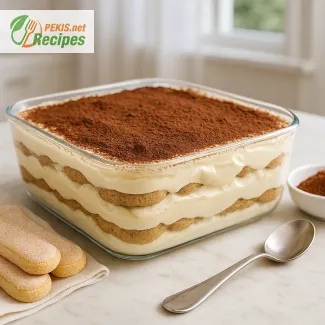
A velvety blend of mascarpone, espresso-soaked Savoiardi, and smooth cream makes this Authentic Italian Tiramisù Without Alcohol feel like a shared moment from an old Venetian café. Each bite sinks softly, releasing balanced sweetness and gentle coffee depth, capturing the comforting spirit and rich texture that made this classic dessert timeless.
A common mistake with Tiramisù is over-soaking the Savoiardi, which makes the layers collapse instead of giving that soft, tender bite. The trick is a quick dip and a well-balanced cream so the texture stays light and smooth. This method keeps the structure intact and brings out the natural richness of espresso and mascarpone. If you want to know more about my approach to Italian desserts, here’s a bit about PEKIS.
PEKIS – professional chef and recipe developer with 25+ years of experience in cooking and baking, specializing in European and international cuisine.
Creamy Italian Coffee-Infused Dessert Inspiration
A velvety mascarpone classic shaped by heritage and pure indulgence
Silky layers sink gently under the spoon, releasing a wave of creamy sweetness that feels both familiar and indulgent. The first bite brings a soft collapse of espresso-soaked sponge, followed by the slow bloom of mascarpone richness that melts into a smooth, almost cloud-like finish. There is a warmth in the way this dessert gathers together simple elements—coffee, cocoa, mascarpone, eggs, sugar—and transforms them into something that feels like an intimate moment shared across generations. The aroma alone carries a quiet nostalgia, a reminder of family kitchens, dimly lit cafés, and evenings that ended with a single plate in the center of the table.
The origins of this beloved Italian icon trace back to the Veneto region, where luxury and simplicity met in kitchens that valued slow preparation and generous texture. Over time, Tiramisù evolved from a local trattoria secret into an international symbol of refined comfort. Its cream-forward structure, especially in versions without alcohol, highlights the softness, the balance of bitterness and sweetness, and the unmistakable velvet layering that makes each serving deeply satisfying. Modern interpretations keep the spirit intact while placing a stronger focus on purity of flavor and a brighter mascarpone profile.
A crucial element lies in the type of sponge used. Traditional Savoiardi bring essential structure, absorbing espresso while maintaining a light internal bite. If you want to explore how these classic Italian sponge fingers are made, a detailed guide is available here: Ladyfingers Recipe (Savoiardi – Sponge Fingers for Tiramisu & Desserts). Their airy texture and neutral sweetness determine how the layers settle, how moist the bite becomes, and how balanced the final dessert feels. In alcohol-free preparations, mascarpone takes center stage, delivering a silky creaminess that feels more prominent and fuller.
The interplay of coffee and cocoa shapes the aromatic profile. Rich, freshly brewed espresso adds a bold heartbeat, while fine cocoa dusting creates a slightly bitter contrast that sharpens the cream’s softness. Eggs, when prepared correctly, offer stability and a delicate volume that lifts the mascarpone without making it heavy. Sugar ties the elements together, smoothing out sharper notes and enhancing the gentle sweetness that defines this version.
A classic Italian dessert that pairs beautifully with Tiramisù, especially when served during festive gatherings or elegant dinners, is Panna Cotta. For readers who enjoy cream-based desserts with subtle flavor layers, this version offers an excellent companion recipe: Creamy Italian Panna Cotta with Fresh Berries Dessert Recipe. The contrast between soft cream gel and espresso-soaked sponge creates a beautiful duo for menus or tasting boards.
Background and culinary significance
Over the past decades, Tiramisù has adapted to countless culinary trends while retaining a clear Italian identity. Its structure represents a perfect balance of soak-to-cream ratio, where timing, temperature, and layering define the final experience. This alcohol-free version emphasizes natural ingredients, the smooth mascarpone texture, and the strong aromatic influence of espresso.
Storage and make-ahead
A chilled, layered dessert like this one benefits greatly from resting time. Allowing it to firm up ensures cleaner slices, deeper coffee infusion, and a more cohesive cream structure. Proper refrigeration also helps maintain the light, airy mouthfeel while preserving the integrity of the layers.
Italian dessert elements and their roles
This dessert draws on hallmark components of Italian sweet cuisine: mascarpone, espresso, cocoa, egg-based creams, and airy sponge biscuits. Each element contributes its own defining qualities—creaminess, aroma, balance, texture—to create a dessert that feels complete.
Why you’ll love this recipe
- Extra creamy texture that feels smooth and velvety
- Balanced coffee aroma without overshadowing sweetness
- Alcohol-free preparation suitable for wider occasions
- Soft sponge layers that soak perfectly and stay tender
- Classic flavor profile rooted in authentic Italian tradition
Creative variations
- Swap the espresso with a lightly sweetened decaf for a gentler aroma.
- Add finely grated dark chocolate between layers for extra richness.
- Introduce a thin layer of vanilla bean cream for added depth.
- Use a blend of espresso and barley coffee for a milder profile.
Italian dessert pairing and serving context
This dessert works beautifully alongside soft cakes, fruit-forward sweets, or gentle vanilla-based fillings. For occasions that call for more textured options, classics like egg-based sponge cakes, fruit-infused creams, or subtle nut desserts complete the table while keeping the spotlight on the creamy layers and espresso-soaked interior.
- Whisk the egg yolks with sugar until the mixture becomes pale and slightly thick.
- Add mascarpone to the yolk mixture and mix until smooth and velvety.
- In a separate bowl whip the heavy cream until soft peaks form, then fold gently into the mascarpone mixture.
- Beat the egg whites until firm peaks form, then fold them into the cream mixture to achieve an extra creamy consistency.
- Dip each Savoiardi biscuit quickly into cooled espresso and arrange them in a rectangular dish (approx. 30 × 20 cm / 12 × 8 inch).
- Spread half of the cream mixture over the biscuit layer, smoothing the surface evenly.
- Add a second layer of espresso-soaked Savoiardi on top.
- Spread the remaining mascarpone cream over the second layer and smooth the top.
- Refrigerate for at least 4 hours to allow the dessert to set and the flavors to fully develop.
- Before serving, dust generously with cocoa powder for a classic Italian finish.
FAQ questionHow do I keep alcohol-free Tiramisù extra creamy and not dense?
For a truly extra creamy texture, focus on how you combine the mascarpone, eggs and cream. Whisk the egg yolks with sugar until they are pale and slightly thick, then blend in mascarpone just until smooth—over-mixing can make it heavy. Whip the cream to soft, not stiff peaks, so it folds easily into the mascarpone mixture. Finally, gently fold in beaten egg whites in two or three additions. This layering of air creates a light, velvety cream without losing stability.
FAQ questionHow long should Savoiardi soak in coffee so they don’t fall apart?
The biggest mistake is letting the biscuits sit in the coffee. Each Savoiardo should get a quick dip, about 1–2 seconds per side, in cooled espresso. The goal is to wet the outside while keeping a slightly dry core that continues to absorb moisture in the fridge. If they are soaked too long, the layers turn mushy and collapse; if they are too dry, the dessert tastes under-infused. Short, controlled dipping is what gives a tender but defined bite.
FAQ questionCan I make alcohol-free Tiramisù a day in advance?
Yes, this dessert is ideal for preparing ahead. Once assembled, it needs at least 4 hours in the fridge, but overnight (8–12 hours) gives the best result. During this time, the coffee gently migrates through the biscuits and the cream firms up, creating clean slices and deeper flavor. Just cover the dish well to prevent fridge odors from affecting the dessert, and dust with cocoa right before serving to keep the surface dry and attractive.
FAQ questionWhat can I use instead of raw eggs in the cream?
If you prefer to avoid raw eggs, you can make a cooked yolk base or use an egg-free version. For a cooked base, whisk yolks with sugar over a gentle bain-marie until thick and hot to the touch, then cool slightly before adding mascarpone. For a fully egg-free option, combine mascarpone with whipped cream and a little powdered sugar, plus vanilla for aroma. You will lose some of the traditional structure, but still get a smooth, rich, alcohol-free Tiramisù that is more comfortable for some guests.
FAQ questionHow do I stop the cream from becoming grainy or splitting?
Grainy cream is usually a sign of over-whipped dairy or cold mascarpone. Always bring mascarpone to room temperature before mixing, and whisk it gently with the yolk-sugar mixture until just combined. Whip the cream separately until soft peaks form; if you go to stiff peaks, it is more likely to curdle when folded in. If the mixture starts to look slightly lumpy, stop whipping and switch to slow folding with a spatula to protect the texture.
FAQ questionWhat kind of coffee is best for an alcohol-free Tiramisù?
The coffee carries a lot of flavor, especially without liqueur. Use strong, freshly brewed espresso or moka-pot coffee, cooled to room temperature. Avoid weak filter coffee, which makes the dessert taste flat. For children or caffeine-sensitive guests, you can use good-quality decaf espresso to keep the same aromatic profile. A slightly sweetened coffee can soften the bitterness and balance the mascarpone richness without needing extra sugar in the cream.
The gentle balance of espresso, mascarpone, and soft layers makes this dessert stand out as one of Italy’s most comforting creations. Its alcohol-free version keeps the flavor focused on the natural richness of the cream and the subtle bitterness of coffee, creating a dessert that feels both familiar and indulgent.
Each step, from the quick dip of the Savoiardi to the careful folding of the cream, shapes the final texture. The reward is a spoonful that sinks effortlessly and rises with a smooth, velvety consistency that defines a well-made Tiramisù. Allowing the dessert to rest brings depth, making every bite more cohesive and aromatic.
The simplicity of the ingredients leaves room for small refinements. A well-brewed espresso, a touch of vanilla, or a fine cocoa dusting can shift the character while preserving its classic charm. These details invite personalization without losing the heart of the recipe.
Sharing this dessert often becomes part of the experience. Its creamy layers, gentle sweetness, and unmistakable scent of coffee create moments that linger long after the last bite.
Allergens present in the recipe
- Eggs: naturally present in the cream mixture
- Milk: from mascarpone and heavy cream
- Gluten: present in Savoiardi biscuits
Tips to eliminate allergens and gluten
- Replace mascarpone and cream with dairy-free alternatives made from coconut or almond-based cream.
- Use gluten-free sponge biscuits instead of Savoiardi.
- Substitute eggs with aquafaba foam and a plant-based custard component for a lighter texture.
- Vitamin A (µg): 240 — supports vision and immune function
- Vitamin B2 (mg): 0.25 — contributes to energy metabolism
- Calcium (mg): 110 — essential for bone strength
- Potassium (mg): 180 — supports normal muscle function
- Magnesium (mg): 15 — helps maintain energy balance
- Cocoa polyphenols (mg): 55 — contribute to reduced oxidative stress
- Coffee antioxidants (mg): 45 — support cell protection
- Flavonoids (mg): 18 — linked to overall cardiovascular support
Recipes worth trying